Bluefin Tuna Larvae Found for First Time in South Korea's Northern East Sea
Bluefin larvae confirmed for the first time off Gangwon, capping a 15-fold surge in East Sea juvenile records since 2021.
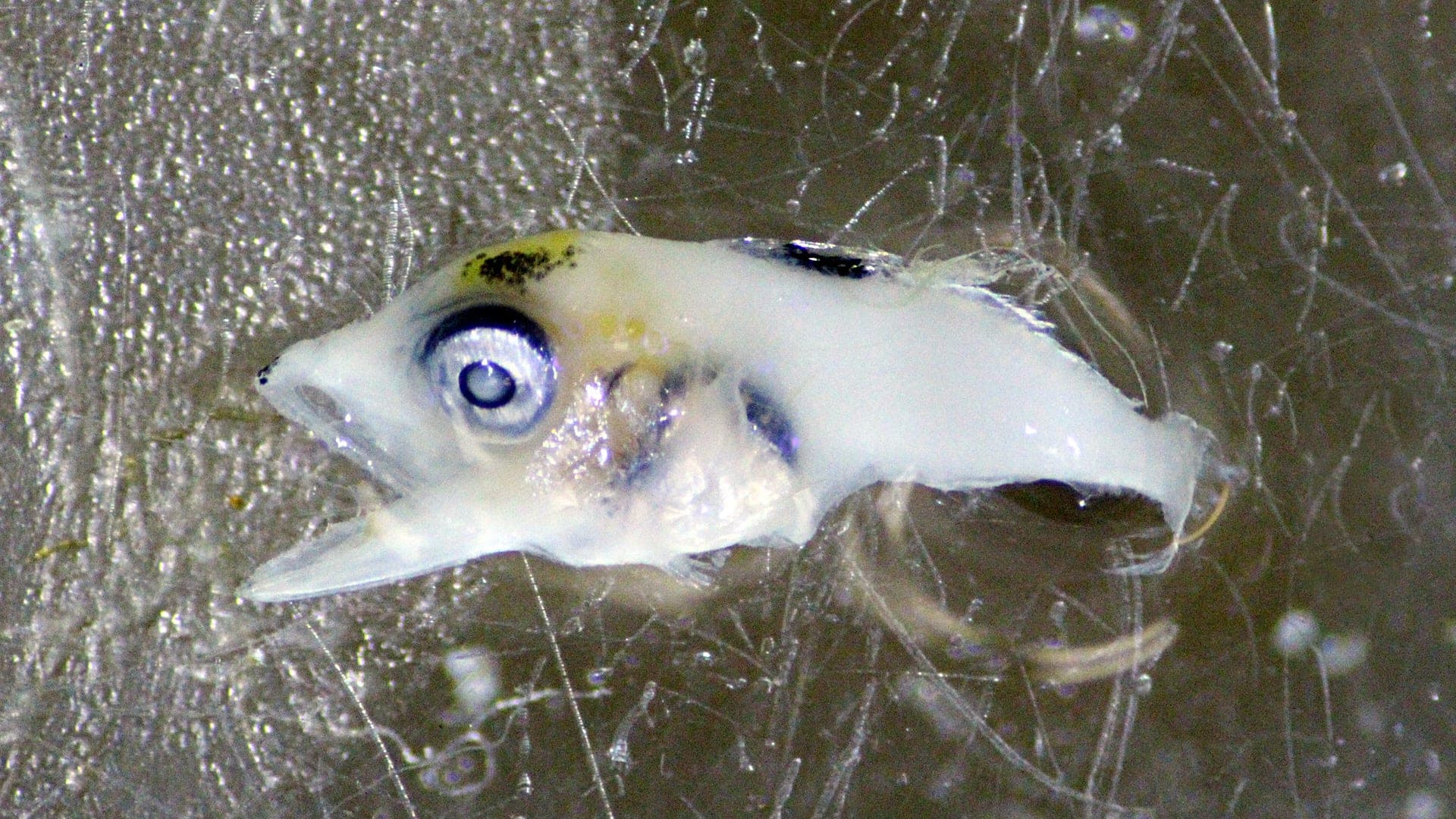
Three juvenile Pacific bluefin tuna, small enough to sit on a fingertip, were pulled from coastal waters off Hyeonnae-myeon in Goseong County during late 2025 surveys and later confirmed by DNA analysis. The National Institute of Fisheries Science announced the result on March 31: the first confirmed bluefin larvae in the northern East Sea. What makes the find significant isn't just the milestone; it's what had to happen oceanographically for those larvae to exist there at all.
The backstory starts in 2021, when bluefin eggs and larvae first appeared in East Sea surveys near Ulleungdo Island and the Liancourt Rocks, a more southerly and offshore position than the Gangwon mainland coast. The count then was 16 specimens. By the most recent sampling year, that figure had grown to 250, a more than 15-fold increase in confirmed early-life records. Commercial landings in the region, negligible in the mid-2000s, have since grown to hundreds of tonnes annually. The Gangwon larvae are the northern edge of an advancing front.
The mechanism driving that front is the Tsushima Current, the warm Kuroshio branch that pushes northeast through the Korea/Tsushima Strait and into the East Sea. South Korea's coastal sea surface temperatures have risen at roughly 2.6 times the global mean over the past 55 years, and the Tsushima warm tongue has been pressing the 16°C isotherm steadily northward, with Korean coastal SSTs reaching a 57-year record high in early 2026. Pacific bluefin larvae survive only in water between roughly 24 and 28°C, conditions that, until recently, simply didn't hold this far into the northern East Sea. They held in late 2025.
Kwon Soon-wook, head of NIFS, put it directly: "The appearance of bluefin tuna larvae this time is an important signal of changes in the distribution of fishery resources caused by rising sea temperatures in the East Sea." NIFS said it plans to "strengthen research to systematically manage bluefin tuna stocks and utilize them as a high value-added resource," a statement that signals both intensified scientific monitoring and the regulatory scaffolding that tends to follow a fast-expanding fishery.
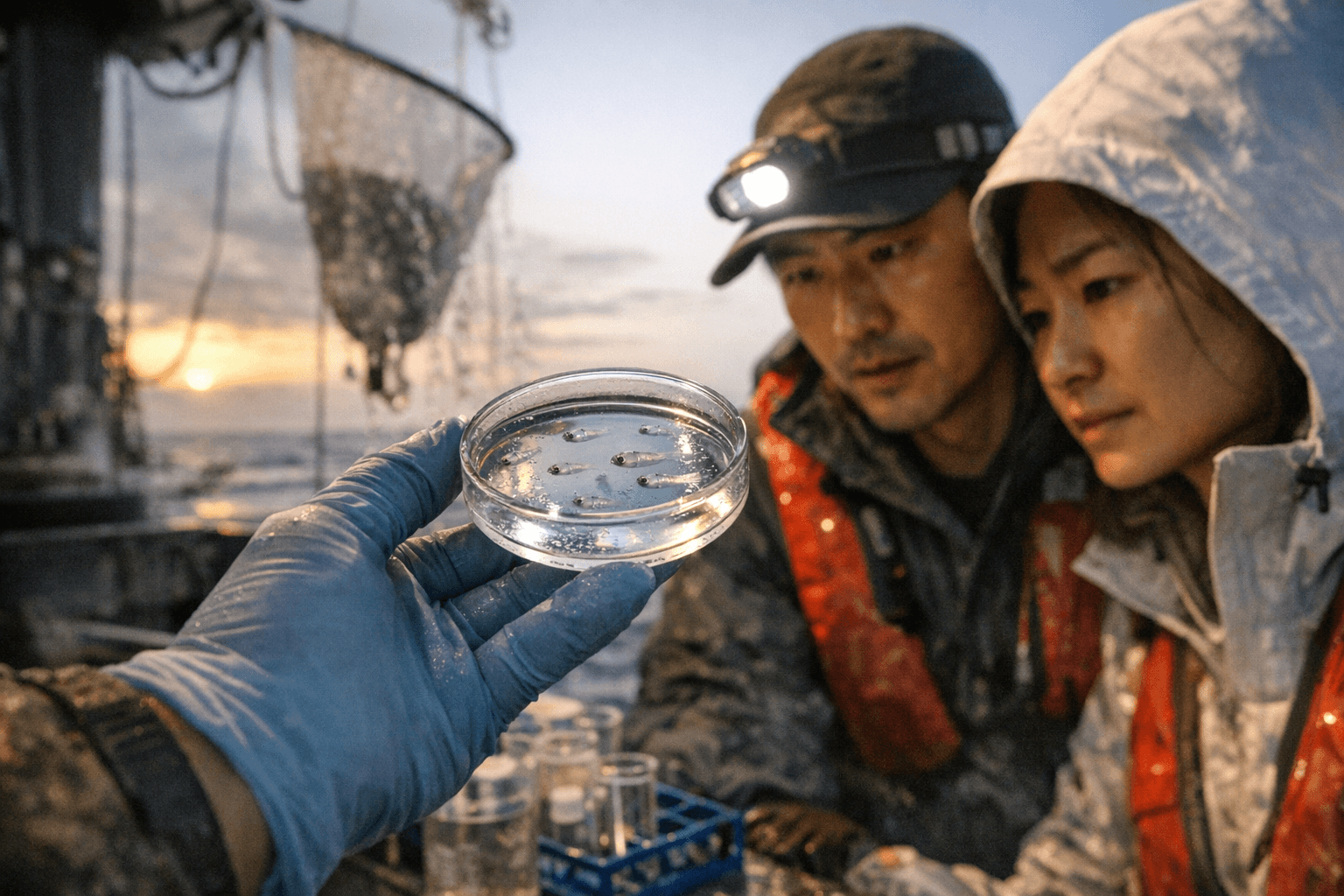
For tuna hunters running from ports between Sokcho and Goseong, this shifts the planning calculus. Larvae in Gangwon in 2025 won't produce a nearshore fishery next season; Pacific bluefin reach roughly 58 cm fork length by year one and around a meter by year three. But if ocean conditions hold and larvae survive at this rate, juvenile fish from this cohort could begin appearing on the Gangwon shelf within two to three seasons, with buildable year-classes arriving behind them.
What to watch in 2026: track the Tsushima warm tongue on SST charts through June and July. When summer surface temperatures above 20°C push north of the 38th parallel along the East Sea coast and mackerel, squid, and sardine schools push inshore alongside them, bluefin are likely holding the thermal break between warm Tsushima inflow and cooler shelf water. That edge, historically found well south of Gangwon launch points, has been creeping north every season.
NIFS's expanded survey work also creates a practical opening. As monitoring intensifies on the Gangwon coast, opportunities for voluntary catch reporting, tagging collaboration, and data partnership with research teams will likely emerge. The data collected in these early surveys will directly shape how this fishery is governed if it takes hold, making now the right time to get involved.
This article was produced by Prism’s automated news system from verified source data, official records, and press releases, then run through automated quality and moderation checks before publishing. The system is built and supervised by the people who set the standards it runs under. Read our full AI policy.
Did this article answer your question?