Bluefin Tuna Shift North in Korea, Quota Overruns and Discards Mount
Juvenile bluefin turned up in northern Gangwon, while Korea also discarded more than 1,300 giant fish after quota limits were blown past.
Bluefin are pushing into places that used to feel out of range, and South Korea is showing how fast that can turn into a quota mess. The Korea National Institute of Fisheries Science confirmed three juvenile bluefin in waters off northern Gangwon Province, the first such finding in colder northern waters, after DNA analysis of tuna larvae collected in the second half of 2025 during a survey off Hyeonnae-myeon in Goseong County that began in 2023.
That finding did not come out of nowhere. Earlier bluefin eggs and larvae had already been detected near Ulleungdo and Dokdo in North Gyeongsang Province, and NIFS officials said the northern juvenile discovery was a meaningful signal that warming seas are changing fishery resource composition. Another official said proof that bluefin can spawn and grow in Korean waters could become a key argument in future quota talks.
The problem is that the fish are moving faster than the rules. South Korea’s Pacific bluefin quota for 2025-2026 was raised by the Western and Central Pacific Fisheries Commission from 748 tons to 1,219 tons, a 63% increase, after the 21st annual meeting in Suva, Fiji, from November 27 to December 3, 2024. The Ministry of Oceans and Fisheries said the larger allowance was meant to support fishermen and the tuna distribution and processing industry. Yet Korean catch data showed how quickly the picture changed: only 51 tons were landed from January to May 2025, then catches jumped to about 500 tons in June.
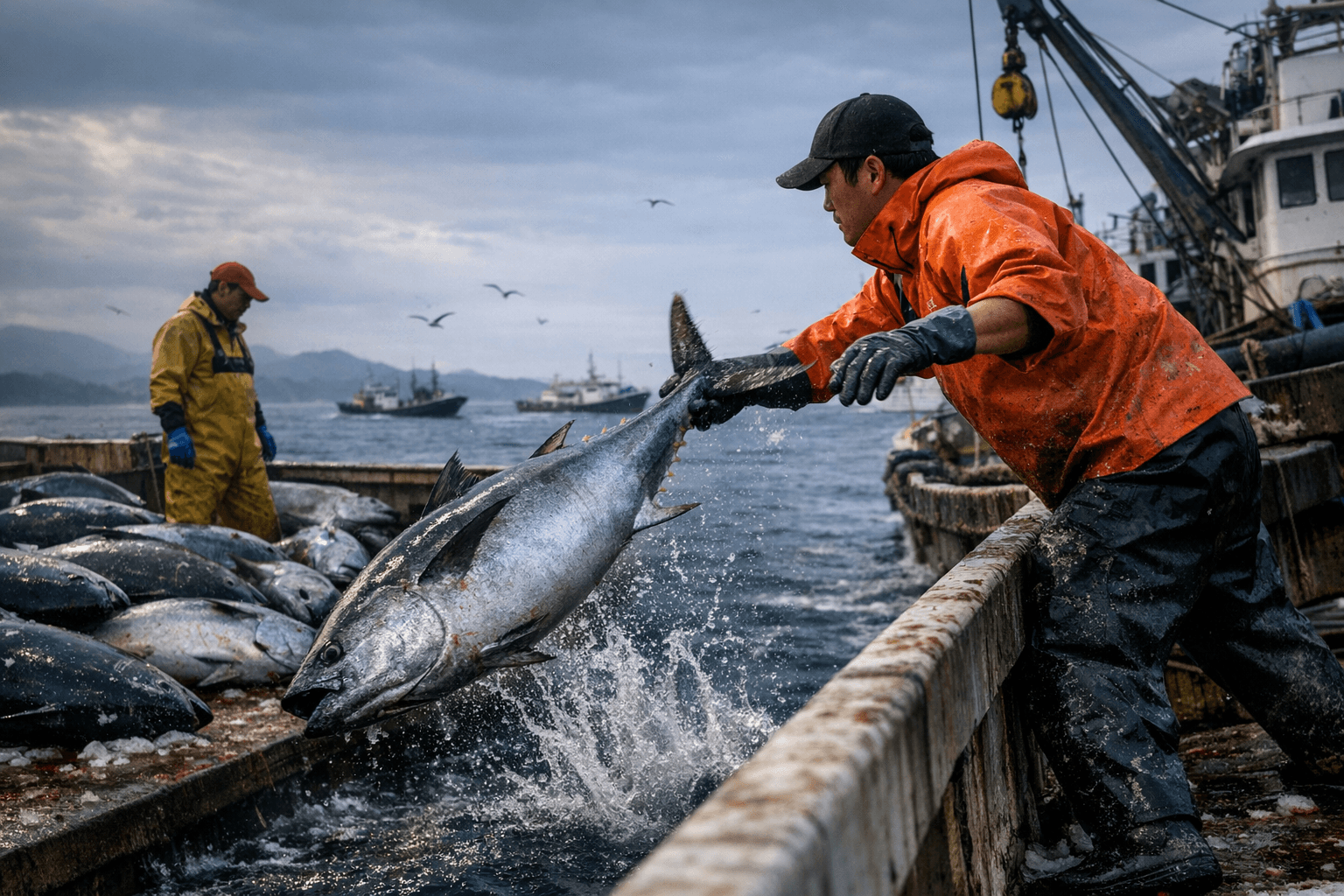
That surge has been matched by waste. In July 2025, more than 1,300 giant bluefin, each weighing more than 100 kilograms, were caught off Yeongdeok County and discarded after the regional quota had already been exceeded. Local reporting said the fish were trapped in stationary nets off Ganggu-myeon, and the lost catch was estimated at about US$1.9 million. In another case, around 600 bluefin weighing 130 to 150 kilograms each were piled up at Gangguan Port and sent for fishmeal after an over-quota catch, while about 1,200 more were removed from sale after being taken accidentally in fixed nets close to shore.
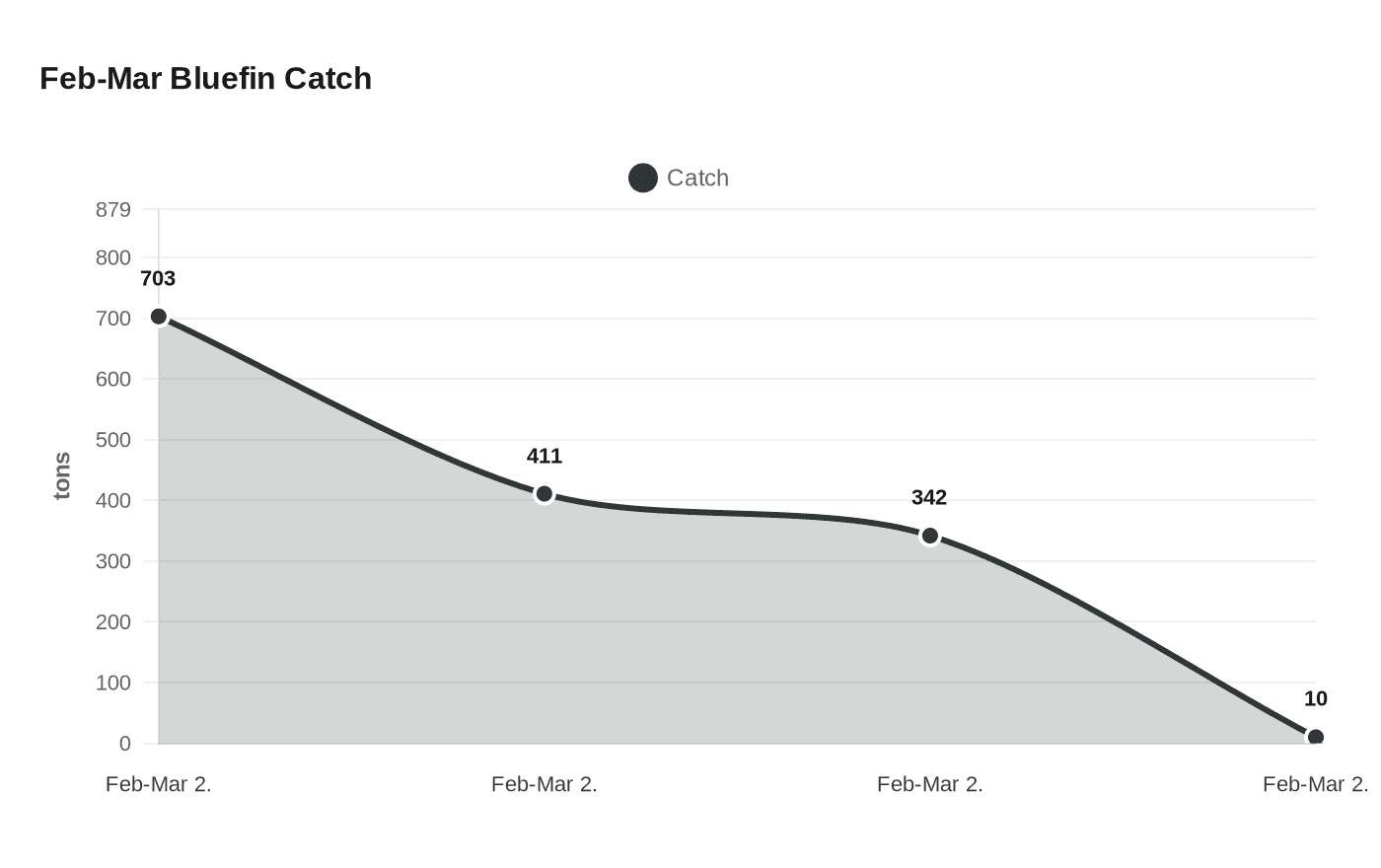
The pressure is not limited to one county. Catch totals for February and March fell from 703 tons in 2022 to 411 tons in 2023 and 342 tons in 2024, then dropped to just 10 tons in February and March 2025. Provincial quota was reported to have risen from 110 tons to 260 tons, but further increases run into the national limit of about 1,200 tons under international rules. For Korea’s bluefin fleet, the northward shift is no longer just a sign of opportunity. It is where the cracks in management are starting to show.
This article was produced by Prism’s automated news system from verified source data, official records, and press releases, then run through automated quality and moderation checks before publishing. The system is built and supervised by the people who set the standards it runs under. Read our full AI policy.
Did this article answer your question?