Bluefin Tuna Surge Along South Korea's East Sea Strains Quota Limits
On one day last July, roughly 1,300 bluefin tuna were discarded along South Korea's East Sea coast after a single province hit its quota limit amid a record surge.
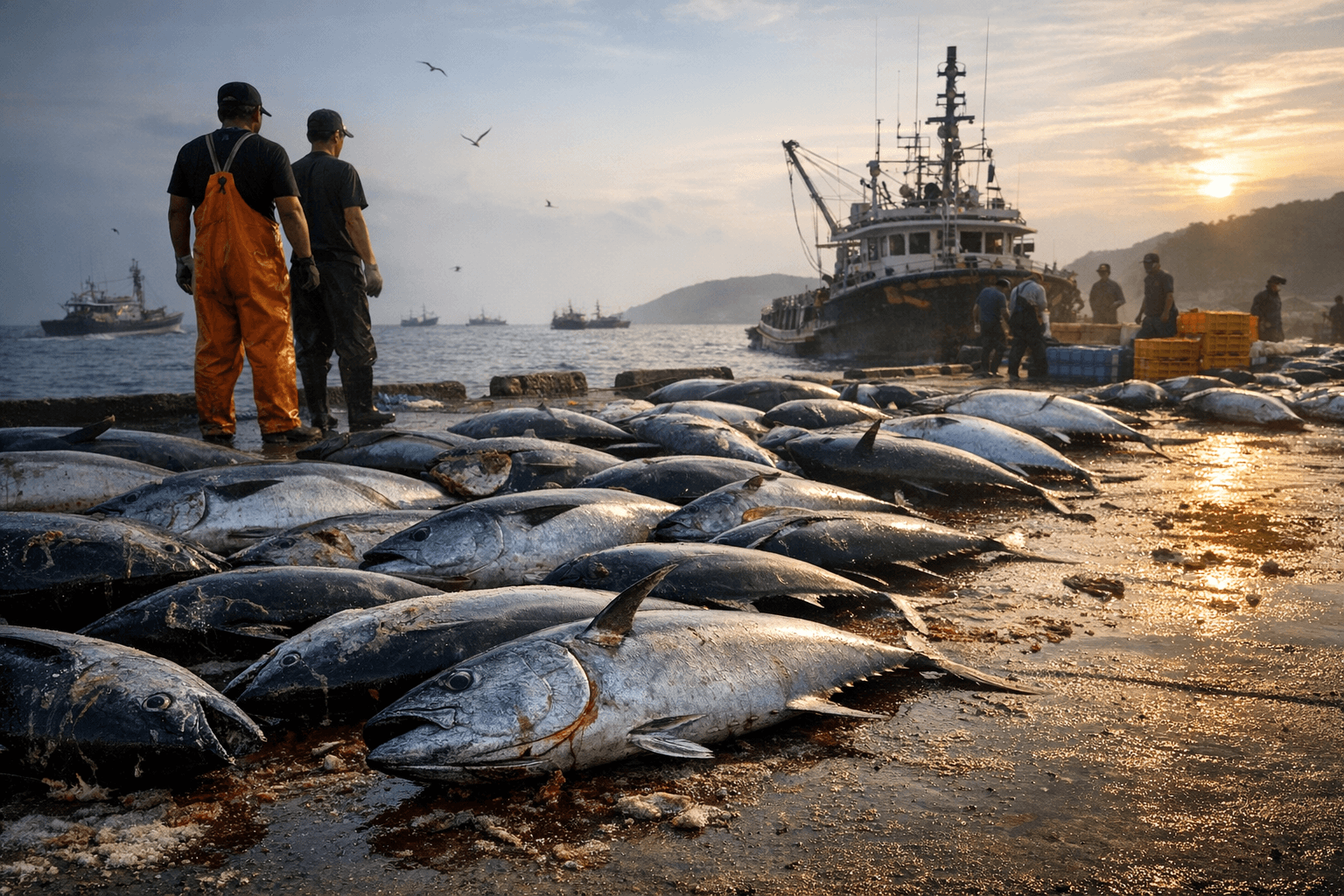
On a single day last July, fishers working North Gyeongsang Province's waters discarded approximately 1,300 bluefin tuna after local quota limits were exceeded. The fish were there. The market was there. The quota was not. That moment captures the central tension now playing out along South Korea's East Sea coastline, where a documented surge in bluefin abundance is running headlong into the hard ceiling of international allocation agreements.
Researchers at the National Institute of Fisheries Science reported this week that juvenile bluefin have been detected in waters further north than previously on record, including northern Gangwon Province, well beyond earlier concentration zones near Ulleungdo and Dokdo in North Gyeongsang Province. NIFS officials described the juvenile detections as "a meaningful signal of changes in fishery resource composition driven by rising sea temperatures." The presence of juveniles in those latitudes points toward something more significant than seasonal migration: it raises the possibility that warming East Sea waters are supporting nursery habitat for a species whose historic range sat considerably further south.
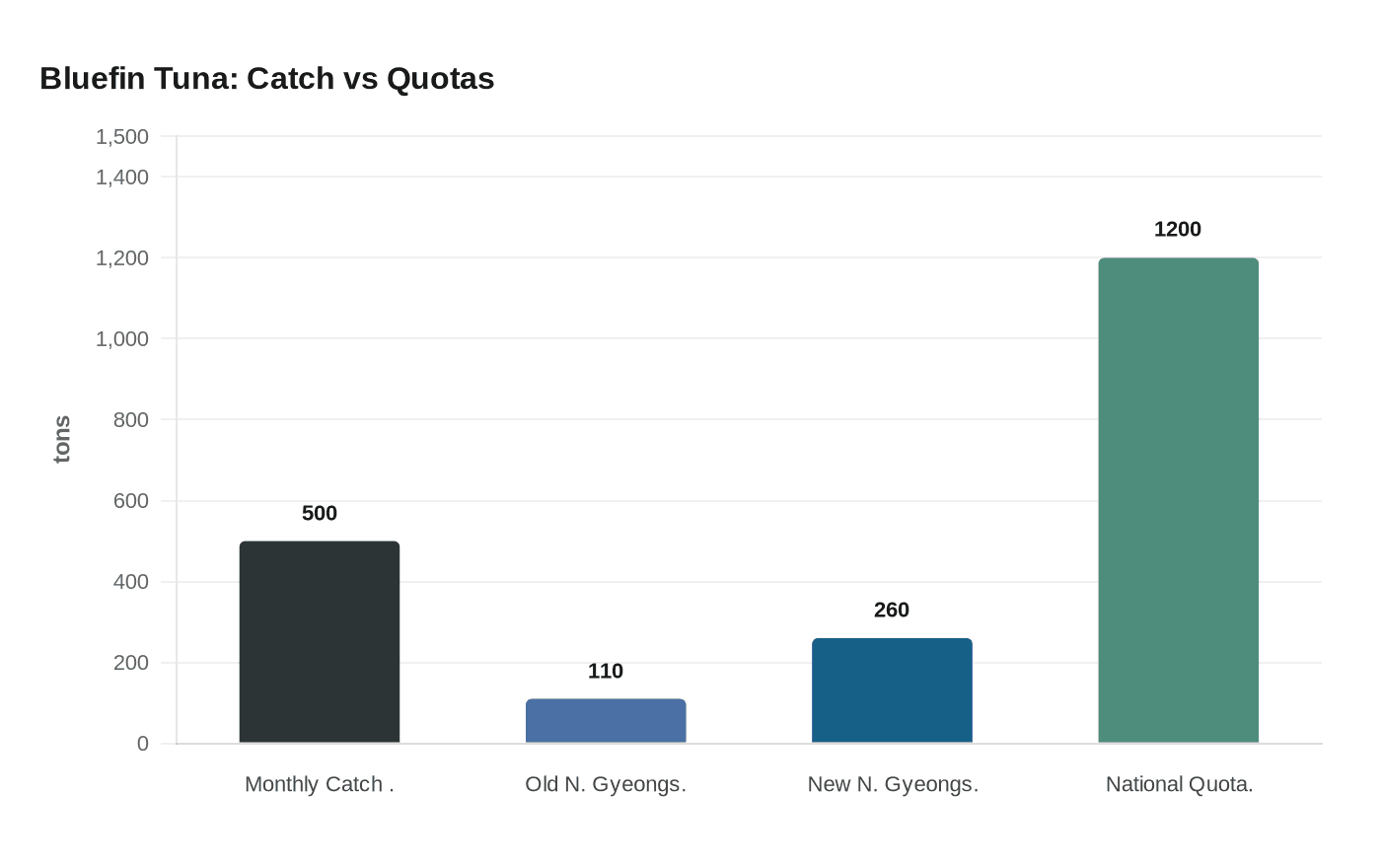
The scale of the abundance shift is striking. Catches along the eastern provinces reached roughly 500 tons in a single recent month. North Gyeongsang's provincial quota has been lifted from 110 tons to 260 tons in response, but that adjustment does little to resolve the structural problem. South Korea's national quota sits at approximately 1,200 tons, a ceiling established through international agreements, and provincial allocations must fit inside that figure. When local abundance runs hot enough to fill a province's quota in a matter of weeks, the math turns brutal fast: fish that could command premium prices at market get fed to livestock or thrown back dead instead.
The geography of this surge matters beyond the quota ledger. Ganggu Port in Yeongdeok-gun has emerged as a focal point for the regional activity, and NIFS has committed to expanding research monitoring as the season progresses. The detection of juveniles in Gangwon Province waters is the kind of data point that sets off alarm bells in both scientific and regulatory circles, because juvenile presence suggests potential local spawning use, not just transient feeding runs. If bluefin are establishing nursery grounds in previously untested northern Korean waters, current stock assessments and quota frameworks built on older distribution models may be operating on outdated assumptions.
For anyone fishing the East Sea right now, the opportunity is real and growing. More bluefin in known waters means more hookups, more charter interest, and the kind of tournament buzz that follows genuine abundance. But the regulatory picture complicates every trip. If national quota accounting triggers seasonal closures mid-year as the 1,200-ton cap approaches, fleets could find themselves shut out precisely when the fishing is at its best. The July discard event was not an anomaly to be managed away quietly: it was a preview of what happens when climate-driven range expansion outpaces the bureaucratic machinery of international fisheries governance.
NIFS plans expanded monitoring, and provincial authorities are expected to push for further national quota increases. How quickly international management bodies respond to evidence of spawning range shifts will determine whether Korean bluefin fishing develops into a sustainable regional fishery or remains caught between surging fish and static paperwork.
This article was produced by Prism’s automated news system from verified source data, official records, and press releases, then run through automated quality and moderation checks before publishing. The system is built and supervised by the people who set the standards it runs under. Read our full AI policy.
Did this article answer your question?