Casa Vieja Lodge Breaks Sailfish Records While Tuna Action Heats Up Offshore Guatemala
506 sailfish released in a single day drove Guatemala's best March in memory, and the bait-rich eddy that fueled the record is putting yellowfin in the count.
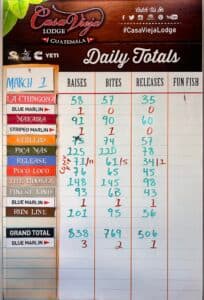
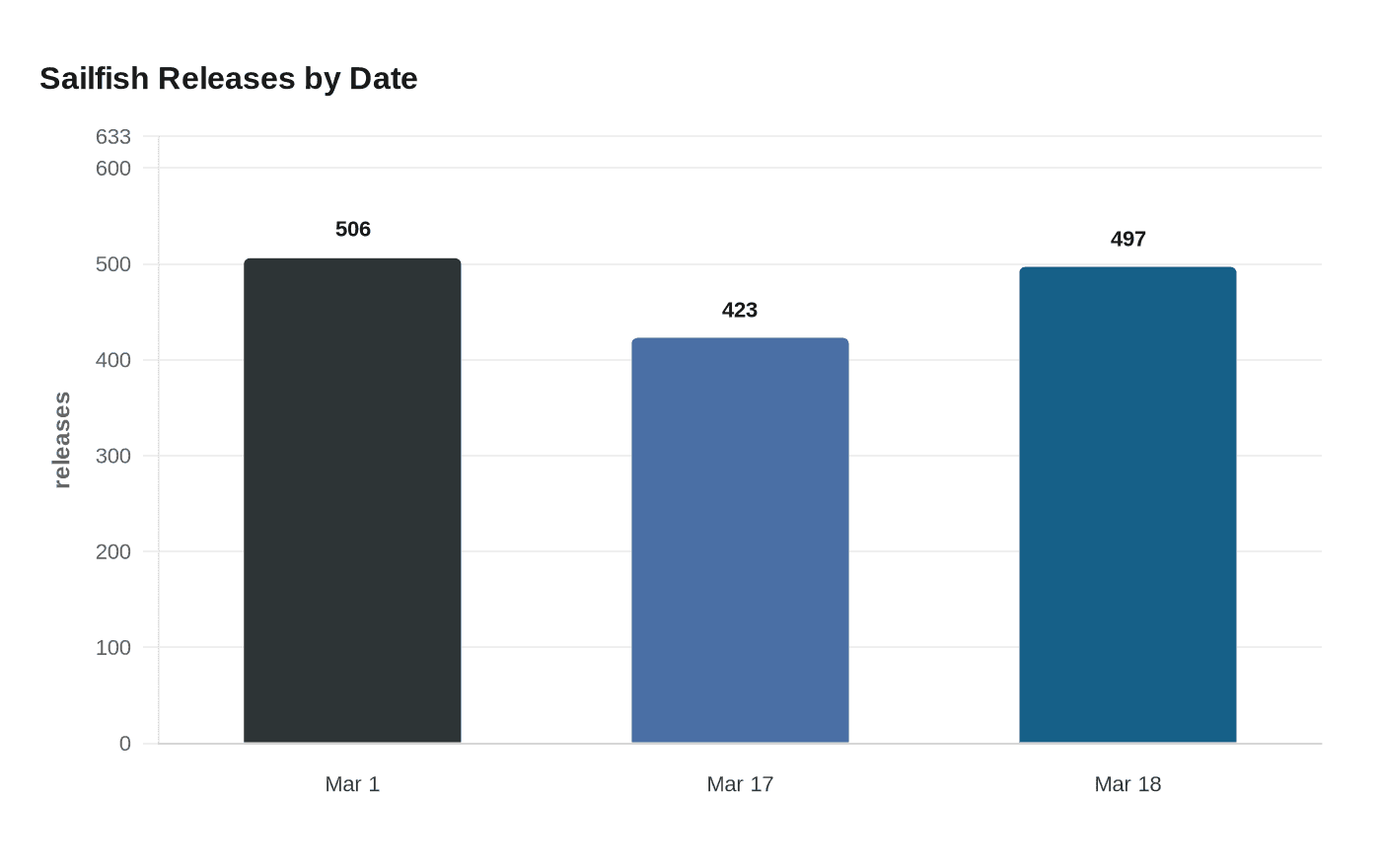
506 sailfish released on a single day is the kind of number that validates planning a trip, but for tuna anglers it carries a different message. When Casa Vieja Lodge's fleet set a new all-time daily release record on March 1, then added 423 on March 17 and 497 on March 18, the underlying story was a bait field so dense and a forage chain so stacked that multiple pelagic species were compressing into the same offshore windows at once.
The Guatemalan coast is shaped by two converging current systems: strong west-to-east flows from Mexico colliding with east-to-west currents moving up from El Salvador. That collision produces a massive natural eddy that concentrates nutrients and baitfish year-round. Roughly 12 miles from the marina sits an underwater canyon known locally as the pocket, dropping to 3,000 to 4,000 feet, where upwelling currents push bait to the surface and pin it against current edges. March amplifies all of it. Warm Pacific surface temperatures, typically in the low-to-mid 80s this time of year, sit squarely within the preferred range for yellowfin tuna, and when sailfish are stacking in the numbers Casa Vieja reported, it means forage is not just present but abundant enough to hold fish from multiple species simultaneously on the same structure.
The honest read on the tuna count is that 6 fish in 26 days across the entire fleet is opportunistic, not targeted. Casa Vieja's waters run deep in sailfish and marlin. Yellowfin are part of the mixed-pelagic picture alongside the 9 mahi-mahi in the month-to-date tally, but they are not the primary draw in March, and that distinction matters when building a trip around tuna. What the numbers do confirm is that forage conditions are strong enough to produce multi-species encounters: tuna are present and feeding on the same bait lines that sailfish are working, which means a captain running teaser spreads can pivot quickly when yellows materialize on a bait ball.
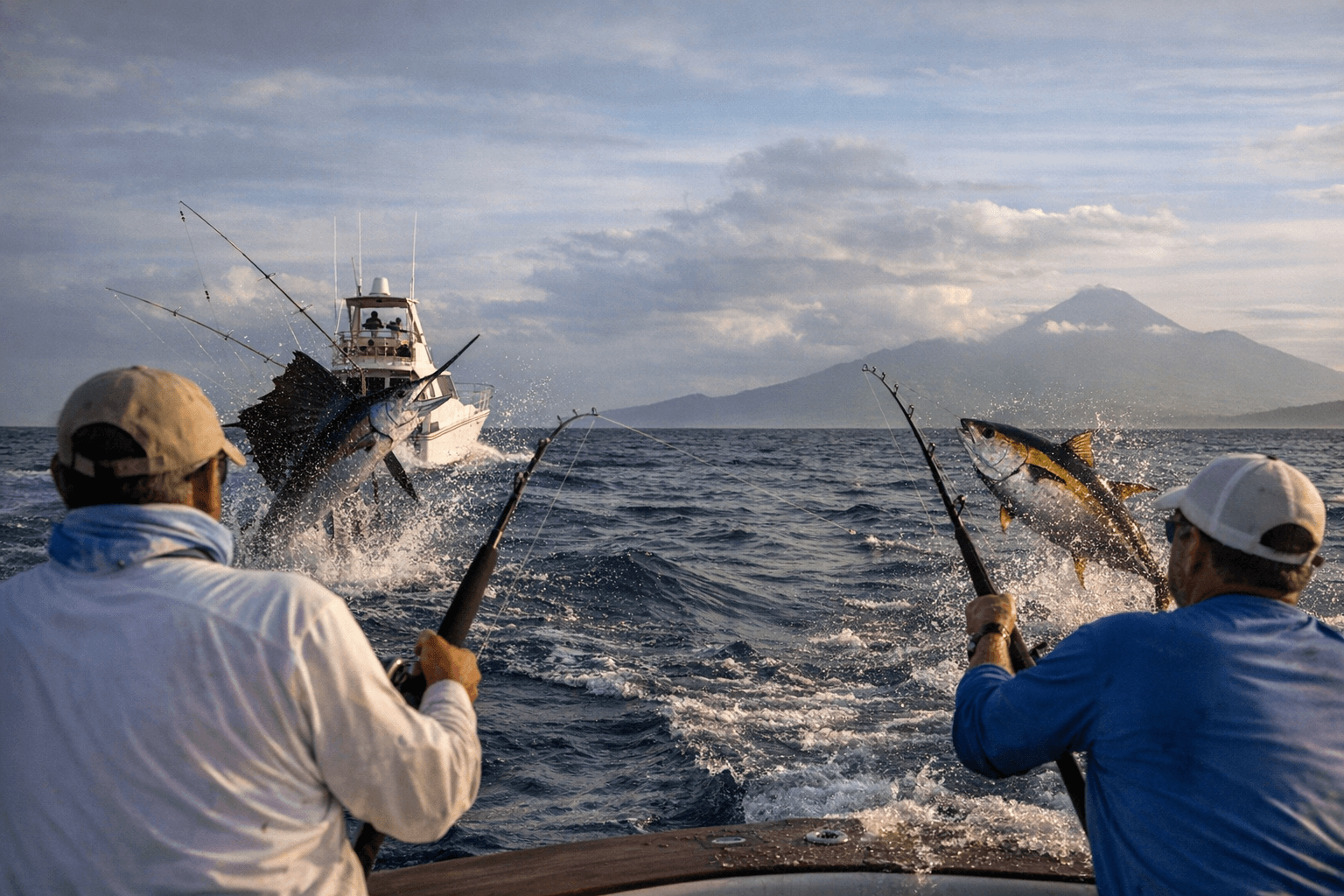
The tactics that give tuna the best shot within this framework involve watching color changes and temperature breaks along current edges, particularly in the early-morning hours when bait schools are near the surface. Trolling with a mix of lighter lures sized for sails and heavier setups for larger yellowfin gives coverage when the fleet is working live bait. If a school shows on the surface, switching to poppers or pitch baits while the mate rigs a heavier outfit is the move most Casa Vieja captains accommodate readily.
For anglers considering a trip, the sailfish record cycle has a predictable side effect: booking pressure spikes. Charter demand accelerates after a lodge publicizes numbers like 506, and prime dates in April and May fill fast. When contacting a captain, the key question is not "are there tuna?" but "where are the current edges running and how much bait are you marking on the sounder?" A captain who answers with specifics about color changes and bait marks is working the conditions. One who leads with guarantee language is not.
March through May sits at the productive end of Guatemala's October-through-June peak window. The same eddy structure that drove the record sailfish month remains in place, and for anglers willing to treat tuna as a legitimate bonus inside a mixed-pelagic pattern rather than the primary target, the offshore grounds off Puerto San José in this window are genuinely hard to beat.
This article was produced by Prism’s automated news system from verified source data, official records, and press releases, then run through automated quality and moderation checks before publishing. The system is built and supervised by the people who set the standards it runs under. Read our full AI policy.
Did this article answer your question?