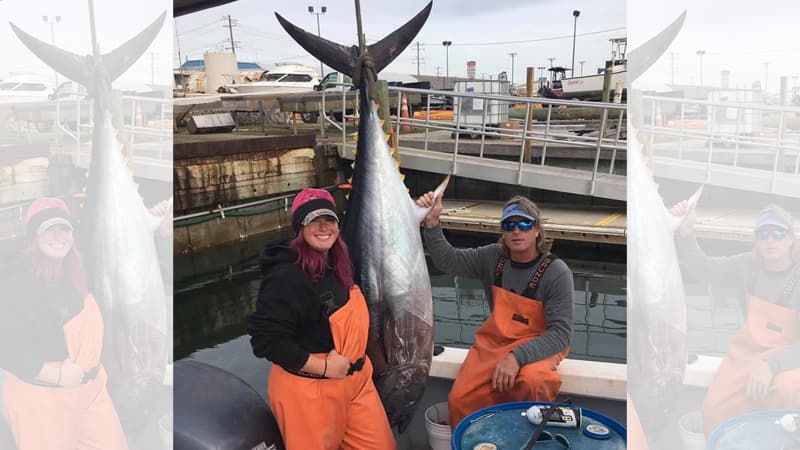
Complete Tuna Fishing Guide: Techniques, Tackle and Reading Fish Behavior
A practical playbook for catching bluefin, yellowfin and other tuna using surface, subsurface and deepwater tactics, with tackle choices and behavior cues that turn sightings into hookups.
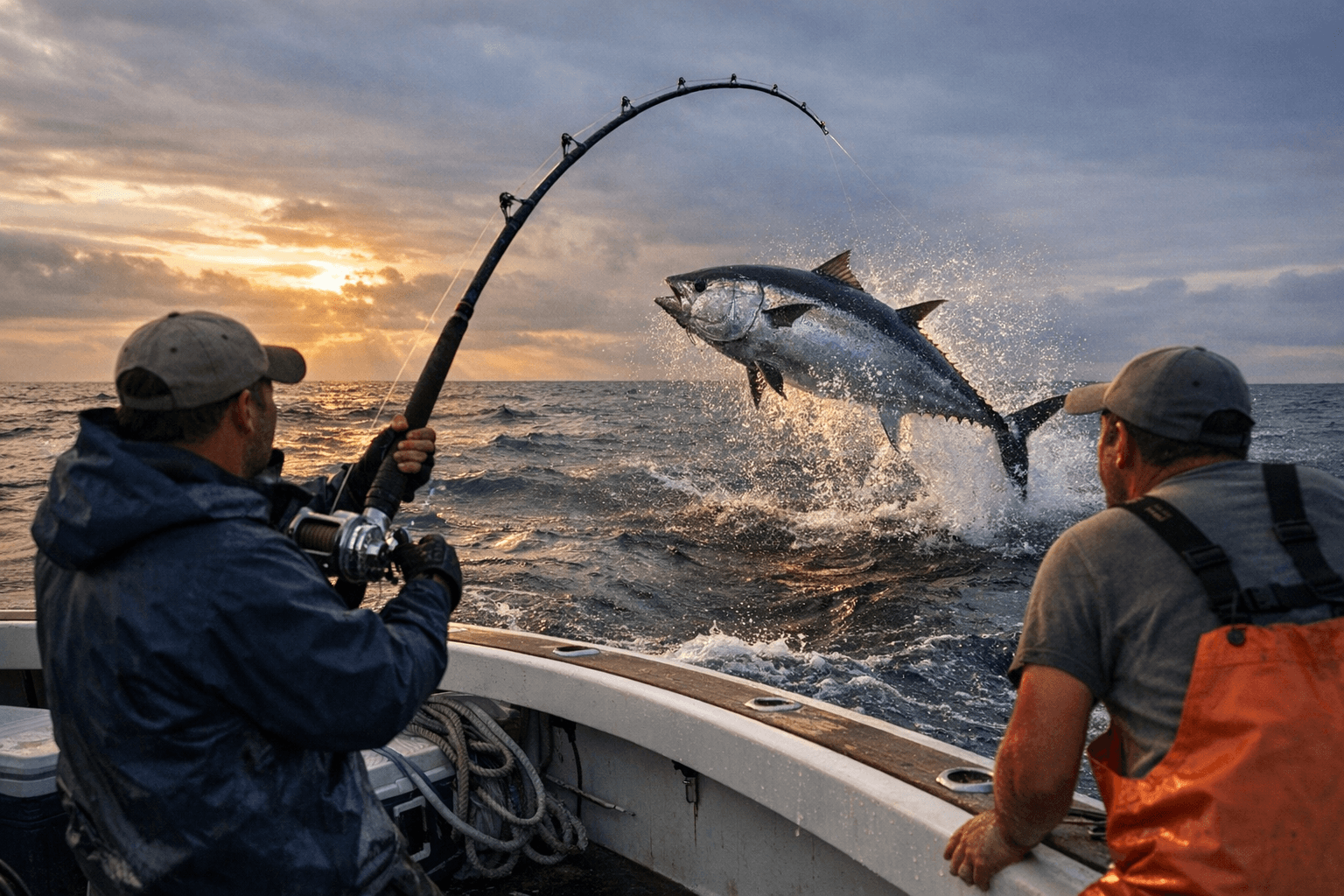
Tuna respond to pressure, presentation and depth. Match the lure and tackle to where fish are holding in the water column and you convert sightings and boils into hooked fish. This guide lays out surface, subsurface and deepwater options, how to read tuna behavior, and how to match rod, reel and line to the method and target species.
Surface work calls for poppers and stickbaits when tuna are chasing bait near the top. Cast or work live-action poppers into active boils and keep retrieve speed varied; fast strips draw reaction strikes while short pauses can trigger follows. Stickbaits excel when tuna are cruising just below the surface; a long, steady retrieve with occasional hard twitches imitates fleeing bait. Watch bird activity, flying bait and slick edges for surface feeding, when you see a line of birds or a distinct boil, bring poppers and stickbaits to the spot quickly and present aggressively.
Subsurface methods include stickbaits fished deeper and slide baits that fall into the zone where fish are holding. If tuna are leaving marks on fish finders or you see working fish with no surface commotion, switch to subsurface presentations that run below the splash zone. Slow the cadence compared with surface work and focus on control during pauses; a well-timed drop or sink often prompts strikes from less aggressive fish.
Deepwater approaches rely on irons, vertical jigs and deep trolling with ballyhoo. When fish are holding on structure or at thermoclines, use heavier irons and jigs to reach them quickly and employ a crisp jig cadence to imitate fleeing bait. Deep trolling with ballyhoo works when birds are absent but sonar shows targets; keep trolling spread wide and adjust speed until tuna react.
Tackle choices must follow method and fish size. Match rod action, reel gearing and line class to the presentation: lighter rods and braid for feathering poppers and light stickbaits; stiffer rods and stronger reels for heavy irons, jigs and deep trolling. Leader setups vary by presentation and fish toothiness; use appropriate shock leaders and fluorocarbon or wire where needed to prevent cut-offs.
Reading behavior is the multiplier. Look for bait schools, slicks, bird lines and flying bait to locate tuna layers. Observe how fish take bait: explosive surface sprints favor poppers and fast stickbaits, hesitant subsurface takes favor slide baits and jigs. Adjust timing on casts, pause lengths and jig cadence as strikes dictate.
For readers on the water, carry a mix of poppers, stickbaits, slide baits, irons and ballyhoo setups and move quickly between surface, subsurface and deep presentations as behavior changes. Keep tackle matched to the job and let fish behavior set the presentation. When you combine the right lure with the right depth and a decisive presentation, hookups follow more often, and that keeps lines tight and smiles wide on deck.
Know something we missed? Have a correction or additional information?
Submit a Tip