Consumers Must Fund Sustainable Tuna Management as Climate Pressures Mount, WWF Says
WWF's Jason Clay says consumers, not agencies, must ultimately fund sustainable tuna management as climate change strains global fisheries.

The bill for sustainable fisheries management lands squarely with consumers, according to WWF's Jason Clay, who argues that the funding chain for protecting tuna stocks runs directly through the people driving demand at the market level.
Clay's position cuts against the assumption that government agencies or international bodies bear primary responsibility for keeping fisheries viable. In his framing, consumer purchasing decisions are the engine that either finances responsible management or starves it of resources. With climate change accelerating pressure on fish populations worldwide, that funding gap is becoming harder to ignore.
The argument carries particular weight for tuna fisheries, where the intersection of global demand, long migration routes, and shifting ocean conditions makes management both expensive and urgent. Climate-driven changes in water temperature and prey distribution are already disrupting the predictable patterns that fisheries managers and charter captains have relied on for decades.
Clay pointed to sourcing challenges like those seen with Chilean mackerel as a concrete example of how supply chains fracture when sustainable management isn't adequately resourced. Chilean mackerel, once a reliable component of global fishmeal supply chains, has faced severe stock collapses tied to a combination of overfishing and climate variability, a cautionary template that tuna advocates don't want repeated in bluefin, yellowfin, or bigeye stocks.
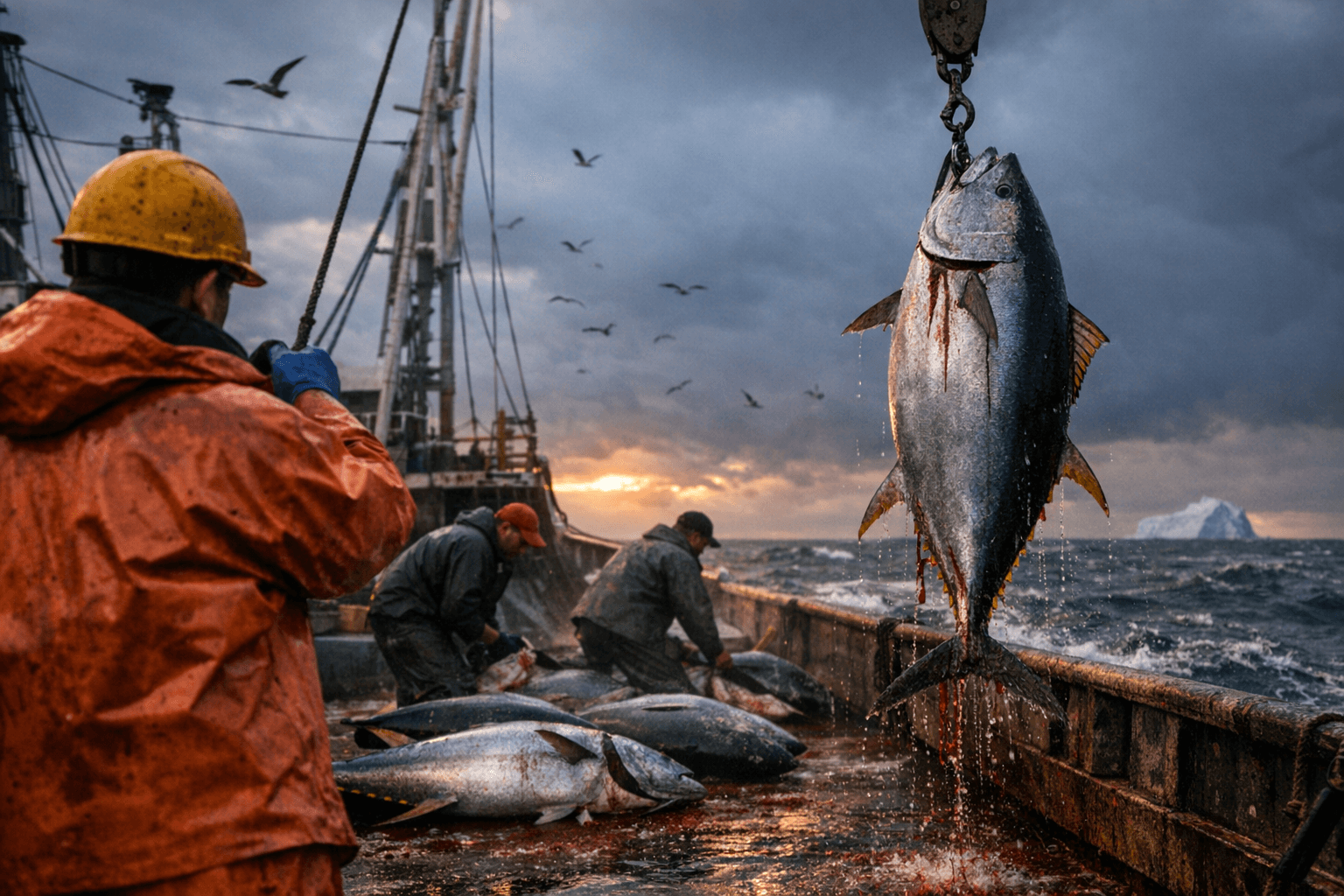
The WWF's broader case is straightforward: without money flowing into science, monitoring, and enforcement, sustainability certifications and management plans remain aspirational rather than functional. And that money, Clay contends, has to originate somewhere in the supply chain that consumers anchor.
For anyone who has watched bluefin quotas tighten, bycatch rules stiffen, and international commission negotiations drag on, the underlying resource question is familiar. What Clay is pushing is an acknowledgment that those processes don't run on goodwill alone, and that the recreational and commercial fishing communities ultimately share the cost burden with the consumers buying canned albacore at the grocery store or sashimi at a waterfront restaurant.
This article was produced by Prism’s automated news system from verified source data, official records, and press releases, then run through automated quality and moderation checks before publishing. The system is built and supervised by the people who set the standards it runs under. Read our full AI policy.
Did this article answer your question?