Early Bluefin Tuna Hauls Surge Off Sado Island, Niigata Prefecture
Bluefin are arriving off Sado Island weeks before the usual late-May-to-June peak, hinting at an early bite window in Niigata Prefecture.
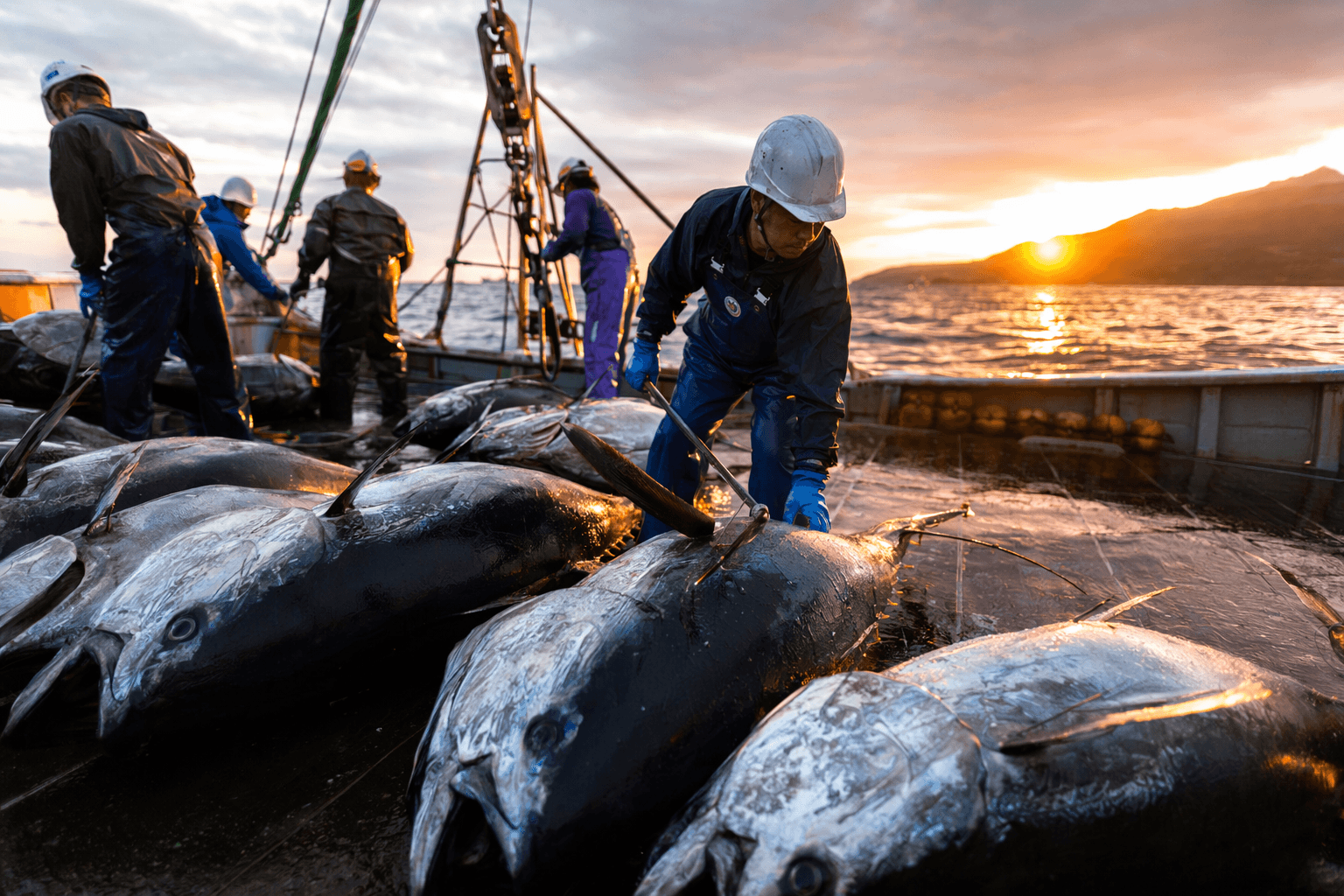
Boats working off Sado Island are bringing in big Pacific bluefin tuna weeks before the fish usually hit their stride, turning Niigata Prefecture’s spring run into an early-season shock. The island’s bluefin peak normally lands in late May and June, but crews are already returning to port with bumper hauls from the Sea of Japan, a shift that has local fishermen watching closely to see whether this is the start of a longer season rather than a one-off burst.
The fish in question are Pacific bluefin tuna, Thunnus orientalis, a single Pacific-wide stock managed across the ocean basin by the Western and Central Pacific Fisheries Commission and the Inter-American Tropical Tuna Commission. That broader management backdrop matters because the early Sado catch is not happening in a vacuum. Coastal Japan has landing records for Pacific bluefin dating back to 1804, and the historical record shows how deeply this fish is woven into Japanese coastal work. After 1949, catches increased sharply, and the latest stock assessment from 2024 says spawning stock biomass has risen over the last twelve years, reaching the second rebuilding target in 2021.
That progress sits alongside a conservation framework that has already forced hard limits. A 2024 IATTC resolution says member countries reduced Pacific bluefin catches by 40% from 2012 to 2021. The International Scientific Committee for Tuna and Tuna-like Species in the North Pacific Ocean says its Pacific bluefin working group, chaired by Shuya Nakatsuka, lists 2024 as the most recent stock assessment, and its landings statistics are updated each year after the June plenary meeting. For Sado Island, that means the strongest reading on the season will not be locked in until later, but the current pattern is already telling crews something important about timing.
The market stakes are immediate. Recent Japanese landing-price data for bluefin tuna at main ports still sit in the low-thousands of yen per kilogram, roughly 1,700 to 4,700 yen in the monthly series, so an early flush of fish can move real money for local boats, buyers, and port crews. On an isolated island like Sado, off Niigata Prefecture, a strong run this early does more than fill the docks. It can reset expectations for the whole spring, and if the fish keep showing up ahead of schedule, the season may have opened with a warning flare instead of a warm-up.
This article was produced by Prism’s automated news system from verified source data, official records, and press releases, then run through automated quality and moderation checks before publishing. The system is built and supervised by the people who set the standards it runs under. Read our full AI policy.
Did this article answer your question?