European Firms Use Foreign Flags to Expand Indian Ocean Tuna Access
European tuna fleets are using foreign flags to reach Indian Ocean quotas, raising fresh questions about who controls the catch and how much pressure yellowfin and bigeye can handle.
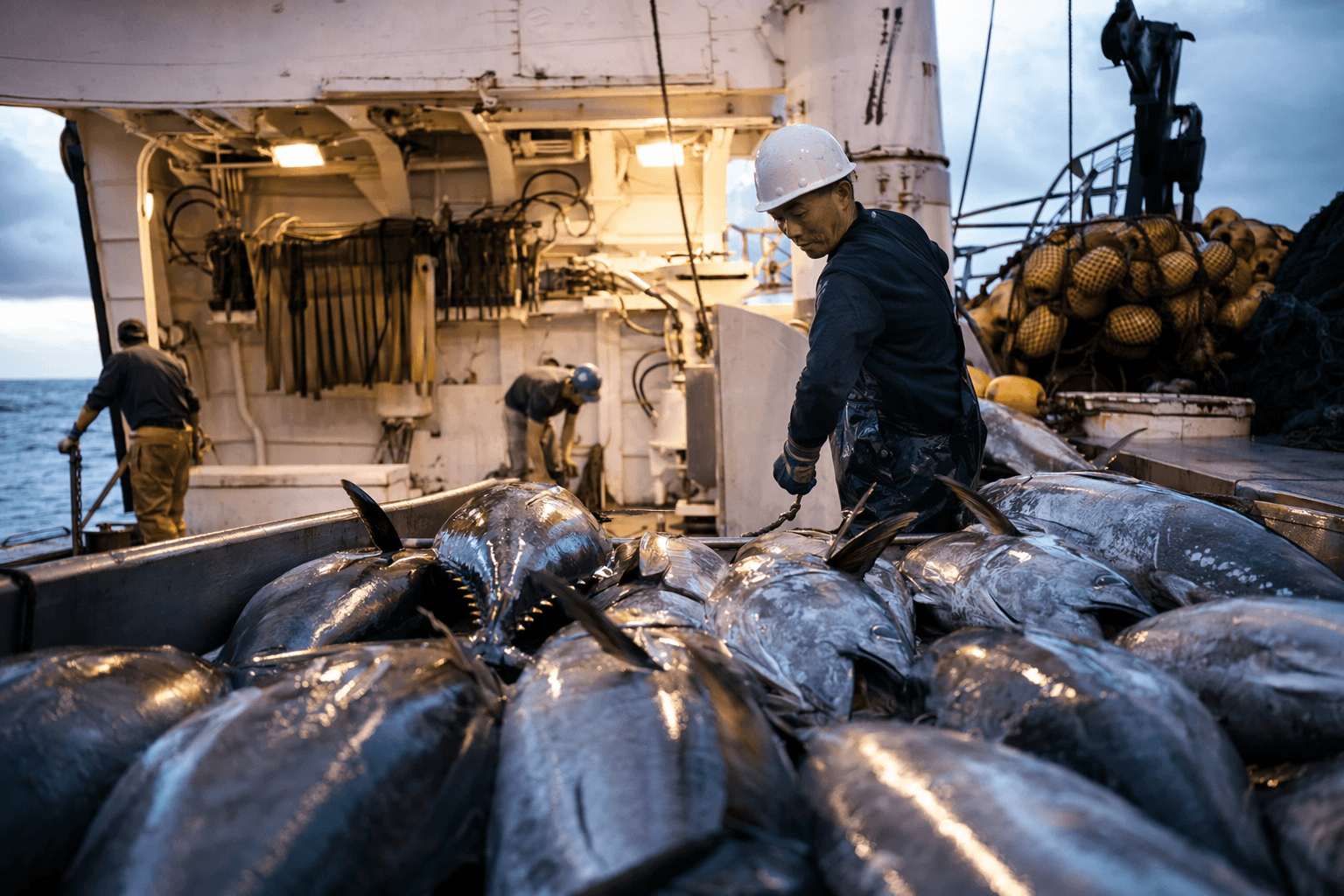
Foreign flags are giving European tuna firms a bigger reach into the Indian Ocean, and that matters far beyond one fleet roster. When an enormous purse seiner can carry as much as 4 million pounds of fish, the name on the stern can shape who gets access to quota, how pressure on yellowfin and bigeye is counted, and whether the market is seeing the true footprint of industrial tuna fishing.
A new report says European-owned vessels have increasingly registered under the flags of Mauritius, Tanzania, Oman, Kenya and the Seychelles to operate inside quota systems that might otherwise be harder to access directly from Europe. The fleet has grown to more than 50 purse seiners and support vessels through that reflagging practice, and the report says European companies now capture roughly a third of the tropical tuna catch in the region. The catch is not abstract. Skipjack, yellowfin and bigeye from these boats ultimately feed the global canned-tuna supply chain.
Jess Rattle of Blue Marine Foundation said the group wanted to know who really owned the vessels, and that concern sits at the center of the accountability gap. The report does not say the practice is illegal, but it argues that ownership layers can blur the real scale of European involvement and make it harder for regulators and observers to judge how much strain the fleet puts on shared tuna stocks. Blue Marine says the EU has dominated Indian Ocean tuna fleets since the 1980s, and at times Spanish- and French-flagged boats accounted for nearly 40% of the catch of the region’s three main tropical tuna species.
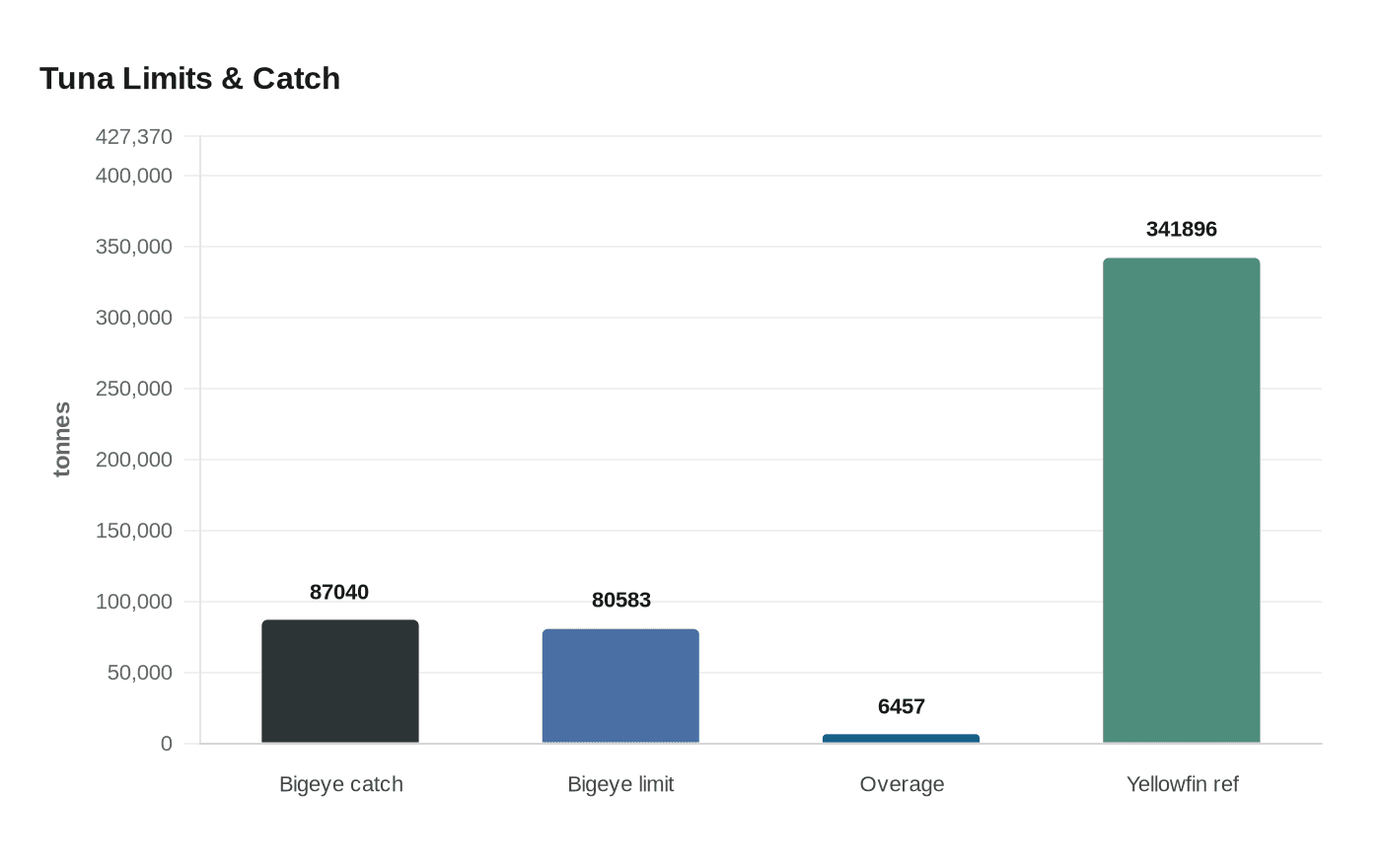
The timing is critical. The Indian Ocean Tuna Commission will hold its 30th session in Malé, Maldives, from May 11-15, 2026, where regional management decisions are expected to be debated. The commission describes itself as the intergovernmental body responsible for managing tuna and tuna-like species in the Indian Ocean, and its fishery-management materials say catch limits for tropical tuna species are adopted through binding measures. The debate lands in a fishery already under pressure: IOTC says yellowfin’s 2025 stock status was estimated from a 2024 assessment, and the annual yellowfin limit for 2025/2026 sits below the reference catch limit of 341,896 tonnes. Bigeye is under even sharper scrutiny, with IOTC reporting 2024 catch at 87,040 tonnes, 6,457 tonnes above the 80,583-tonne limit.
The International Seafood Sustainability Foundation urged the commission in April 2026 to secure funding for yellowfin and albacore work and strengthen bycatch mitigation. For tuna fishermen, whether they run charter boats, private rigs or industrial sets, the fight over foreign flags is really a fight over transparency, fair competition and whether the Indian Ocean’s tuna rules can still command trust.
Know something we missed? Have a correction or additional information?
Submit a Tip