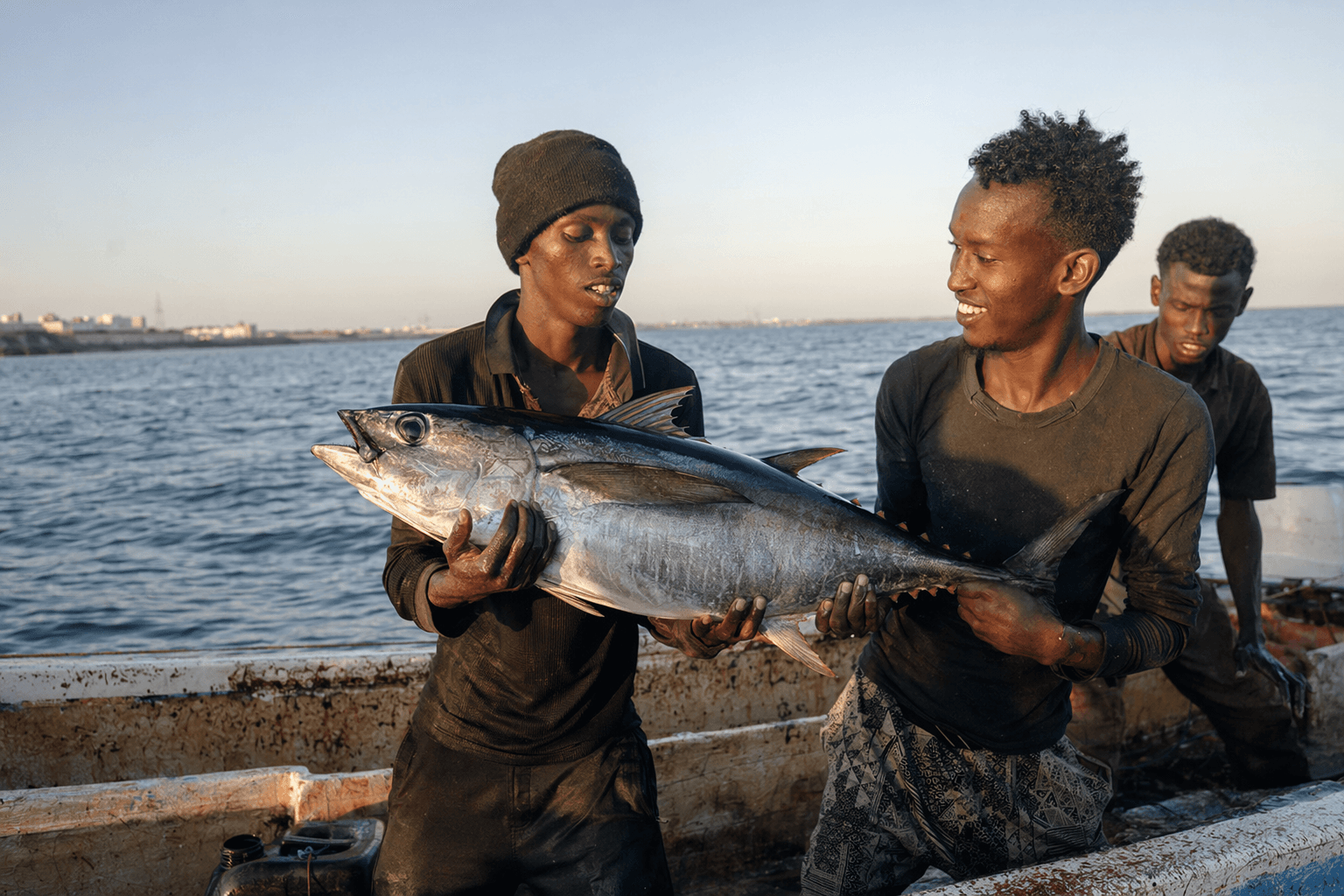
Young Somali fishermen land yellowfin tuna off Mogadishu with handlines
Young Somali fishermen hauled a 100-pound yellowfin on handlines less than a mile from Mogadishu, a nearshore catch that cut straight through the usual offshore assumptions.
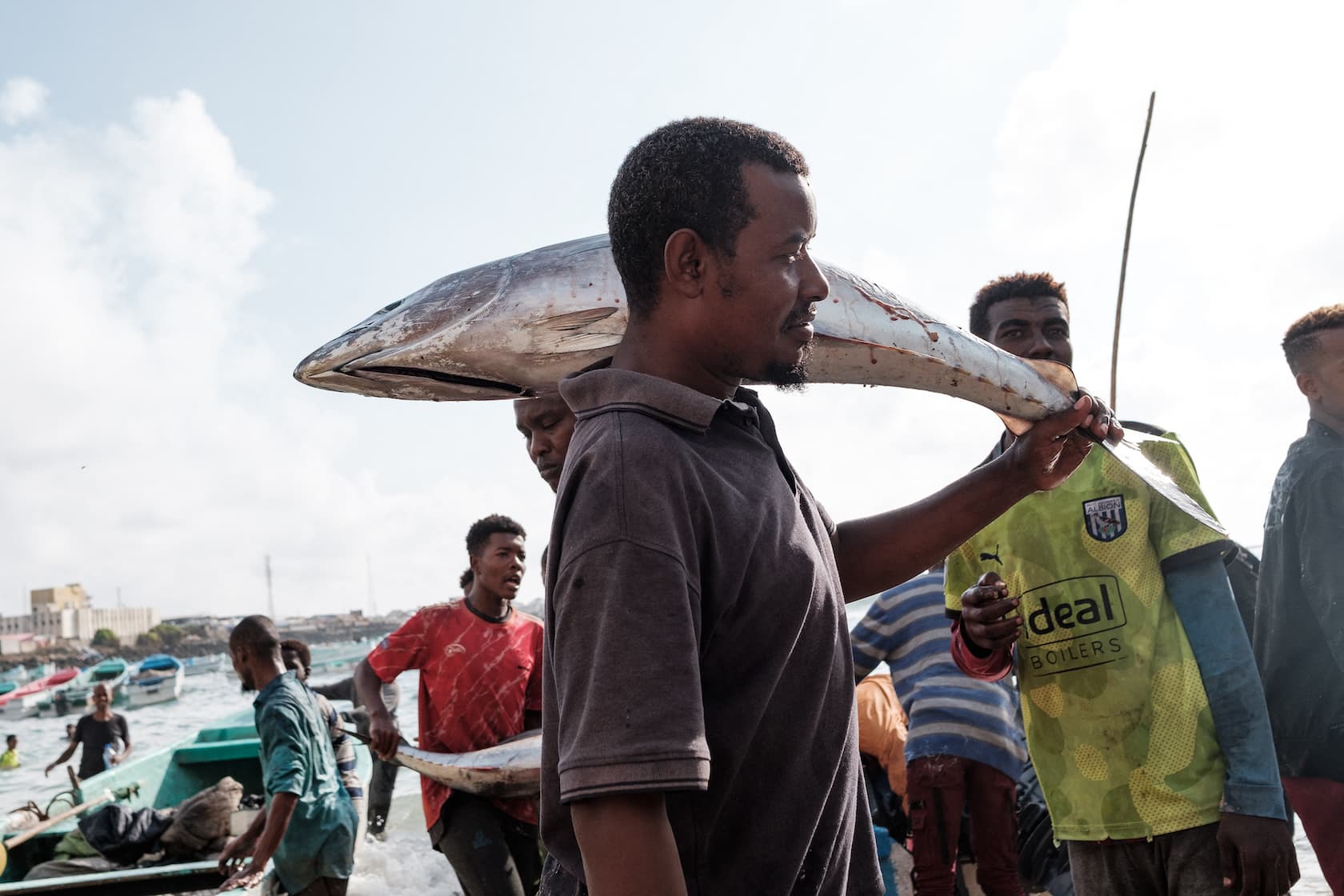
A 100-pound yellowfin tuna came up on handlines less than a mile off Mogadishu, and the catch landed with the kind of force that makes seasoned tuna hands stop and look twice. The fish was taken by young Somali fishermen working the traditional way, in a scene that showed how much power still sits close to shore off Somalia’s capital.
That matters because Somalia’s Indian Ocean coast has long been described as one of the world’s most productive marine ecosystems, with valuable pelagic tuna resources sitting inside a fishery that remains badly underbuilt. FAO estimates the sector generates only about 2% of GDP, while the Somali Development and Reconstruction Bank puts the contribution at 3% of GDP and 2% of exports. With a 3,333 km coastline and an Exclusive Economic Zone estimated to sustainably produce 380,000 to 500,000 metric tons annually, Somalia has room to grow if the fleet, the data and the enforcement ever catch up.
The handline catch also fits the way much of Somali fishing still works. FAO fisheries documentation says canoe-based fishers commonly use simple gear such as handlines, gill nets and longlines, in part because many boats are too small for more industrial setups. Somalia’s Ministry of Fisheries and Blue Economy told the Indian Ocean Tuna Commission in 2024 that no industrial fishing fleet operates under the Somali flag, and that industrial fishing in its waters is carried out by foreign vessels.
That same report said the government renewed an access agreement in 2023 with the Chinese Overseas Fishing Association, granting licenses to 21 COFA vessels to target tuna and tuna-like species in Somalia’s EEZ. The backdrop is familiar and ugly: ENACT Africa and the Institute for Security Studies have warned that illegal tuna fishing off Somalia has reached alarming levels, with losses estimated at about US$300 million a year. The problem is transnational, and enforcement remains thin because the IOTC has no direct law-enforcement mandate.
Somali officials and international fisheries managers are trying to change that. Abdulkadir Abdi has said tuna is a vital pillar of food security and the economy, while FAO fisheries data specialist Fardowsa Wehliye has warned that pulling too many young fish from the water can damage future spawning stocks. FAO says yellowfin and skipjack remain relatively numerous in Somali waters, but bigeye is under significant stress, and some coastal species show signs of overexploitation.
The yellowfin off Mogadishu was more than a good catch. It was a reminder that Somalia still has a real tuna fishery hiding in plain sight, one powered by local skill, close-in water and an ocean system that has been underestimated for decades.
This article was produced by Prism’s automated news system from verified source data, official records, and press releases, then run through automated quality and moderation checks before publishing. The system is built and supervised by the people who set the standards it runs under. Read our full AI policy.
Did this article answer your question?