FFA Champions Pacific Tuna as Sustainable Fisheries Model at FAO Iceland Meeting
Pacific tuna is the only major fishery region where none of its stocks are overfished, FFA told the FAO COFI Sub-Committee in Iceland.
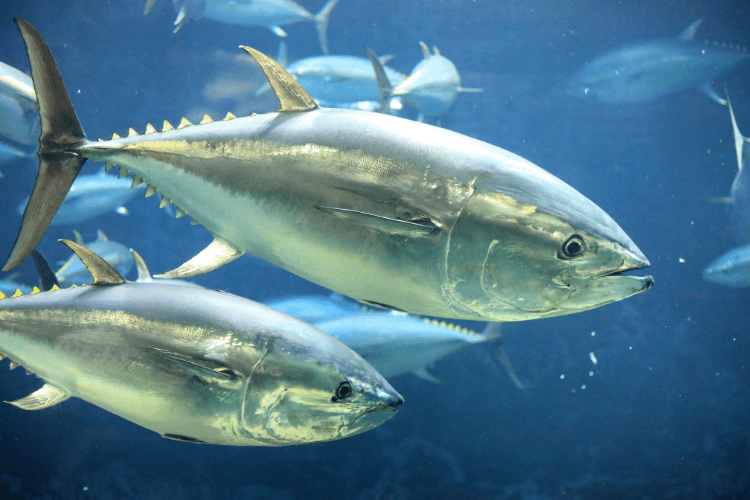
The Pacific Islands Forum Fisheries Agency went to Iceland with a straightforward argument: the western and central Pacific tuna fishery works, and the rest of the world should pay attention to why.
At the FAO Committee on Fisheries COFI Sub-Committee meeting, FFA held up Pacific tuna management as a model for precautionary, science-based governance, making the case that the region's approach to monitoring, control and surveillance has produced results no other major tuna fishery can claim. According to FFA, the Pacific Islands region holds the largest and healthiest tuna stocks on the planet, with all of its major stocks sustainably fished and none classified as overfished.
That distinction matters because it doesn't happen by accident. FFA member nations collectively manage roughly 10 percent of the world's ocean and 20 percent of global marine jurisdictions, waters that are simultaneously threatened by climate change and heavily depended upon for food security, livelihoods, and national revenue. The Regional Roadmap for Sustainable Pacific Fisheries, endorsed by Pacific Islands Forum Leaders back in 2015, was designed specifically to optimize tuna's economic returns while keeping those stocks intact.
The Iceland meeting also put combating IUU fishing front and center. Illegal, unreported and unregulated fishing remains one of the most persistent threats to any well-managed fishery, and FFA's pitch was that regional cooperation and robust MCS infrastructure are the practical answer. Operation Rai Balang 2026, concluded earlier this month, demonstrated exactly that approach, with FFA and its members launching what the agency described as strong, coordinated surveillance action to open the 2026 fishing year.
The science behind the sustainability claim has been tested. A pre-assessment of western and central Pacific Ocean tuna fisheries against Marine Stewardship Council principles, conducted by Mr. Len Rodwell of FFA and Dr. Tim Adams of the Secretariat of the Pacific Community, found the fishery entering a new phase of enhanced management following the entry into force of the Western and Central Pacific Fisheries Convention. The same assessment was candid about persistent pressure points: continued fleet growth has driven increased fishing mortality in some stocks globally, and bycatch of sea turtles, seabirds, marine mammals, sharks, and juvenile tunas in purse seine and pelagic longline operations remains a documented problem the region is still working to resolve.
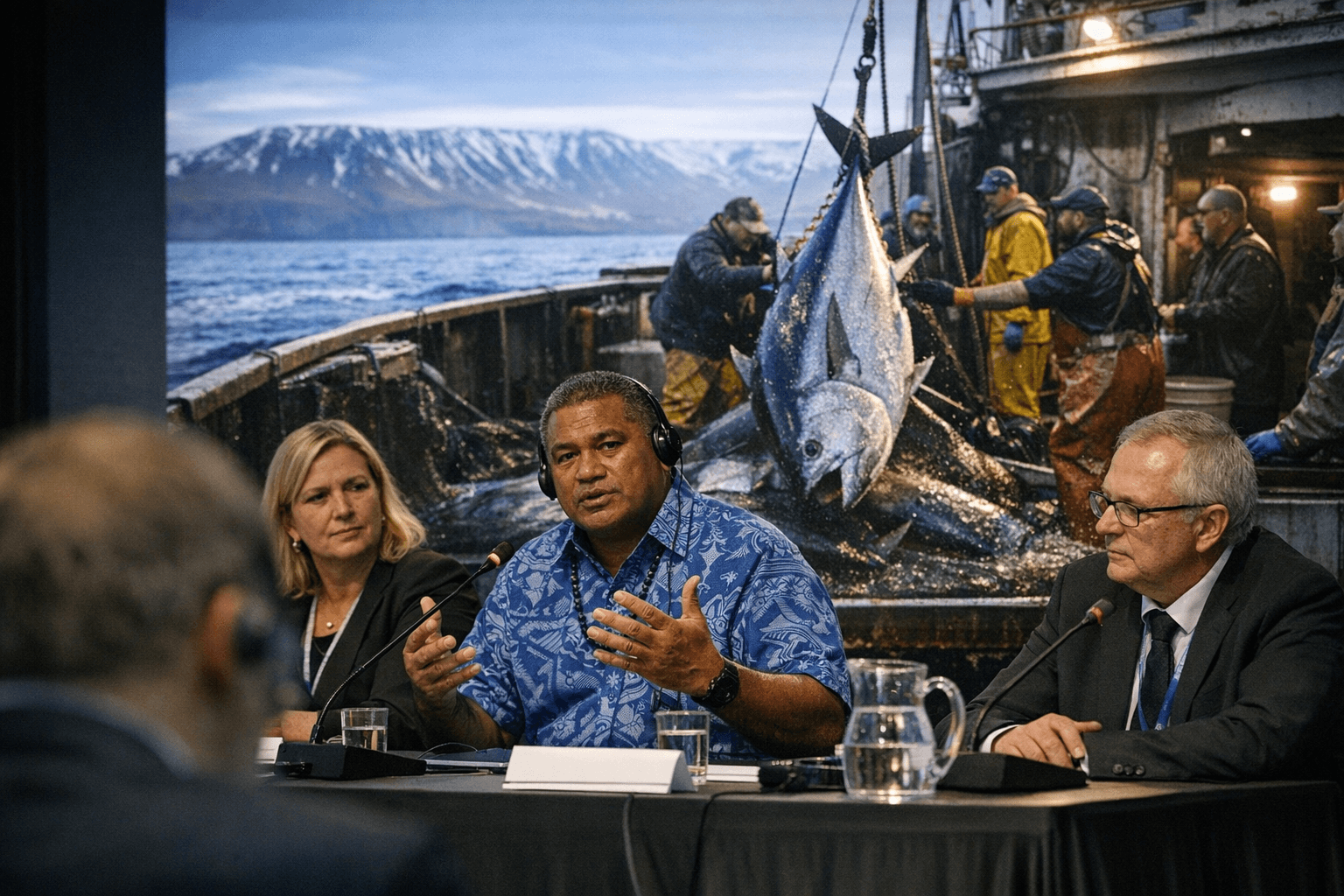
The Iceland appearance comes amid a busy stretch of regional diplomacy. In Suva, the 7th East New Britain Initiative Working Group Meeting brought members together to advance economic and social returns from Pacific tuna through value chain development and investment. The 2nd Development Partner Symposium in Suva drew Fiji's commitment to advance offshore tuna fisheries alongside FFA members, while the 19th Joint Steering Committee of the Japan Promotion Fund wrapped up in Honiara in February. At the international level, the European Union formalized a renewed ocean partnership through the PEUMP phase 2 agreement, expanding cooperation with FFA, SPC, OPOC, and the University of the South Pacific.
The broader political framing was sharpened at the Pacific Tuna Forum, co-organized by FFA alongside SPC, the Parties to the Nauru Agreement Office, the Western and Central Pacific Fisheries Commission, the Pacific Islands Forum Secretariat, and FAO GLOBEFISH, and hosted by Fiji in partnership with Papua New Guinea's National Fisheries Authority and INFOFISH. PTF 2025 Chair Dr. Manumatavai Tupou-Roosen of the University of the South Pacific outlined a 2050 horizon for inclusive, sustainable growth. FFA Director General Noan David Pakop joined national ministers Hon. Alitia Bainivalu of Fiji and Hon. Jelta Wong of PNG, SPC's Dr. Paul Hamer, and PIF Ambassador to the WTO Merewalesi Falemaka in calling for stronger IUU enforcement, deeper management partnerships, and a louder Pacific voice in global fisheries governance.
FFA's Rose Martin put the social dimension plainly: "Social inclusion, fair labour, and community participation are inseparable from sustainability." FFA's work under that banner now includes small-scale value-adding programs, Respectful Workplace training aimed at forced and child labour risks, and embedding social inclusion directly into Tuna Management Plans.
The FFA Secretariat operates out of Honiara, Solomon Islands, coordinating a membership that spans 17 countries and territories across the Pacific, from Australia and New Zealand to small island nations like Niue, Tokelau, and Tuvalu. The case it carried to Iceland was built on decades of that collective management. Whether the FAO audience takes the model seriously enough to adapt it elsewhere is the question the region is watching.
This article was produced by Prism’s automated news system from verified source data, official records, and press releases, then run through automated quality and moderation checks before publishing. The system is built and supervised by the people who set the standards it runs under. Read our full AI policy.
Did this article answer your question?