Greenpeace Alleges Forced Labour Tied to U.S. Canned Tuna Supply Chain
Publix scored just 6% on human rights and labor protections as Greenpeace tied U.S. canned tuna to forced labour at sea in Pacific supply chains.
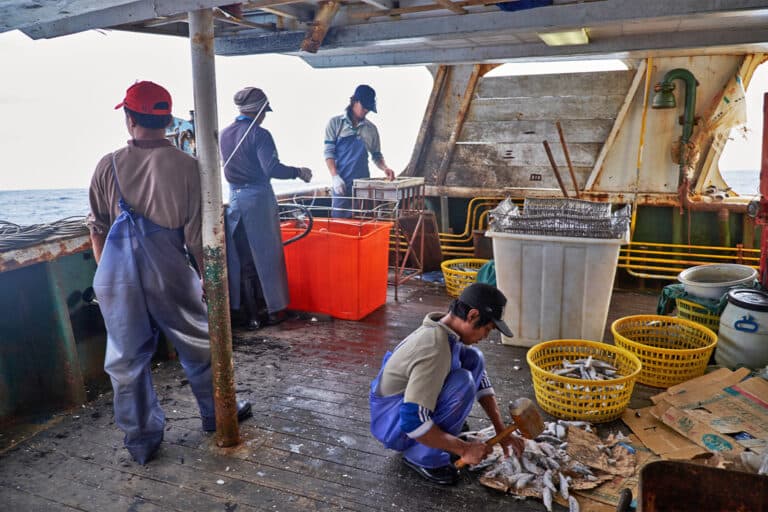
Forced labour allegations reaching the canned tuna aisles of American supermarkets gained new attention this month when the Business & Human Rights Centre summarized and republished a Greenpeace Southeast Asia investigation documenting what researchers describe as modern slavery embedded in Pacific tuna supply chains.
The underlying investigation was produced by Greenpeace Southeast Asia alongside co-researchers including the Indonesian Migrant Workers Union, known as SBMI. The findings, compiled across multiple Greenpeace reports dating from 2020 through 2022, allege that transshipment at sea and distant-water fishing operations create systemic conditions enabling forced labour aboard vessels that supply tuna ultimately canned and sold in the United States.
The scorecard for major U.S. retailers is damning. Publix, one of the country's largest supermarket chains, earned a 6% score on human rights and labor protections in Greenpeace's evaluation, a zero percent on advocacy and initiatives, and an overall total score of 22%, landing it 12th in the rankings. The Business & Human Rights Centre's own corporate human rights index found no evidence across a number of categories when assessing the chain. Greenpeace's report notes that while Publix maintains a Seafood Sourcing Policy and a Labor & Human Rights Standards statement, and its policy formally requires suppliers to commit to the ILO Declaration on Fundamental Principles and Rights at Work, the UN Guiding Principles on Business and Human Rights, and ILO Core Conventions, the paper commitments have not translated into demonstrated compliance. "Publix needs to not only sign up or conduct audits, but actively take changes onboard," the Greenpeace report states directly.
Wegmans received separate attention for refinements to its traceability commitments. The chain updated its policy to require use of a Global Dialogue on Seafood Traceability interoperable system covering all seafood suppliers and producers sold in the Wegmans Seafood Department, with a previous end-of-2024 target date removed and not replaced, leading researchers to assume the policy is now in force.
Bumble Bee's position is arguably the starkest of the named companies. Trade outlet IntraFish reported in 2023 that the canned-tuna giant removed claims that it maintains a fair and safe supply chain from its website as part of a lawsuit settlement.
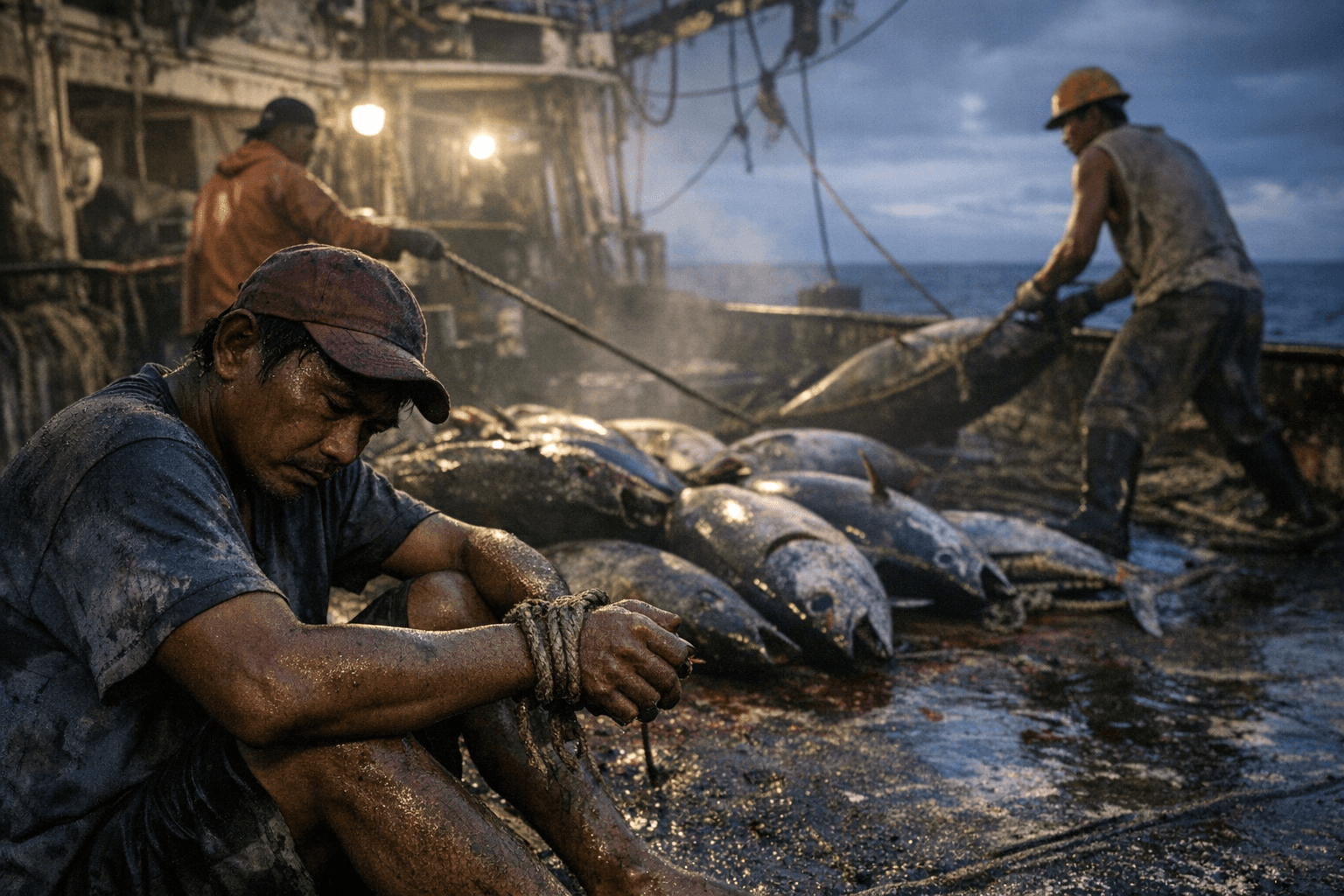
The problem has deep roots. A 2015 Environmental Justice Foundation report documented how overfishing in Thailand fueled human trafficking and the plundering of oceans. In 2016, Myanmar migrant workers won $13 million in compensation from a Thai tuna firm, a case The Guardian covered in detail. Those precedents underscore that the current Greenpeace allegations are not anomalies but part of a documented pattern spanning more than a decade.
Greenpeace's recommendations are direct: companies must publish the entirety of their supply chains, ensure tuna is traceable from shipment to point of sale, end transshipment and distant-water fishing practices that inherently raise human rights risks, and work with governments to enforce existing tools like the carding system while integrating genuine human rights accountability into them. "Large tuna producers and retailers must, under the UN Guiding Principles on Business and Human Rights, respect human rights across their value chain," the report states. "Right now, these great responsibilities are not matched by actions that are up to the challenge."
For anyone who chases bluefin, yellowfin, or skipjack on the water, the gap between what is hauled aboard a commercial vessel and what ends up in a supermarket tin has rarely looked wider or more consequential.
This article was produced by Prism’s automated news system from verified source data, official records, and press releases, then run through automated quality and moderation checks before publishing. The system is built and supervised by the people who set the standards it runs under. Read our full AI policy.
Did this article answer your question?