Honolulu Easter Trolling Trip Brings Tuna, Wahoo, Marlin Mix
Jason and Jacob’s Easter run off Honolulu turned into a mixed pelagic bite, with mahi, ono, yellowfin, skipjack, wahoo and striped marlin all tied to the same spread.
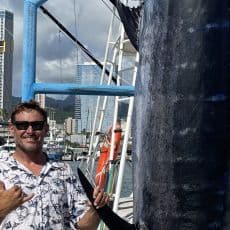
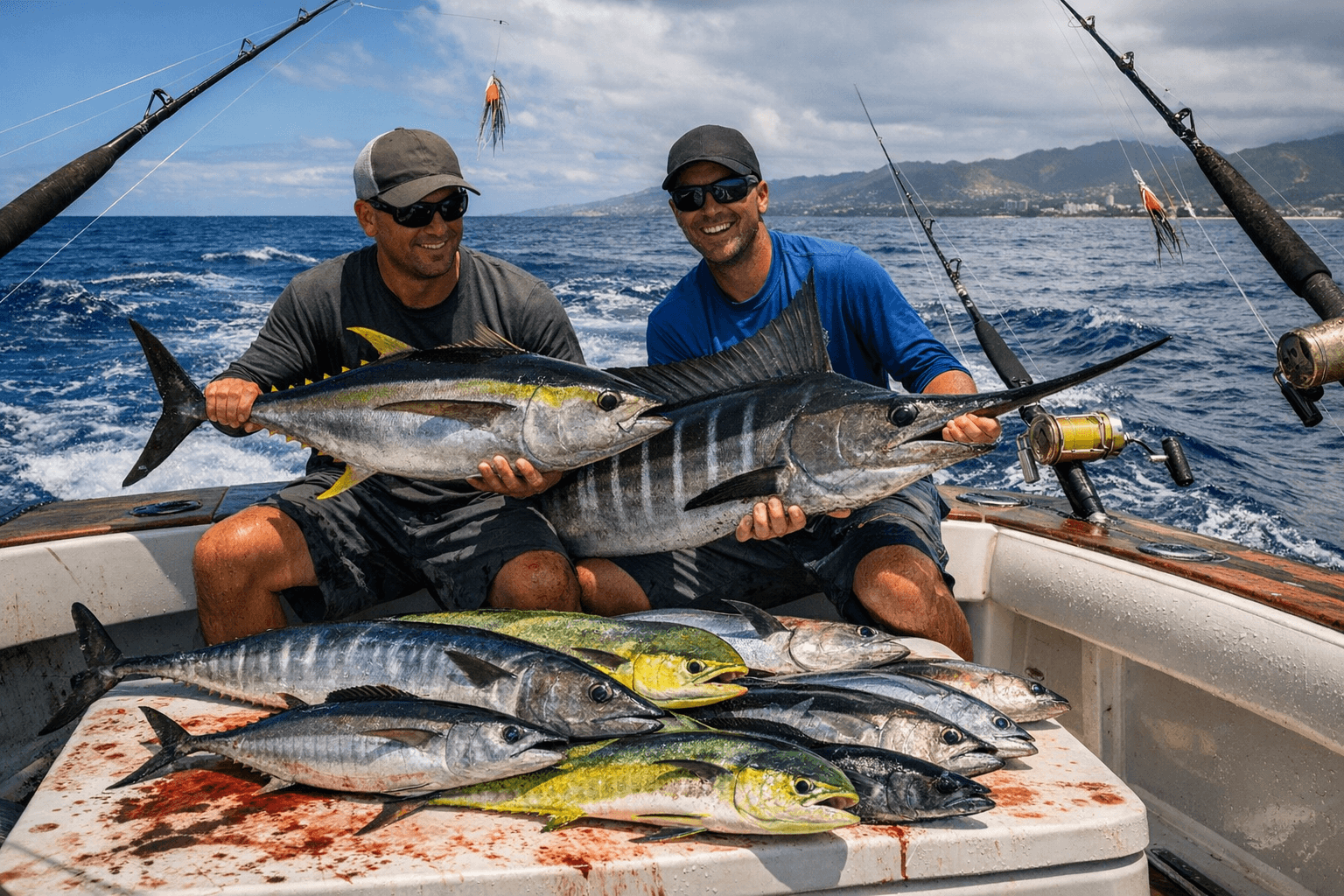
Jason and his son Jacob got the kind of Easter offshore read that tells Honolulu tuna anglers a lot in one trip: clean water, sunshine, and a trolling bite that kept producing even after bait lagged early. Play N Hooky Sportfishing’s April 6 report, “Easter Action!,” listed Dolphin, or mahi mahi, wahoo, yellowfin tuna, striped marlin and skipjack tuna from the same outing, a classic Hawaiian mix that shows why Oahu’s offshore scene rarely turns into a one-species game.
The key signal was not a hot bait stop. It was the trolling window itself. The crew went out for deep-sea trolling for pelagics, and once the lures got in the right water, mahi mahi and ono ate them. That matters because it points to a pattern weekend anglers know well around Honolulu: when bait is scattered or slow early, clean offshore water can still hold active fish if the spread is working and the boat stays patient. The report reads less like a banner yellowfin-only bite and more like a broad pelagic window, where tuna are part of the picture but not the whole story.
That mixed tag list is exactly the part local and visiting anglers should notice. Yellowfin and skipjack showed up alongside wahoo and striped marlin, which means the offshore lane around Honolulu was offering multiple targets at once rather than a narrow run on one species. Play N Hooky Sportfishing runs a 41-foot Hatteras Flybridge Sportfishing vessel, and its private trips are limited to six passengers under U.S. Coast Guard rules, so this kind of family charter stays intimate enough to keep lines managed while still covering a full trolling spread.
The marlin tag adds another layer. NOAA Fisheries describes striped marlin as a highly migratory sport fish in tropical and subtropical waters, and the western and central North Pacific stock has been assessed as likely overfished and likely subject to overfishing. That makes any marlin mention a reminder to treat billfish encounters carefully, even on a mixed bag day. For visiting anglers, Hawaiʻi’s nonresident recreational marine fishing license still applies for anyone 15 and older fishing the ocean, with current fees set at $20 for one day, $40 for seven days and $70 for a year.
The bigger takeaway for tuna anglers is simple: this Easter run off Honolulu looked like a broad, active offshore bite, not a single hot tuna bite. When yellowfin, skipjack, wahoo, mahi and marlin all share the same report, the water is telling crews to stay versatile, keep trolling, and expect the next strike to come from almost anything with fins.
This article was produced by Prism’s automated news system from verified source data, official records, and press releases, then run through automated quality and moderation checks before publishing. The system is built and supervised by the people who set the standards it runs under. Read our full AI policy.
Did this article answer your question?