How to Catch Tuna on Topwater Plugs and Poppers
Learn when to throw topwater plugs and poppers for tuna, what gear and leaders to use, how to retrieve, regional nuances, and safe boat handling for surface schools.
1. When to use topwater tactics
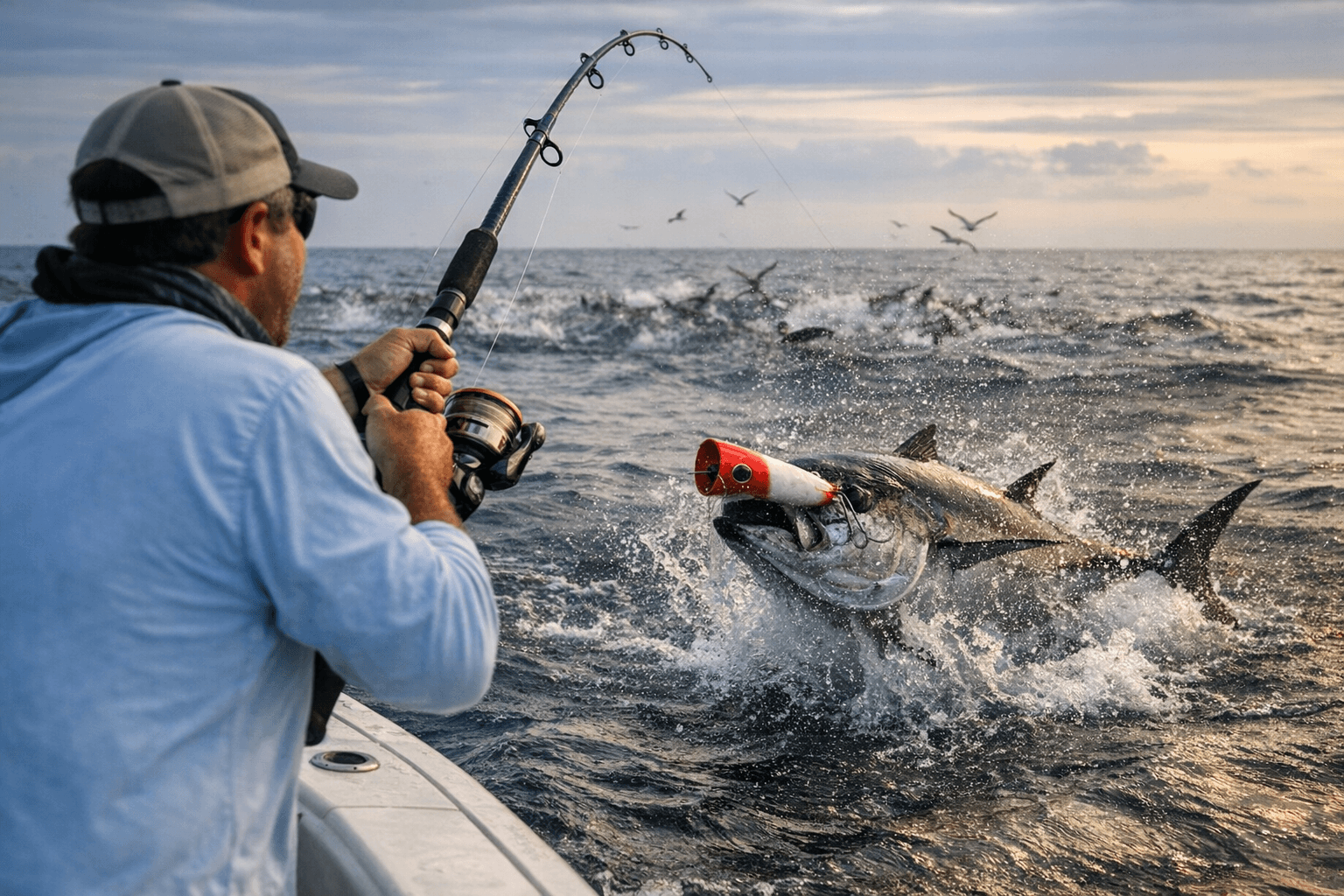
Topwater plugs and poppers shine when tuna are actively schooling at the surface. Look for surface blitzes, flashing fish, birds working bait, visible baitballs, or activity around shrimp trawlers and oil rigs, those are the classic cues that fish are up and eating on top. If you see consistent breaking, it’s time to break out the big plugs and keep the spread tight so you can present baits right into the chaos.
2. Plug selection and sizes for different tuna species
Choose plug size to match species and bait size: smaller poppers and pencils for smaller school tuna and bonito, medium plugs for yellowfin up to 40–60 pounds, and large, heavy plugs for giant bluefin. Match the profile and action to local forage, dense, noisy poppers for fast, aggressive bites; streamlined plugs for long casts and long draws. Durable hardware and strong split rings are essential because topwater tuna strikes are violent; opt for plugs that can take repeated swings without coming apart.
3. Recommended rod and reel types
Use rods with fast action and stout backbone that can cast heavy plugs but still load for a solid hookset. Reels need ample line capacity (300–600 yards depending on species and offshore ground) and strong, reliable drags to withstand high-speed runs and headshakes. Conventional or high-capacity spinning outfits both work, conventional reels give more line capacity and leverage for big blues, while high-cap spinning combos are great for long casts and visually tracking a popper’s action.
4. Braid versus mono leader choices
Braid gives sensitivity and casting distance, but you’ll still want a leader to prevent frays and to provide a little give on hard strikes. Use a heavy monofilament or fluorocarbon shock leader in the 40–130 lb range depending on tuna size, shorter and stronger for big bluefin, lighter and longer for school-sized fish. Leaders also protect against abrasion from tuna teeth and puckered mouths; tie a reliable knot or use a short, heavy-duty bite leader if tooth wear is a concern.
5. Practical retrieval patterns: long draws and pauses
The bread-and-butter retrieve on topwater tuna is a long, steady draw with intermittent pauses to let tuna track and commit. Work the plug with deliberate long pulls that get the bait running on plane, then pause briefly, many strikes happen on the pause when a tuna snaps up the bait. For poppers, a few sharp pops to create a commotion followed by a long draw often triggers desperate surface strikes; experiment with cadence until you find what the feeding fish prefer.
6. Rigging, terminal tackle, and presentation tips
Rig plugs with corrosion-resistant split rings, high-strength hooks, and a properly knotted leader to handle explosive strikes. Keep your hookups slim so the lure runs true, avoid oversized split rings that flip the hook angle. Presentation matters: cast ahead of breaking fish and retrieve through the center of the blitz rather than around the edges, and keep lines tight but slack enough to absorb the first violent blow without breaking off instantly.
- Tip: When a school forms, drop stainless wire leaders into play only if toothy species show up; otherwise use heavy fluorocarbon to reduce abrasion and visibility.
- Tip: Swap to larger plugs or add rattles if fish are aggressively chasing but not committing.
7. Regional observations and tactics
In the Gulf of Mexico, tuna often key on shrimp and school tighter around rigs and production platforms, use stout plugs and be ready for short, brutal runs. In New England, bluefin surface schools can be massive and fast; long casts, heavy backing, and durable plugs are the order of the day. In the mid‑Atlantic, you’ll often find mixed schools and opportunistic bites around baitballs and commercial shrimpers, so keep a range of plug sizes ready to match whatever shows up. Adjust your plug profile and retrieve speed by region: warmer waters favor faster, flashier presentations; colder northerly situations sometimes call for more subdued, realistic plugs.
8. Boat handling and safety around surface schools
When working a surface school you’re in the danger zone, maintain calm boat control, keep a wide, predictable approach, and communicate clearly with crew about where lures are in the water. Stay clear of the active center of the school with the engine off when anglers are fighting fish to avoid prop hazards; use a waypoint or drift-anchor to manage position. Respect other boats and birds working the same school, crowding stresses fish and increases accident risk, so rotate your presentation spots and avoid hotdogging right through the blitz.
9. Community relevance and practical value
Topwater tuna fishing is a shared thrill in the fishing community: the sound of a plug being hammered electrifies everyone on deck and creates teachable moments for newer anglers. Sharing successful plug choices and retrieve cadences at the dock helps everyone dial in faster the next time. Use local reports, bait sightings, rig activity, and recent success stories, to refine your setup before heading out; community intel often points you straight to the next surface school.
Closing thought: Topwater tuna fishing is part timing, part gear, and all heart, read the water, match the plug to the school, run a stout outfit with the right leader, and fish patient, long draws with smart pauses. When the surface lights up, you’ll have the tools and tactics to turn chaos into hookup after hookup, now go make noise and stay safe out there.
Know something we missed? Have a correction or additional information?
Submit a Tip