Indonesia Promotes Sustainable, Traceable Tuna at Boston Seafood Expo 2026
Indonesia made its tuna traceability case to U.S. buyers at SENA 2026 in Boston, with pole-and-line fishing and chain-of-custody documentation front and center.

Every can of tuna on a charter boat's deck comes from somewhere, and knowing exactly where is increasingly the price of entry into the U.S. market. That reality drove Indonesia's pavilion at Seafood Expo North America in Boston to host a focused seminar on March 26, bringing together government officials, industry representatives, and traceability experts to argue that Indonesian tuna belongs in American supply chains for the long haul.
The seminar, titled "Indonesia in Dialogue: A Tuna Case Study Toward Sustainable and Traceable Seafood," was organized by Indonesia's Ministry of Trade through Trade Attaché Ranitya Kusumadewi in Washington, D.C. Kusumadewi framed the session's purpose squarely around market share: the event aimed to demonstrate Indonesia's "long-term commitment to maintaining its seafood export market share by upholding sustainability and traceability principles."
Bara Hasibuan, representing Indonesia's Coordinating Ministry for Food Affairs, put the stakes plainly. Describing Indonesia as "the world's largest tuna producer and a major supplier to the U.S. market," Hasibuan said the country must proactively address global trade challenges, stressing that "sustainability, food safety, and traceability" form the foundation for maintaining market access and buyer confidence. His practical road map included certification upgrades, improved inspection regimes, laboratory testing for safety and quality, and transparent supply-chain documentation from catch to delivery.
Craig Turley of the International Pole and Line Foundation praised Indonesia's progress toward meeting Global Dialogue on Sustainable Traceability (GDST) requirements, arguing that traceability systems not only support sustainability claims but also create supply-chain efficiencies that open new market opportunities. Michael McNicholas, chairman of the GDST, reinforced why buyers care: interoperable traceability systems and data transparency are, in his view, "key factors influencing buyers' decisions to establish long-term partnerships with suppliers."
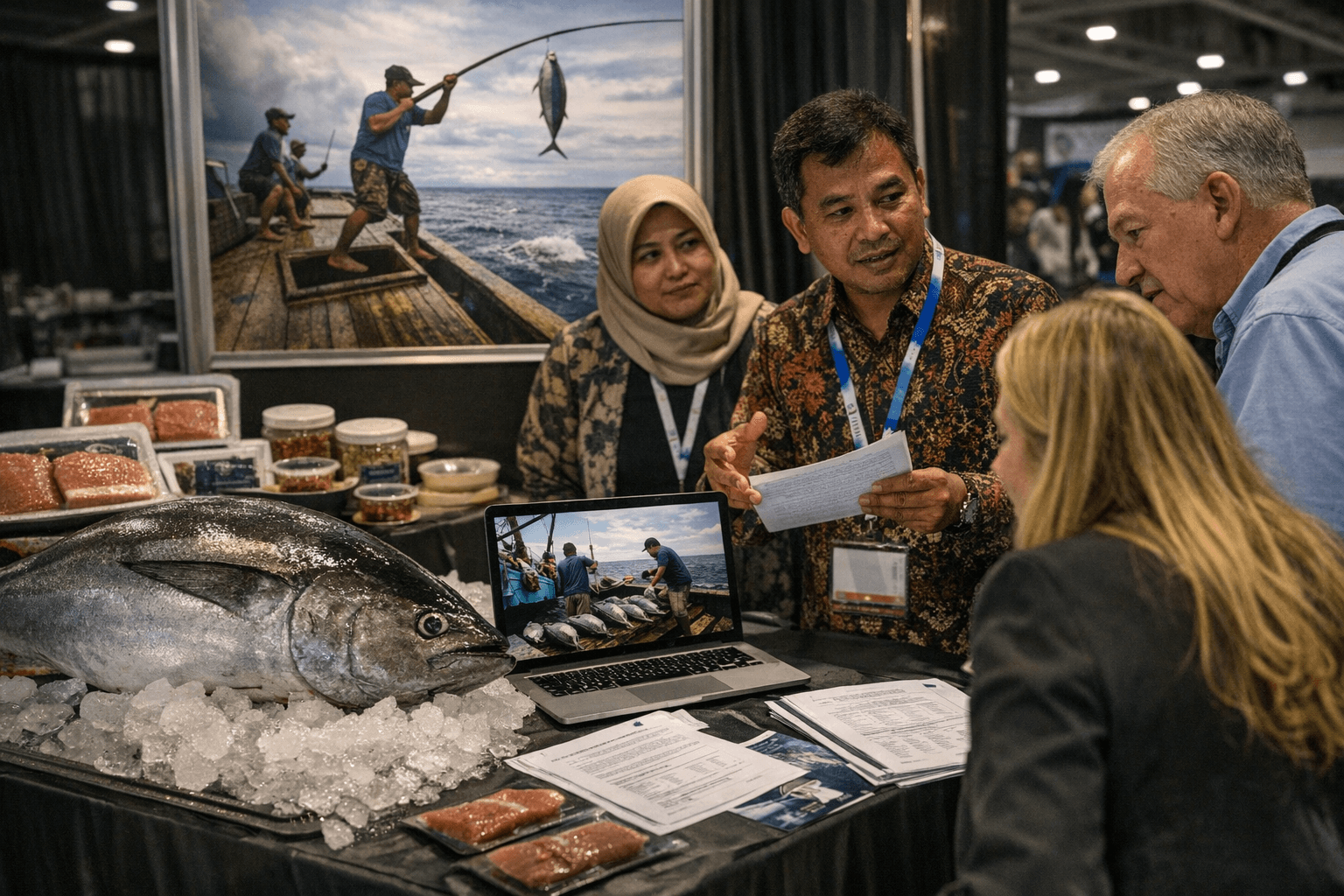
On the water, the shift is already tangible. Indonesian businesses are increasingly adopting pole-and-line and handline methods and forging partnerships with small-scale fishers to secure both catch quality and traceable documentation. PT Primo Indo Ikan, represented at the seminar by Andajani, was among the industry participants demonstrating how commercial operations are aligning with those standards.
For tuna anglers and North American consumers, the implications run deeper than supply-chain paperwork. Stronger chain-of-custody measures reduce the risk of illegal, unreported, and unregulated product reaching U.S. markets, and improved lab testing backs up the food-safety claims attached to the canned and fresh tuna sold across the country. The seminar's speakers were clear that these are not one-time certifications but ongoing investments requiring continued commitment to technology, fisher engagement, and third-party verification.
U.S. importers can expect verifiable chain-of-custody evidence and third-party standards to become more central to doing business with Indonesian suppliers, not less.
This article was produced by Prism’s automated news system from verified source data, official records, and press releases, then run through automated quality and moderation checks before publishing. The system is built and supervised by the people who set the standards it runs under. Read our full AI policy.
Did this article answer your question?