IOTC Compliance Committee to Review Bigeye Tuna Catch Limits in Maldives
Bigeye catch-limit compliance gaps flagged by the IOTC could trigger IUU vessel blacklistings and quota cuts at a May 4 session in Malé with direct consequences for Indian Ocean charter fishing.

The IOTC's compliance machinery moved on April 7 when the Secretariat released its "Report on compliance with bigeye tuna catch limits" alongside the provisional agenda for CoC23, the 23rd Session of the Compliance Committee. Charter captains and offshore anglers working the Indian Ocean have until May 4 to understand what the committee will do with those findings; that is when the Malé session opens, and what gets decided over those four days will shape quota structures, fleet eligibility, and monitoring requirements well into next season.
The agenda's most direct pressure point for operators is the formal review of Resolutions 23/04 and 25/04, the bigeye-specific measures that govern member catch limits. Where the compliance report surfaces gaps, the Committee holds authority to recommend escalated monitoring, revised reporting timelines, or outright blacklisting of vessels on the IUU list. An IUU listing is not an abstract penalty: vessels named on that list face port denials and market access restrictions, which compresses the charter pool and can push what remains of the compliant fleet into fewer, higher-pressure fishing grounds.
The agenda runs broader than bigeye alone. Alongside the catch-limit review, CoC23 will assess implementation of the IOTC's interim rebuilding plan for Indian Ocean yellowfin, touching Resolutions 21/01, 19/01, and 18/01. Dual scrutiny on both species at the same session is notable; it signals the Committee is evaluating the Indian Ocean's overall conservation trajectory, not just policing individual quota lines. For anglers targeting either species, the combined review increases the likelihood that output controls will be adjusted before the next Commission-level meeting later in 2026.
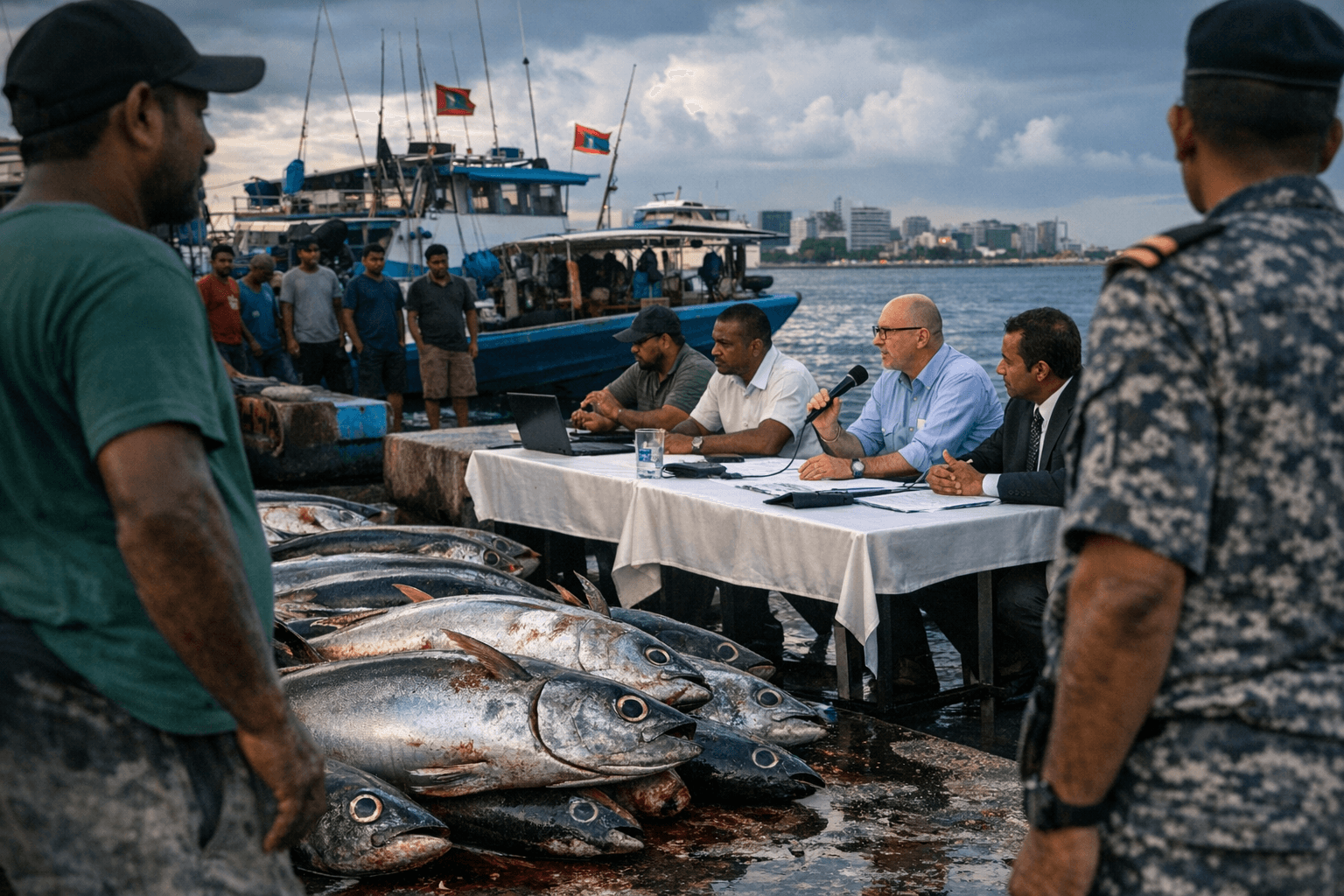
Electronic monitoring is the other thread worth watching. The WGEMS, the working group on electronic monitoring standards, will deliver outputs that feed directly into CoC23's assessment of whether current data streams are sufficient to verify reported catch and effort. If the Committee concludes they are not, new or expanded observer coverage and EM system requirements could follow, with compliance costs eventually absorbed by the operators running charter programs. The agenda also includes proposals on gear marking, vessel chartering transparency, and dFAD compliance rules, all of which affect how a captain legally operates and documents a trip.
The practical timeline is compressed. Background papers and compliance matrices from member countries will continue circulating through April. The full committee session runs May 4-6, with May 8 set as the adoption date for the Compliance Committee report. Before booking an offshore trip in the Indian Ocean for next season, knowing whether the vessel's flag state passed its compliance review and whether its catch documentation clears IOTC certification standards has moved from recommended due diligence to a necessary conversation to have with your captain before the deposit clears.
This article was produced by Prism’s automated news system from verified source data, official records, and press releases, then run through automated quality and moderation checks before publishing. The system is built and supervised by the people who set the standards it runs under. Read our full AI policy.
Did this article answer your question?