Islamorada anglers find better blackfin tuna finish after rough Hump start
A slow start on the Islamorada Hump turned into 10 blackfin, several skipjack and a bonita once the crew switched back to tuna feathers on the run home.
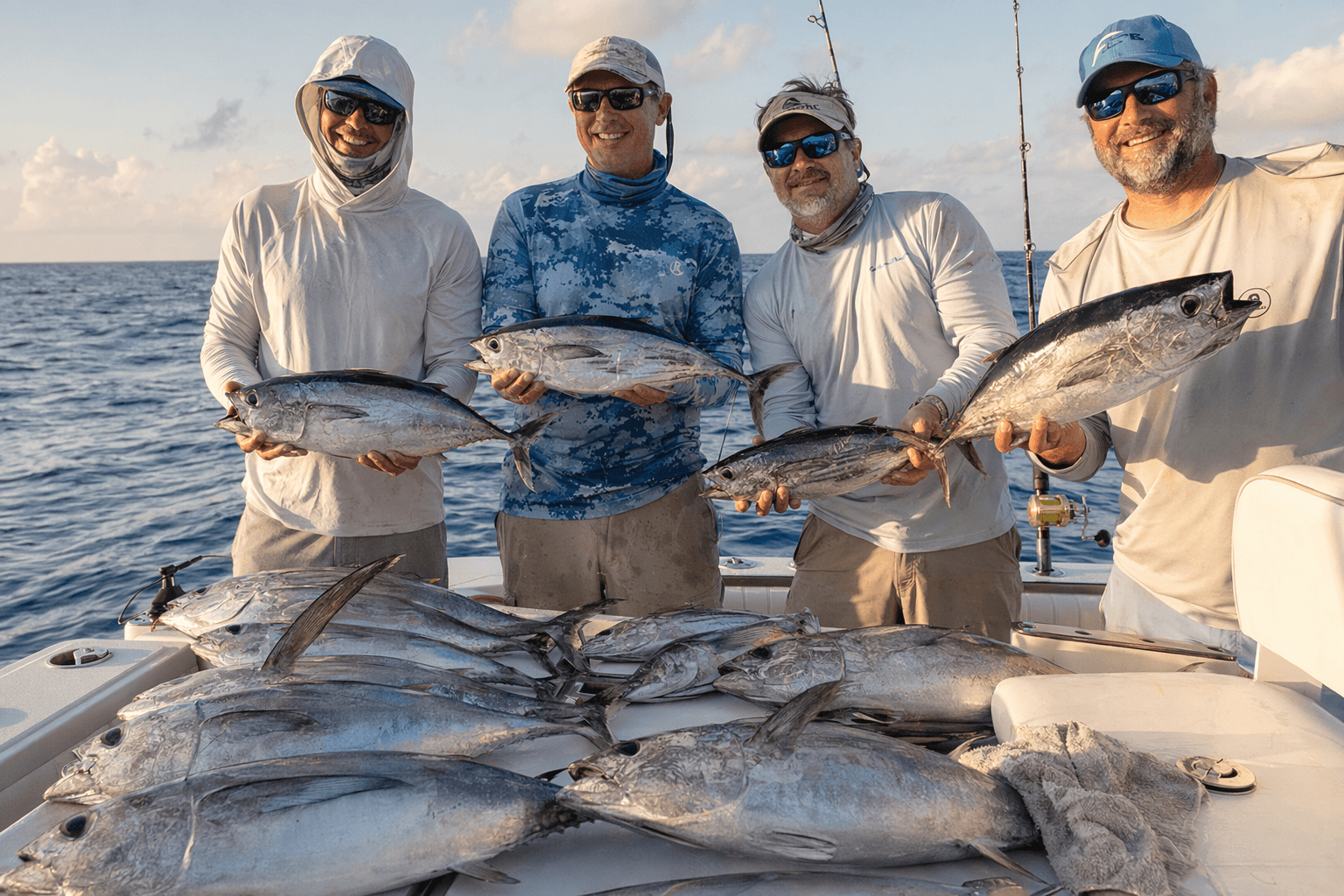
A rough first pass at the Islamorada Hump still produced a solid blackfin finish, but only after DirtyBoat’s crew abandoned the early setup and leaned back into tuna feathers for the ride home. The boat found porpoises on the Hump in the morning, yet the tuna bite never really got going, setting up a day that rewarded the crew’s willingness to change instead of forcing one plan.
From there, the boat slid east-southeast and stayed on a weed line for more than 10 miles, running it out to about 1,000 feet of water. The offshore lane had plenty of life. Birds were working, debris was scattered along the edge, and a few decent mahi schools showed themselves. Even with live bait in the spread, the dolphin would not settle down, which made the day less about a mahi bite than about reading the water and waiting for the right presentation to line up.
That change came on the run back. Once the crew switched back to tuna feathers, the blackfin showed up in numbers. The box ended with 10 blackfin tuna, several skipjack and one bonita, a far better finish than the hesitant start suggested. The turnaround points to a simple lesson from the day off Islamorada: when the Hump is alive but not feeding cleanly, the next move may be to keep fishing the return track until the tuna tell you what they want.
The timing fit a broader spring pattern in the Florida Keys. DirtyBoat’s April 24 captain’s log said the ocean was still carrying easterly breeze and leftover lump offshore, but conditions were improving. The April 17 log had already flagged blackfin tuna, humps and current edges as worthwhile targets for crews willing to push offshore while the window stayed manageable. In that kind of water, the Hump remains a critical checkpoint, but the bite can shift fast depending on current, bait and the way the spread is rigged.
The species itself stays tightly regulated. Florida Fish and Wildlife Conservation Commission rules cap recreational harvest at two blackfin tuna per day, except under a separate 10-fish vessel limit provision, and the agency identifies blackfin as native saltwater fish in the western Atlantic Ocean. For crews running tuna in state waters, NOAA Fisheries’ highly migratory species rules and permit requirements still matter, especially when targeting the wider tuna package. The practical takeaway from the Islamorada run was plain: the Hump can start slow, the weed line can tease, and the strongest blackfin finish may come only after the crew switches gears and fishes the ride home with purpose.
This article was produced by Prism’s automated news system from verified source data, official records, and press releases, then run through automated quality and moderation checks before publishing. The system is built and supervised by the people who set the standards it runs under. Read our full AI policy.
Did this article answer your question?