ISSF Reports 86% of Global Tuna Catch Now Comes From Healthy Stocks
The 86% that turned heads in 2024 has since climbed to 97%, but Pacific bluefin's overfished status still drives the bag limits and season windows anglers face.
The 86% figure from ISSF's March 2024 Status of the Stocks report looked, on the surface, like a clean win: 86% of the world's commercial tuna catch, drawn from roughly 5.2 million tonnes landed annually, originates from biologically healthy stocks. One percentage point better than the previous cycle. Part of a trajectory that has since reached 88% by November 2024 and 97% as of ISSF's January 2026 report.
But the number that matters for anyone fishing tuna is the one buried two paragraphs deeper.
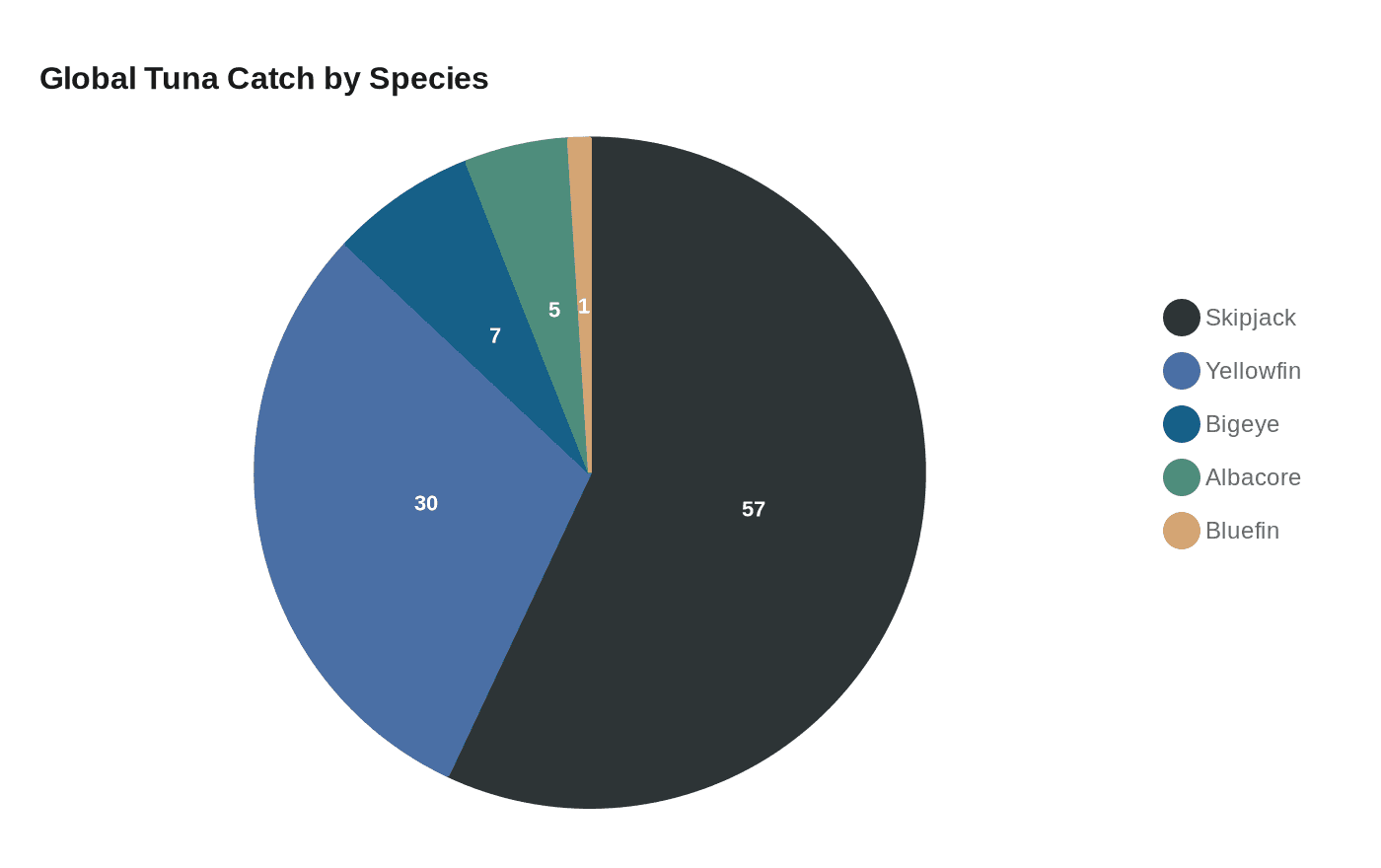
The International Seafood Sustainability Foundation evaluates 23 major commercial stocks across five species: six albacore, four bigeye, four bluefin, five skipjack, and four yellowfin. The 86% is a catch-weighted figure, not a count of healthy stocks. By stock count, only 61% of those 23 stocks qualify as healthy. Another 22% sit at intermediate levels, and 17% are overfished. That gap has a single driver: skipjack accounts for 57% of all commercial tuna caught globally, and its primary stocks in the Western Pacific, Eastern Pacific, and Indian Ocean are currently in good shape. When skipjack is healthy, the weighted math looks reassuring. Yellowfin adds another 30%, bigeye 7%, albacore 5%, and bluefin just 1%.
That 1% is where recreational anglers feel the squeeze. Pacific Ocean bluefin is identified as overfished in the ISSF report. Mediterranean albacore, Indian Ocean bigeye, and Indian Ocean yellowfin carry the worst possible designation: overfished and subject to ongoing overfishing simultaneously. Those are the stocks under the sharpest scrutiny from the five tuna Regional Fisheries Management Organizations governing these waters. ICCAT covers Atlantic and Mediterranean species, the Indian Ocean Tuna Commission handles Indian Ocean stocks, the IATTC manages Eastern Pacific tuna, and the CCSBT governs southern bluefin. When these bodies meet for their assessment cycles, overfished-plus-ongoing-overfishing stocks generate the rule changes that reach anglers as reduced bag limits, narrower size windows, and shortened seasons.
Gear breakdown adds another layer of context for reading these numbers. Purse seining captures 66% of the global tuna catch, operated by roughly 650 large-scale vessels with a combined hold capacity of 863,000 cubic metres. Longline covers 9 to 10% of the global catch, pole-and-line 7%, and gillnets 4%. These are the commercial fleets whose pressure on shared stocks directly shapes what recreational access looks like downstream.
For practical trip planning, the stock health picture points in one clear direction. Pacific yellowfin and Western Pacific skipjack offer the strongest near-term access outlook. Indian Ocean bigeye and yellowfin, along with Pacific bluefin, are the species where the next RFMO assessment cycle is most likely to produce tighter measures rather than expanded ones. The January 2026 ISSF report's jump to 97% healthy-stock catch reflects real, system-wide improvement, but Pacific bluefin has not been part of that story.
The ISSF, founded in 2009 through a partnership between the tuna industry, scientists, and the World Wide Fund for Nature, operates through a Scientific Advisory Committee that reviews each Status of the Stocks report. The organization also released a companion standalone bycatch and ecosystem impacts report alongside the March 2024 findings, a publication that will now be issued annually. Neither report advocates for specific purchasing decisions, but their ratings feed directly into the management frameworks that determine what anglers can and cannot put in the box.
This article was produced by Prism’s automated news system from verified source data, official records, and press releases, then run through automated quality and moderation checks before publishing. The system is built and supervised by the people who set the standards it runs under. Read our full AI policy.
Did this article answer your question?