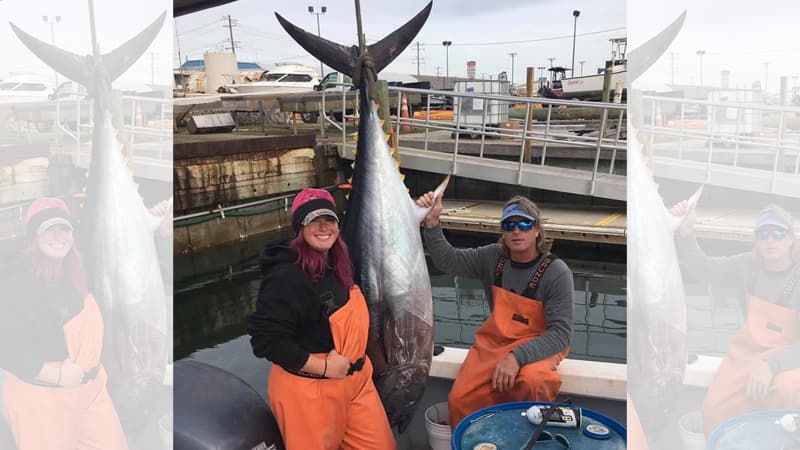
Key West January Tuna Fishing: Depth and Patience Outperform Speed
January offshore fishing out of Key West was governed more by vertical movement and depth than by wide-area searching, as blackfin shifted up and down the water column with cold fronts and current changes. That matters because anglers must focus on watching brief early-morning bait windows, marking fish in the 250–600 ft range, and using drifts, controlled presentations, and chunking instead of high-speed surface searches.
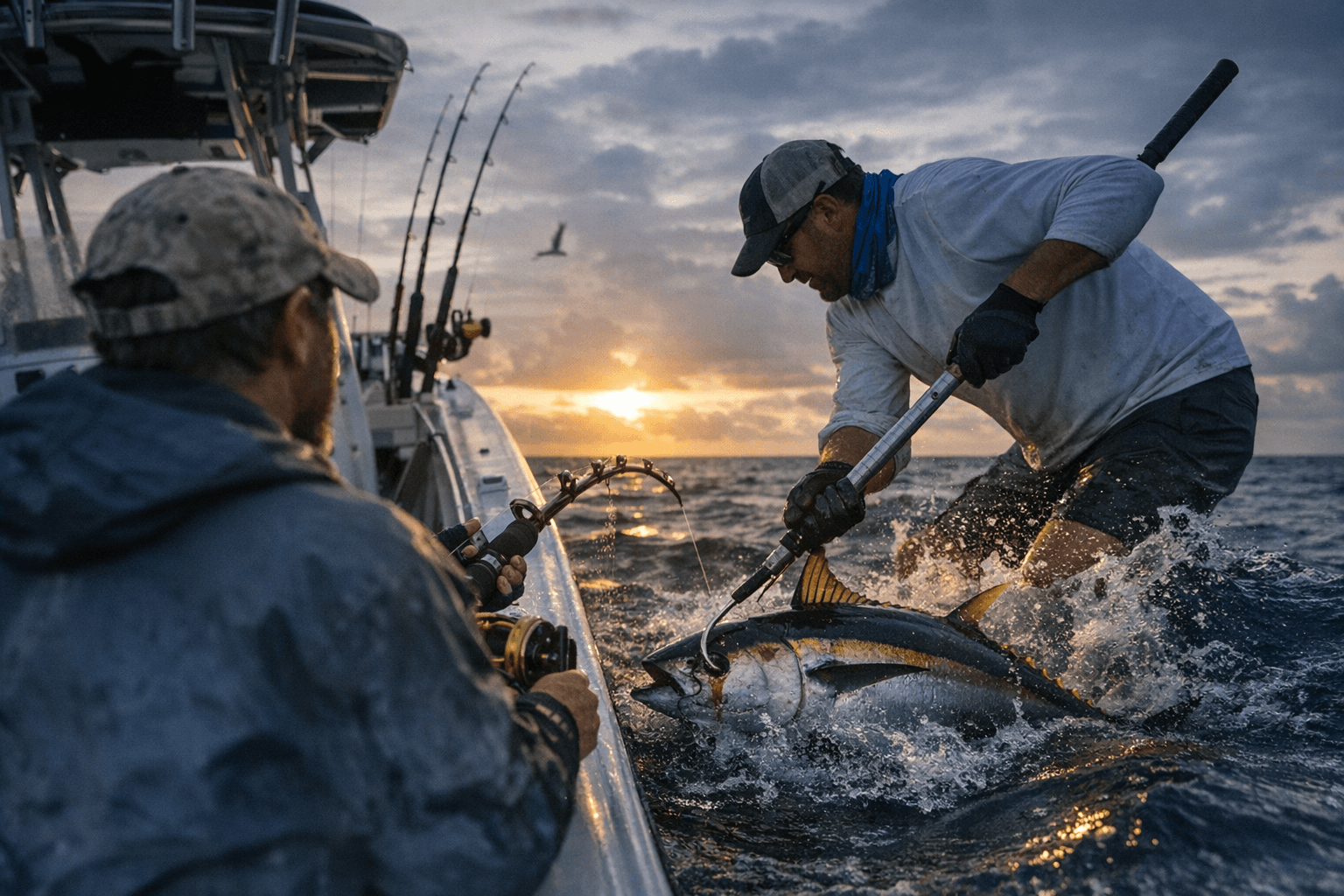
January offshore trips out of Key West showed a clear winter pattern: tuna movement was vertical, not horizontal. Cold fronts and shifts in current pushed bait and blackfin up and down the water column. After mild fronts blackfin often slid shallow for short feeding windows, then dropped back and held deeper. That made early-morning bait and current lines the most productive time to find feeding fish, but those windows were brief and required quick, focused effort.
When fish settled in deeper water, commonly in the 250–600 ft range, the most effective tactics changed from fast surface searching to precision work. Marking fish with electronics, adjusting presentations to match the depth, and working controlled drifts and chunking became the winning approach. Surface blitzing and high-speed searches lost effectiveness once the tuna moved off the surface. Patience and strict depth control were emphasized as winter priorities for getting bites.
Local structure and grounds responded differently in winter. Rebecca Shoal, the Marquesas, and the Dry Tortugas each showed distinct behavior in cold conditions, and anglers who ran multiple spots needed to adapt tactics by area rather than rely on one standard approach. The same conditions that pushed tuna deep can also shift the lineup of realistic targets; at times during January the mix of species aboard a trip changed and wahoo, sailfish, or swordfish became realistic options depending on depth and current behavior.
Practical takeaways for captains, charter operators, and anglers are straightforward. Watch early-morning bait and current lines closely and be ready to work them quickly. When marks appear deep, slow down: mark fish, set up a controlled drift, adjust weighting and presentation to hold the bite zone, and use chunking rather than chasing surface activity. Maintain patience, holding depth and presentation will often produce bites that frantic searching misses.
Choosing the right captain matters more in winter. Confirm a captain’s experience with winter offshore patterns, ask how they handle marking and working fish in 250–600 ft, and ensure the crew is prepared for controlled drifts and chunking tactics. For the Key West community, the shift toward depth-focused winter fishing changes gear choices, bait handling, and trip expectations, rewarding anglers who come prepared to work the water column rather than the horizon.
Know something we missed? Have a correction or additional information?
Submit a Tip