Lorient Tests 800-Ton Boat Lift with Water Balloons, Hits 1,200 Tons
Lorient's new 800-ton boat lift was tested with water-filled balloons and briefly handled loads up to about 1,200 tons, a result with direct implications for haul-outs, maintenance scheduling, and service of larger tuna and sportfishing boats.
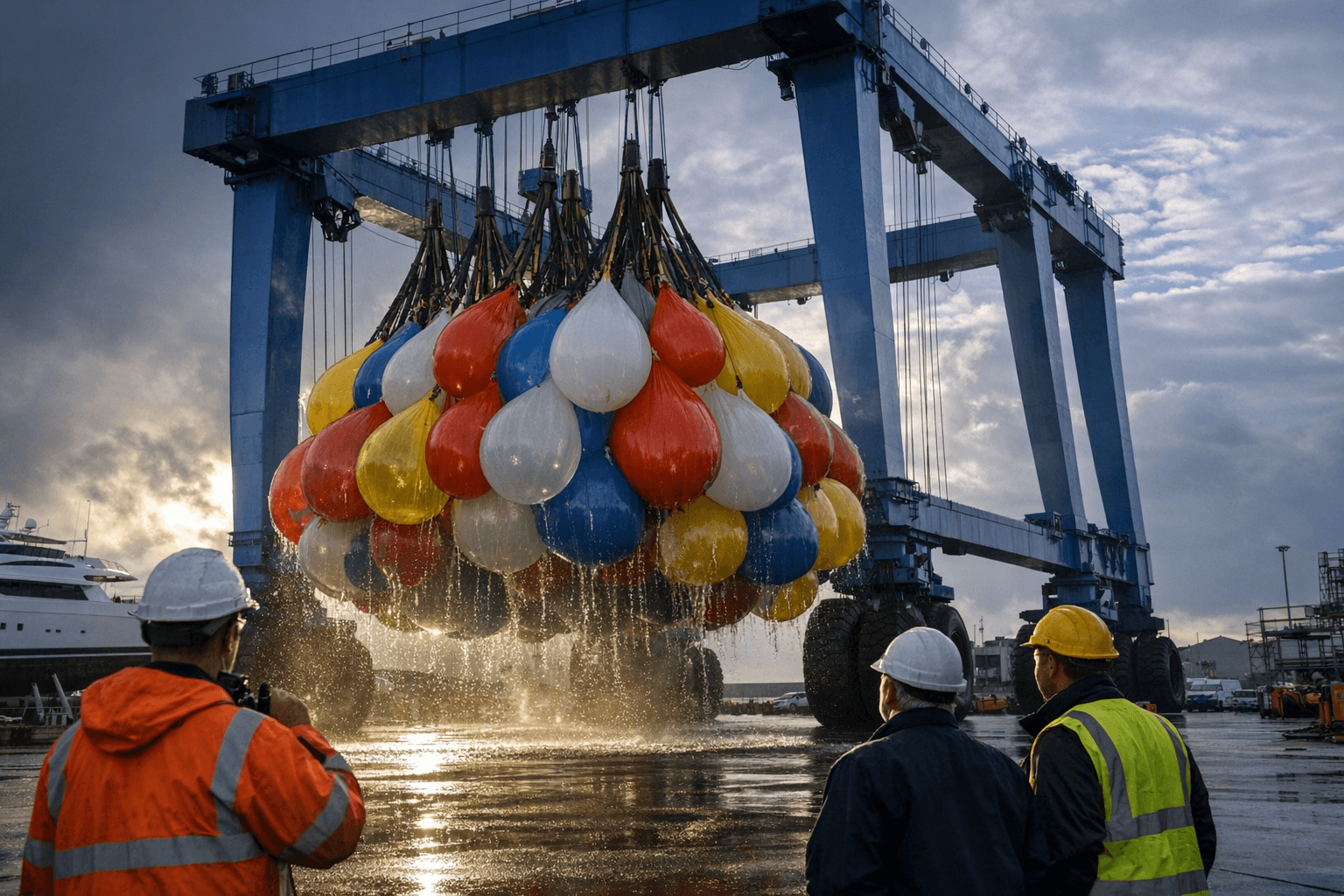
Lorient's 800-ton boat lift was put through stress tests overnight, and the results grabbed the attention of marinas and owners of large tuna and sportfishing boats. A Dutch company conducting the inspection used 18 water-filled balloons of varying weights to simulate hull loads, and the sequence of tests pushed the lift beyond its rated capacity, reaching roughly 1,200 tons at the final stage. Photographs from the operation show the lift supporting approximately 880 tons during one phase of the inspection. The work was completed from Thursday to Friday, January 22, 2026.
For yard operators and captains, the practical takeaway is immediate. An 800-ton rating sets expectations for routine haul-outs, cradle work, and engine-room access for commercial longliners and bluewater sportfishing rigs. Seeing the lift sustain transient loads above 800 tons suggests a built-in safety margin but also raises questions about certification, routine inspection intervals, and sling and pad condition before lifting heavier-than-usual vessels. Verify travel-lift documentation, slings, and inspection tags prior to scheduling a haul-out.
The testing method is straightforward and familiar to the community: water-filled balloons act as controllable, evenly distributed test weights that avoid damaging hulls while allowing technicians to incrementally increase load. Using 18 balloons with varying weights lets engineers simulate different load distributions for keel, bilge, and keel-to-shell contact areas, which matters when you haul a 50- to 80-foot sportfisher or a larger commercial vessel with concentrated gear and tanks.
Marina managers should see this as a reminder to update operating procedures and insurance paperwork. If yards plan to certify higher working loads or accept larger vessels more regularly, they will need documented test results, stamped certification from an accredited engineer, and a clear maintenance schedule for slings and lifting beams. Captains and owners should provide precise lightship and laden weights ahead of lift operations and confirm whether a cradle or sling configuration will keep sea-chests, outriggers, and tuna towers clear of hard points.
What happens next will matter to the tuna fishing fleet: formal test reports and certifications will determine whether Lorient's lift enters service as an 800-ton unit with an understood safety margin or whether its operators pursue a re-rating. If commissioning proceeds with appropriate paperwork and maintenance practices, more large commercial and sportfishing vessels may be able to get local haul-outs and repairs that previously required travel to larger yards, cutting downtime and costs.
Know something we missed? Have a correction or additional information?
Submit a Tip