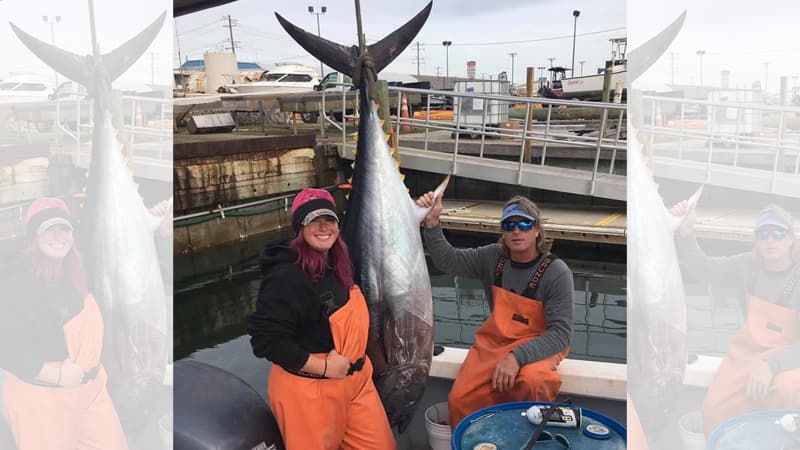
Marathon Winter Tuna Report: Depth Shifts Change January Tactics
In late December, Marathon’s winter fishing pattern showed blackfin tuna shifting vertically after cold fronts, feeding shallow in short windows before settling in 250–500 foot depths. That shift forced anglers to prioritize depth and presentation over covering distance and to choose Atlantic or Gulf/backcountry waters based on wind and temperature.
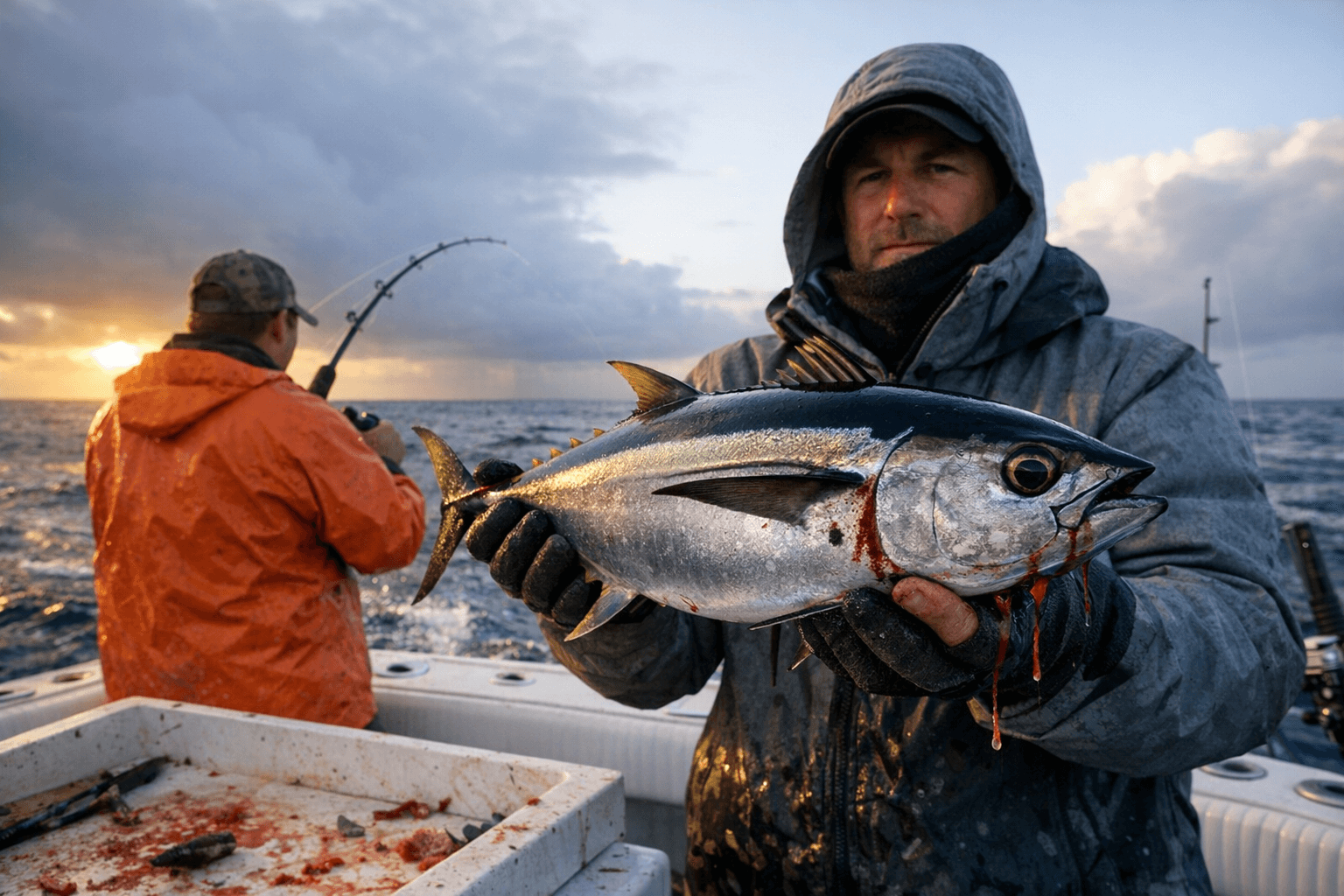
Fishing activity around Marathon in late December underlined a familiar winter truth: where and how you fish matters more than how far you run. Blackfin tuna were present in January conditions but reacted to frontal passages by moving up to feed briefly near the surface, then slipping back down into the 250–500 foot range. Success depended on matching tactics to that vertical movement.
When fish settled deep, live-baiting, drifting and chunking worked best. These presentations hold in one depth band and allow anglers to target settled schools with a steady offering. When schools were on the move after a front and feeding near the surface for short windows, trolling proved the more effective method to cover water and intercept fish during those fleeting opportunities. Adjusting quickly between those modes made the difference between a full cool box and idle hours on the rail.
Winter conditions also forced a practical choice about which side of the Keys to fish. Wind direction and temperature dictated whether Atlantic or Gulf/backcountry waters offered the safer and more productive fishing. Plan trips around those conditions, and be ready to switch grounds the morning of a trip rather than committing to distance alone. Depth and presentation decisions mattered more than running long lines.
The winter picture extended beyond blackfin. The report detailed what to expect for wahoo, sailfish, yellowtail and snapper under January conditions, giving local skippers and weekend anglers a checklist of likely opportunities and limitations as temperatures dropped. That context helps with bait selection, tackle choice and trip planning even when conditions are marginal.
For the Marathon community, the practical takeaway is clear: monitor fronts and be prepared to change tactics quickly. Verify local wind and water temperature forecasts before departing, outfit boats for both deep live-baiting and efficient trolling, and set realistic goals based on where fish are holding on any given day. These timely adjustments keep trips productive and help charter operators and private anglers make the most of a winter season that rewards attention to depth and presentation more than raw speed.
Know something we missed? Have a correction or additional information?
Submit a Tip