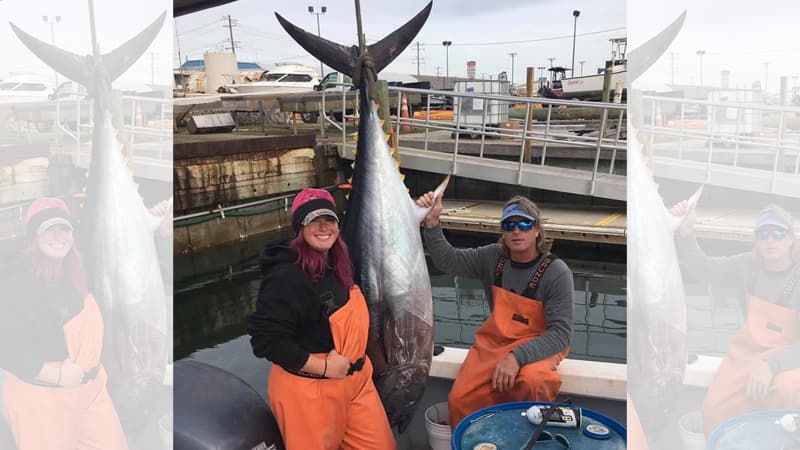
Mid-Atlantic Bluefin Limits Revert; Winter Weather Keeps Boats Home
Bluefin tuna regulations reverted to default limits on January 1, opening clear retention opportunities for recreational anglers and charter vessels with the proper HMS permit. Persistent cold and strong winds have kept most boats in port, but recent reports of tautog, flounder, sea bass and bluefish show local inshore trips remain productive.
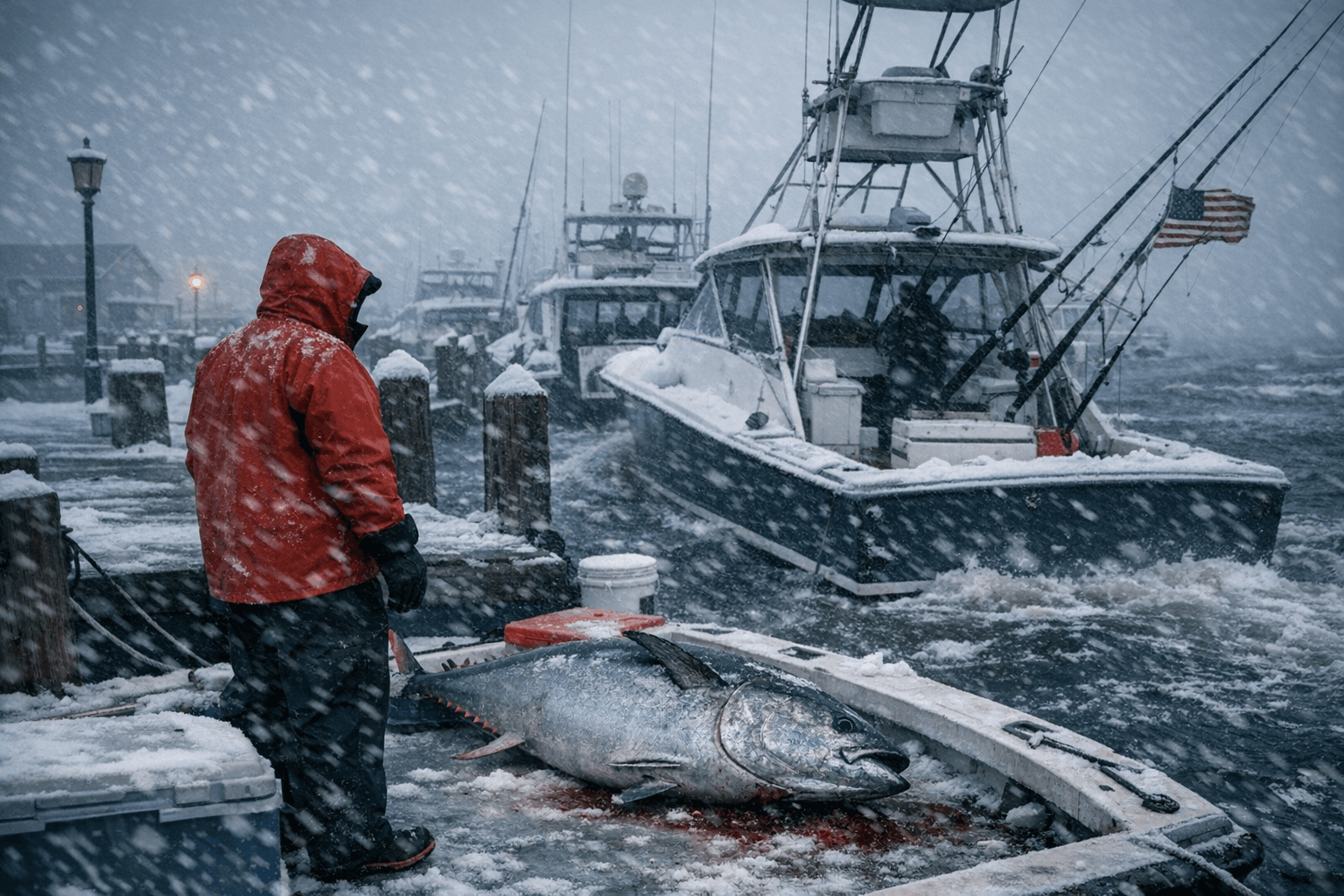
Federal bluefin tuna rules returned to their default limits as of January 1, creating immediate chances to target these prized fish along the Mid-Atlantic coast. The regulatory shift allows recreational anglers holding a Highly Migratory Species (HMS) permit and charter vessels fishing recreationally to retain one bluefin tuna measuring between 27 inches and 73 inches in curved fork length per vessel per day or per trip. Anglers are also allowed one trophy bluefin tuna over 73 inches per vessel per year, provided the regional trophy subquota remains available. The general category for commercial fishing reverted to a default retention limit of one trophy bluefin tuna 73 inches or larger per vessel per day or per trip.
The timing matters for both private anglers and charter operators planning January and early-season trips. Verify regional quota status before committing to a trip; these limits could be adjusted if quotas change. Check current rules and any quota updates on the NOAA Fisheries Atlantic Highly Migratory Species (HMS) website before heading offshore. Measure fish by curved fork length to ensure compliance and note that the vessel-based limits mean everyone on board should agree on whether a retained tuna counts against the vessel allotment.
Weather has been the dominant factor this week. Bitter cold and relentless winds have kept many boats tied to the dock, limiting offshore pressure despite the regulatory change. Still, a few anglers who slipped out off the Virginia coast reported success on tautog and caught a few flounder. In Ocean City, the crew of the Ocean Princess posted a successful sea bass trip, returning with nice-sized sea bass and a mix of bluefish and tautog. Those inshore bites highlight practical alternatives when big-boat bluefin trips are delayed by weather.
For charter captains, the regulation reversion could affect trip marketing and pricing as customers seek bluefin opportunities once conditions improve. Recreational anglers without an HMS permit who plan to pursue bluefin must obtain one before fishing for these species. Safety remains paramount in winter conditions: check marine forecasts, dress for extreme cold, and be prepared to adjust plans on short notice.
Expect activity to increase as seas calm and temperatures moderate. Stay current with quota announcements, carry measurement tools to document curved fork length, and plan trips with both regulations and safety in mind.
Know something we missed? Have a correction or additional information?
Submit a Tip