NOAA Calls Stakeholder Meeting to Shape North Pacific Albacore Management Talks
NMFS will preview the 2026 NPALB stock assessment at a May 21 virtual meeting; register by May 14 or miss your window to shape U.S. positions at IATTC and WCPFC.

NOAA's National Marine Fisheries Service (NMFS) set a May 14 registration deadline for a high-stakes virtual stakeholder session on North Pacific albacore that will, for the first time this year, put preliminary results from the 2026 NPALB stock assessment in front of U.S. commercial and recreational fishers, processors, scientists, and NGOs before those findings reach the international negotiating table.
The meeting runs May 21 from 9 a.m. to 1 p.m. Hawaiian Standard Time, noon to 4 p.m. Pacific Daylight Time. Its agenda covers three tracks: walk through the executive summary of the 2026 stock assessment, build on updates delivered at the February 18 stakeholder webinar, and consolidate U.S. positions ahead of annual meetings at both the Inter-American Tropical Tuna Commission and the WCPFC Northern Committee later in 2026.
North Pacific albacore is unusual in the tuna world because its migratory range spans two separate RFMO jurisdictions. IATTC governs the eastern Pacific portion of the stock; WCPFC covers the broader western and central Pacific. For eight years, the two bodies have been building a joint harvest strategy, including a harvest control rule that would automatically trigger catch or effort adjustments based on real-time stock status. The most recent completed ISC assessment, from 2023, found the stock healthy, with spawning biomass above limit reference points and fishing mortality at sustainable levels. What the 2026 preliminary data shows will inform how aggressively U.S. delegates push for revisions to those controls.
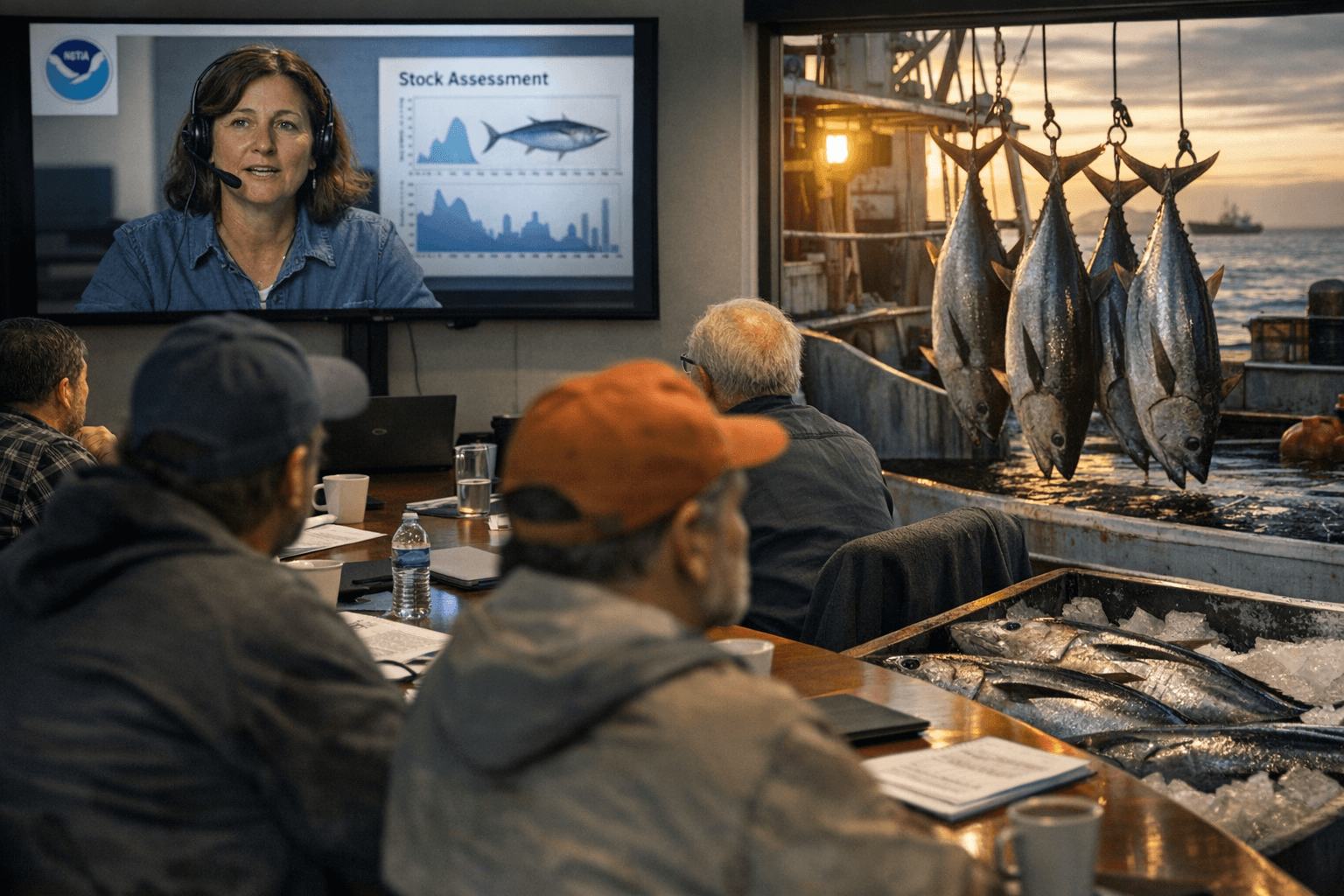
The stakes for domestic fleets are tangible. RFMO decisions can move catch limits, alter bycatch mitigation requirements, and impose new reporting obligations that filter directly into vessel operations and quota arrangements. Previous WCPFC Northern Committee sessions surfaced sharp disagreements over fleet-specific fishing intensity reductions tied to historical benchmark periods, with allocation fairness at the center of the dispute. Those tensions make clear stakeholder input in the May 21 session particularly consequential.
Valerie Post at NOAA's Pacific Islands Regional Office and Tyler Lawson at the West Coast Region Office are listed as agency contacts. Registration closes May 14, one week before the meeting.
This article was produced by Prism’s automated news system from verified source data, official records, and press releases, then run through automated quality and moderation checks before publishing. The system is built and supervised by the people who set the standards it runs under. Read our full AI policy.
Did this article answer your question?