NOAA Panel to Debate Bluefin Tuna Quotas at May Meeting
Bluefin quota talk is moving fast: NOAA’s May 12-14 panel meets days after a proposal to lift the U.S. baseline to 1,509.98 mt.
Bluefin tuna will be front and center when NOAA Fisheries opens its Atlantic Highly Migratory Species Advisory Panel meeting May 12-14 at the DoubleTree by Hilton Silver Spring Hotel in Silver Spring, Maryland. The 3-day session is open to the public and will also run by webinar and conference call, giving anglers, charter operators and industry voices a direct window into the next round of HMS policy decisions.
The agenda goes well beyond a routine check-in. NOAA says panel members will hear a highly migratory species rulemaking update, an Atlantic bluefin tuna fishery update, and the outcomes of the 2025 International Commission for the Conservation of Atlantic Tunas annual meeting. A recreational HMS roundtable is also on the schedule, along with an enforcement update from NOAA Fisheries and the U.S. Coast Guard. For the bluefin fleet, that combination matters because quota policy, compliance and day-to-day fishing realities are all being put on the same table.
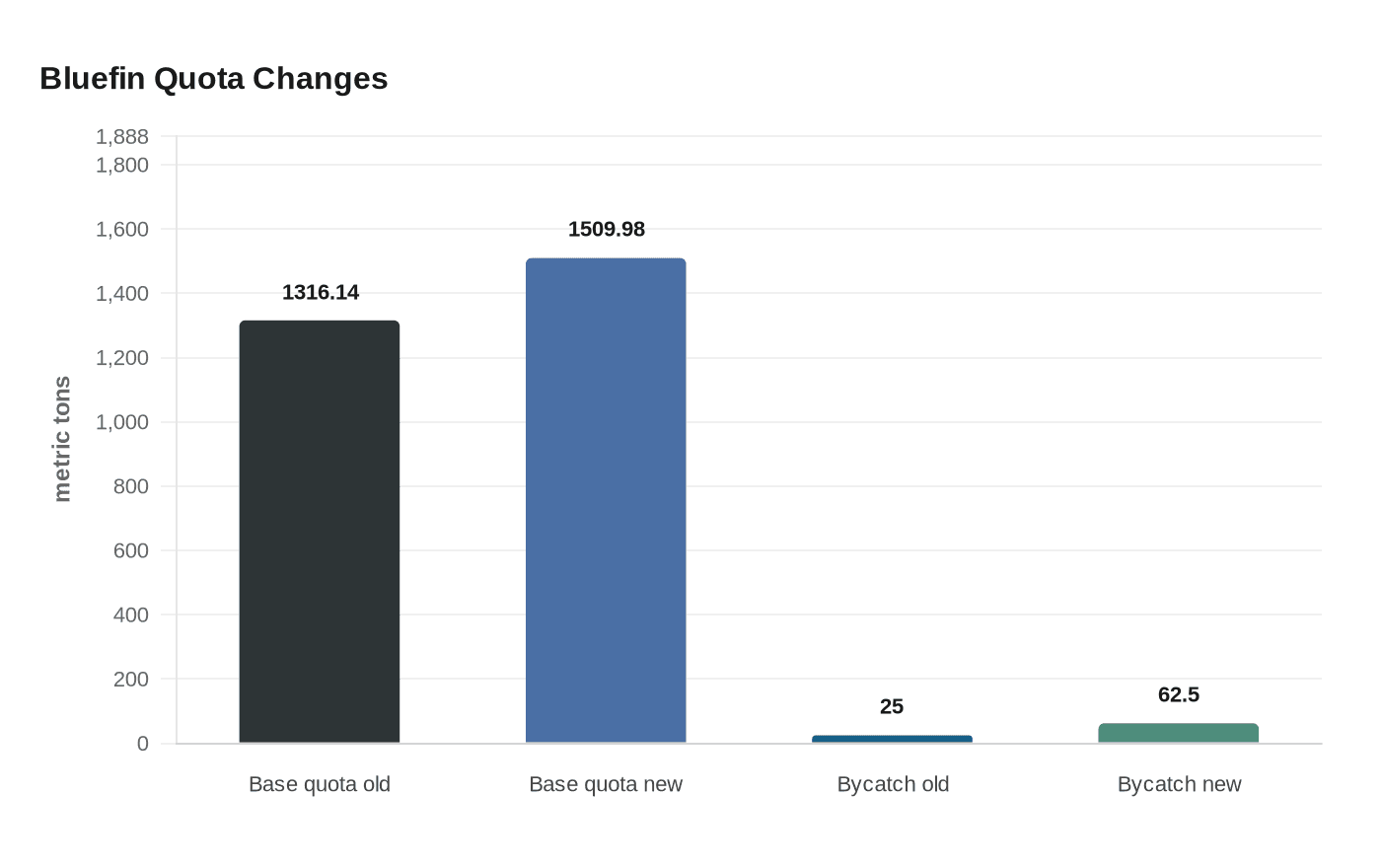
The timing is especially sharp because NOAA Fisheries proposed on May 7 to raise the U.S. baseline annual bluefin quota from 1,316.14 metric tons to 1,509.98 metric tons. The proposed rule would also increase bluefin domestic fishing category quotas under the existing regulatory percentages and raise the pelagic longline bycatch set-aside from 25 metric tons to 62.5 metric tons. NOAA tied the proposal to the 2025 ICCAT action and said the same rule also covers North Atlantic swordfish, South Atlantic swordfish and northern albacore tuna. A public hearing webinar is set for May 28 from 2:00 to 4:00 p.m. ET, and written comments are due June 8.
The international backdrop is still driving the story. At ICCAT’s 2025 annual meeting in Seville, Spain, the U.S. secured an additional 231 metric tons of Atlantic bluefin quota, which NOAA described as the largest single-year increase in U.S. bluefin quota history. ICCAT also set 2026-2028 total allowable catches at 3,081.6 metric tons for western Atlantic bluefin and 48,403 metric tons for eastern Atlantic bluefin, increases of 13% and 19.3%. ICCAT’s 2025 outcome also included a commitment to examine the natural distribution and mixing of Mediterranean and Gulf of America bluefin stocks using genomics and tagging studies.
NOAA says the HMS Advisory Panel meets about twice each year and includes representatives from commercial and recreational fishing interests, the scientific community and the environmental community. The panel works under the 2006 Consolidated HMS Fishery Management Plan and the Magnuson-Stevens and Atlantic Tunas Convention Acts, which makes the May meeting more than a discussion forum. It is one of the first public checkpoints where the new bluefin numbers, enforcement priorities and next-season management questions all collide.
This article was produced by Prism’s automated news system from verified source data, official records, and press releases, then run through automated quality and moderation checks before publishing. The system is built and supervised by the people who set the standards it runs under. Read our full AI policy.
Did this article answer your question?