Omnidirectional sonar boosts yellowfin tuna catches, reshapes tournament outcomes
Sonar-equipped boats caught 84% more fish in a North Carolina tournament study, with yellowfin tuna among the species most affected.
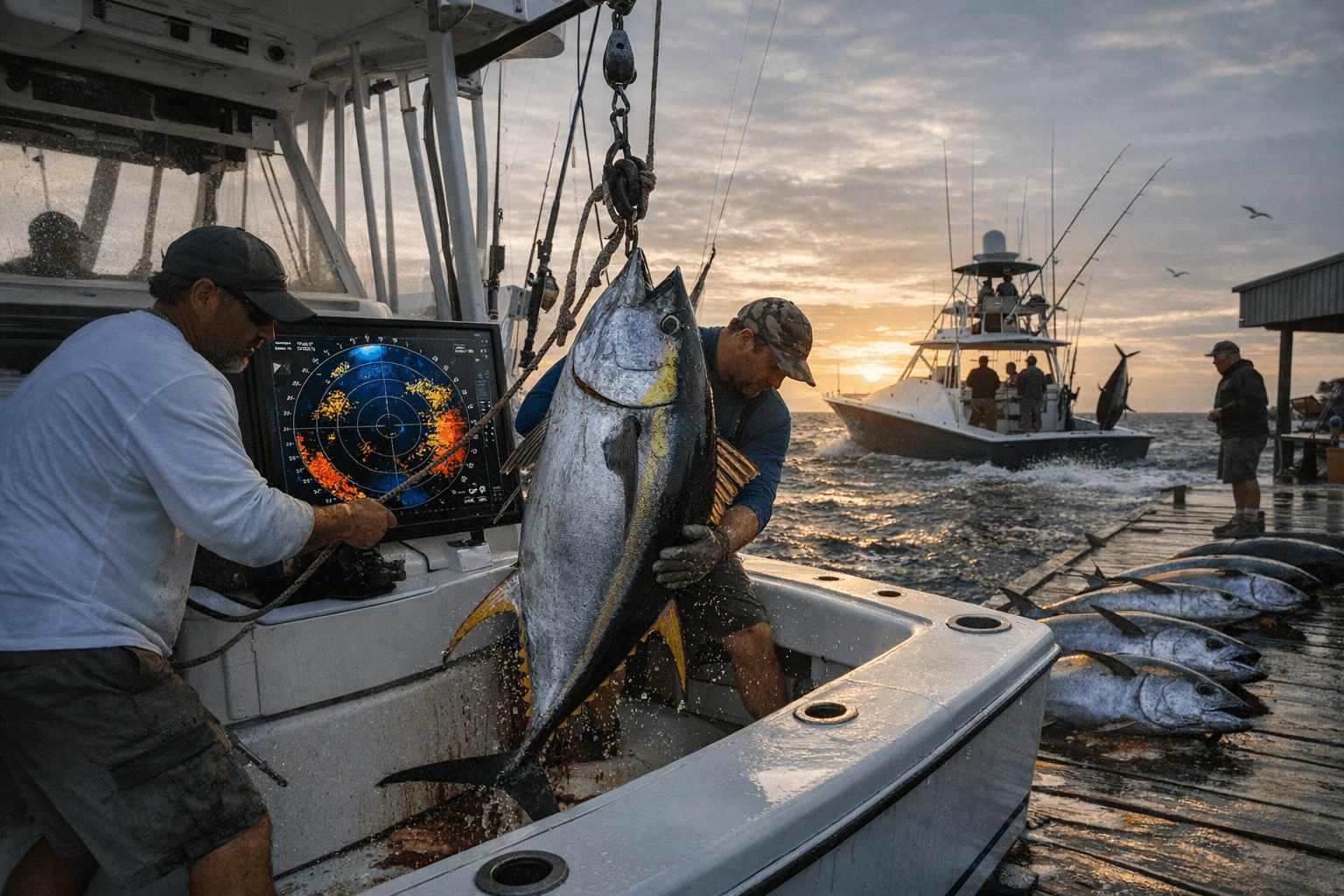
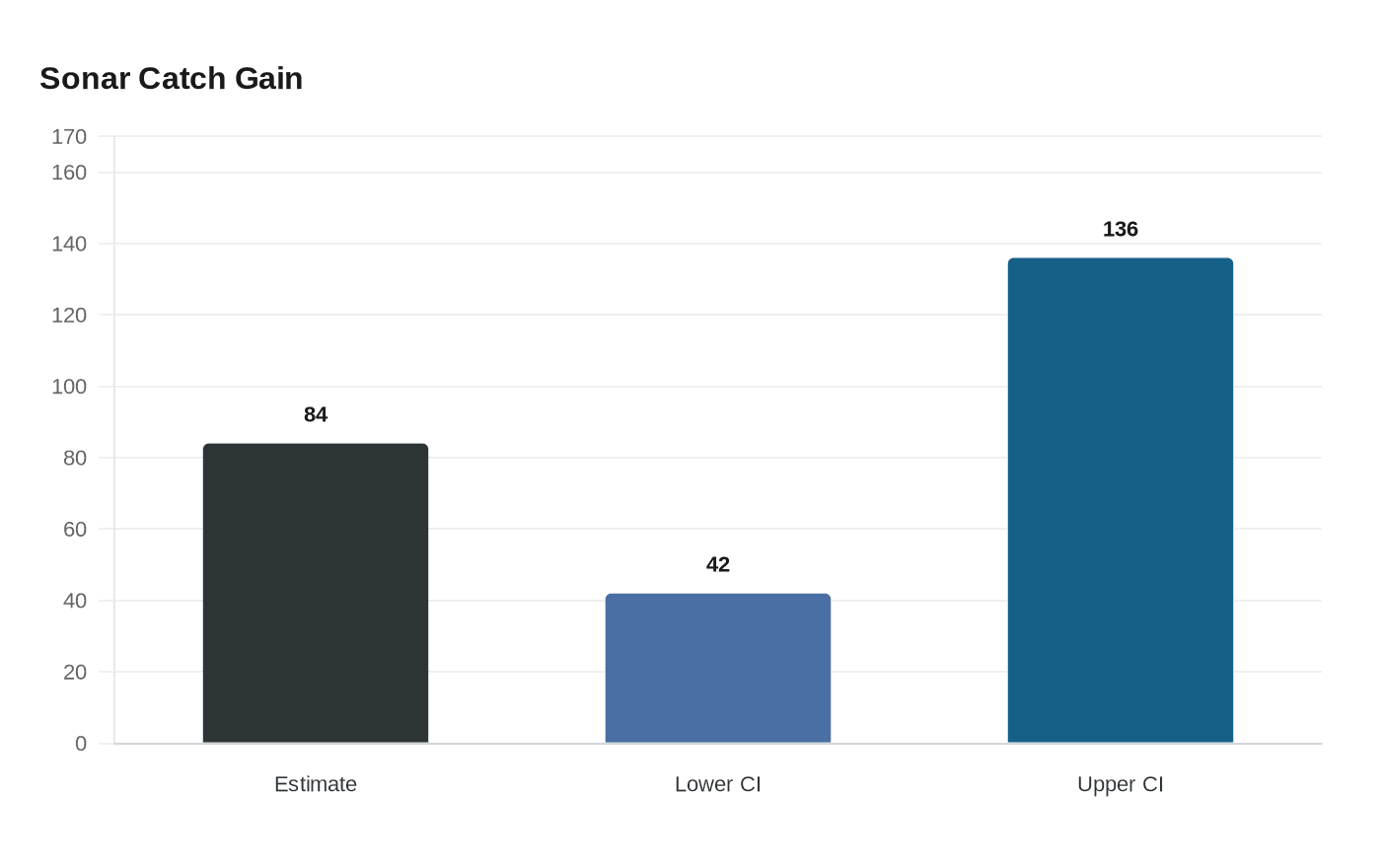
A yellowfin bite in a packed North Carolina tournament now looks very different from the one a crew faced just a few seasons ago. In a new open-access study, Brendan J Runde, Paul J Rudershausen and Jeffrey A Buckel found that boats using omnidirectional sonar caught 84% more fish than boats without it, a gap large enough to reshape how serious pelagic crews think about winning.
The paper, “Omnidirectional sonar increases catch efficiency in a pelagic sportfishing tournament,” was published April 16, 2026 in the ICES Journal of Marine Science, after being received December 2, 2025, revised March 23, 2026 and accepted March 27, 2026. The team analyzed two consecutive years of tournament catch data from North Carolina, where boats targeted six pelagic species: three istiophorid billfishes, dolphinfish, wahoo and yellowfin tuna. After accounting for vessel-specific differences and year-to-year variation, the sonar boats still came out far ahead, with a 95% credible interval of 42% to 136%.
That is not a small equipment bump. In practical tuna terms, omnidirectional sonar gives a crew the ability to identify and target individual fish, which matters when yellowfin are mixed in with billfish and wahoo and every minute offshore costs fuel, daylight and bait. The study also found that sonar-equipped boats won more than the expected number of prizes for non-billfish species, which suggests the technology is changing tournament outcomes, not just improving effort at the margins.
The authors linked the pattern to the way major fishing tools have historically altered catch efficiency in jumps rather than smooth progress. For teams already running top-tier electronics, the result reads less like a luxury feature and more like a competitive necessity. The study stops short of calling for a ban, but it does say the findings matter for fishery managers concerned about sustainability as new technology spreads through the fleet.
That tension is already visible along the Tar Heel coast. The North Carolina Governor’s Cup Billfishing Conservation Series operates with eight major billfish tournaments, and yellowfin tuna, dolphinfish and wahoo are prized alongside billfish in official tournament materials. The NC Ducks Unlimited Band the Billfish Tournament, founded in 1989, has even carved out separate SONAR and NON-SONAR release divisions in its 2025 prize structure, a clear sign that organizers already see sonar access as a meaningful dividing line.
For tuna crews trying to keep pace, the message is blunt: the boats that can see more in the water are not just finding fish faster. They are winning more often, and the gap is wide enough to change who gets paid at the dock.
This article was produced by Prism’s automated news system from verified source data, official records, and press releases, then run through automated quality and moderation checks before publishing. The system is built and supervised by the people who set the standards it runs under. Read our full AI policy.
Did this article answer your question?