Pacific Tuna Catch Hits Record High in 2024, but Climate Risks Loom
The Western and Central Pacific posted its highest-ever tuna catch in 2024, yet the same report flags widening data gaps that put next season's rules at risk.
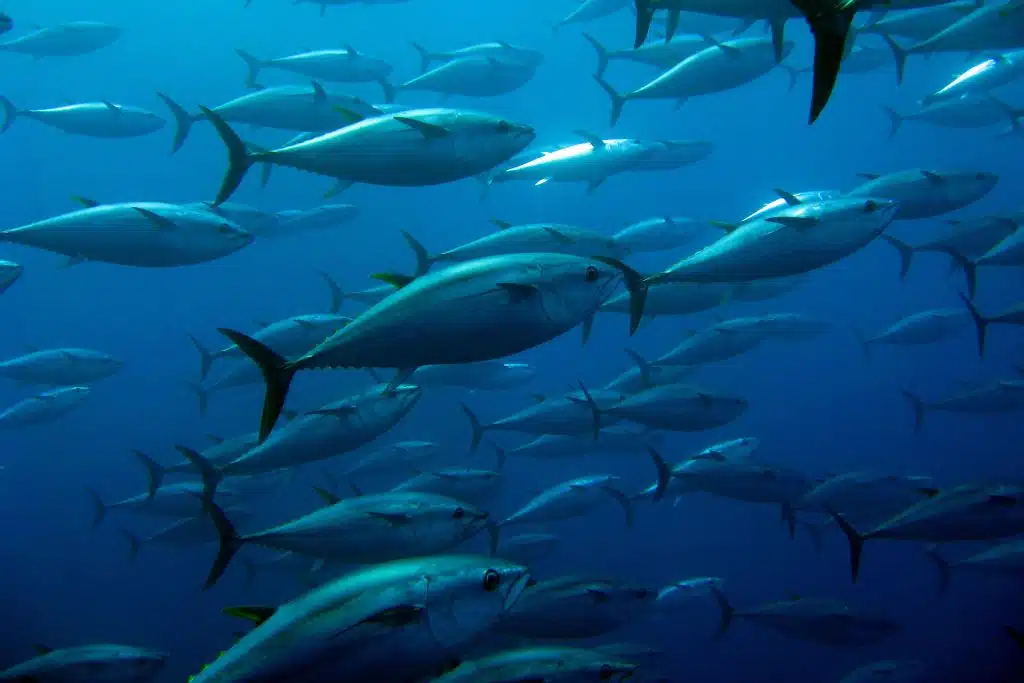
The Western and Central Pacific just posted the highest tuna catch ever recorded, skipjack included. Pull back one layer, and the same WCPFC22 Summary Report delivering that headline is also flashing yellow on every signal that precedes reactive management changes: widening stock assessment uncertainty, climate-driven distribution shifts, and biological data gaps that scientists themselves describe as urgent.
Released March 11, 2026, and drawing on the Commission's 22nd annual meeting in Manila from December 1-5, 2025, the report covers the ocean region that produces enormous shares of the world's tuna supply, particularly skipjack, yellowfin, bigeye and South Pacific albacore.
The catch picture was largely positive. Skipjack set an all-time record. Yellowfin and bigeye saw only minor changes. South Pacific albacore rose notably compared to 2023. The Commission's aggregate stock language was unambiguous: "All key tuna stocks (skipjack, bigeye, yellowfin and South Pacific albacore) are currently assessed as in the green (not overfished and not undergoing overfishing) and close to their TRPs or other relevant objectives."
What moved was the geography. Purse seine fleets contracted to the west in 2024, shifting heavily toward free-school sets rather than FAD-associated sets, which pulled purse seine bigeye catch slightly lower despite more total sets being conducted. Scientists attributed the westward migration to La Niña: "Climate-driven changes in tuna distribution, rather than the FAD closure regime, appeared to be the primary driver of the recent set-type patterns." Overall effort across all gears remained generally stable; the distribution did not.
That La Niña footprint is the key forward-looking variable. As ENSO conditions evolve through 2026, the distribution that produced last year's record may not hold. Fish that pushed west under La Niña conditions may redistribute as the climate signal changes, compressing or expanding seasonal windows in the specific fishing grounds charter captains and offshore anglers plan their seasons around.

Underneath the distribution uncertainty is a deeper problem: the science is getting noisier. Scientific experts flagged higher uncertainty in stock assessments due to gaps in biological parameters and data inputs. South Pacific albacore was called out specifically for increasing assessment uncertainty, and changes in recruitment, natural mortality estimates and model choices have widened the range of projected outcomes. Southwest Pacific striped marlin remains classified as overfished, with uncertainty attached even to that finding.
Healthy stocks combined with deteriorating model confidence is the specific pairing that sends managers toward precautionary restrictions. The report warned explicitly that distribution shifts and rising assessment uncertainty could translate into changed local-season timing, new retention rules, and area-based restrictions for recreational anglers and charter operations across Pacific rim countries. Those measures tend to arrive quickly.
Strengthened monitoring and improved data collection were identified as urgent priorities, but those programs take years to build. The 2024 record catch is the clearest data point on the table; whether the biological data gaps undermining albacore modeling get closed before managers feel compelled to act without them will determine how much of that access holds into the seasons ahead.
This article was produced by Prism’s automated news system from verified source data, official records, and press releases, then run through automated quality and moderation checks before publishing. The system is built and supervised by the people who set the standards it runs under. Read our full AI policy.
Did this article answer your question?