Research Assistant, Doctoral Student Luka Žuvić Connects Communities to Bluefin Tuna Research
Croatian researcher Luka Žuvić links fishermen, labs and national open-science systems to make Atlantic bluefin tuna research more visible and usable for communities.
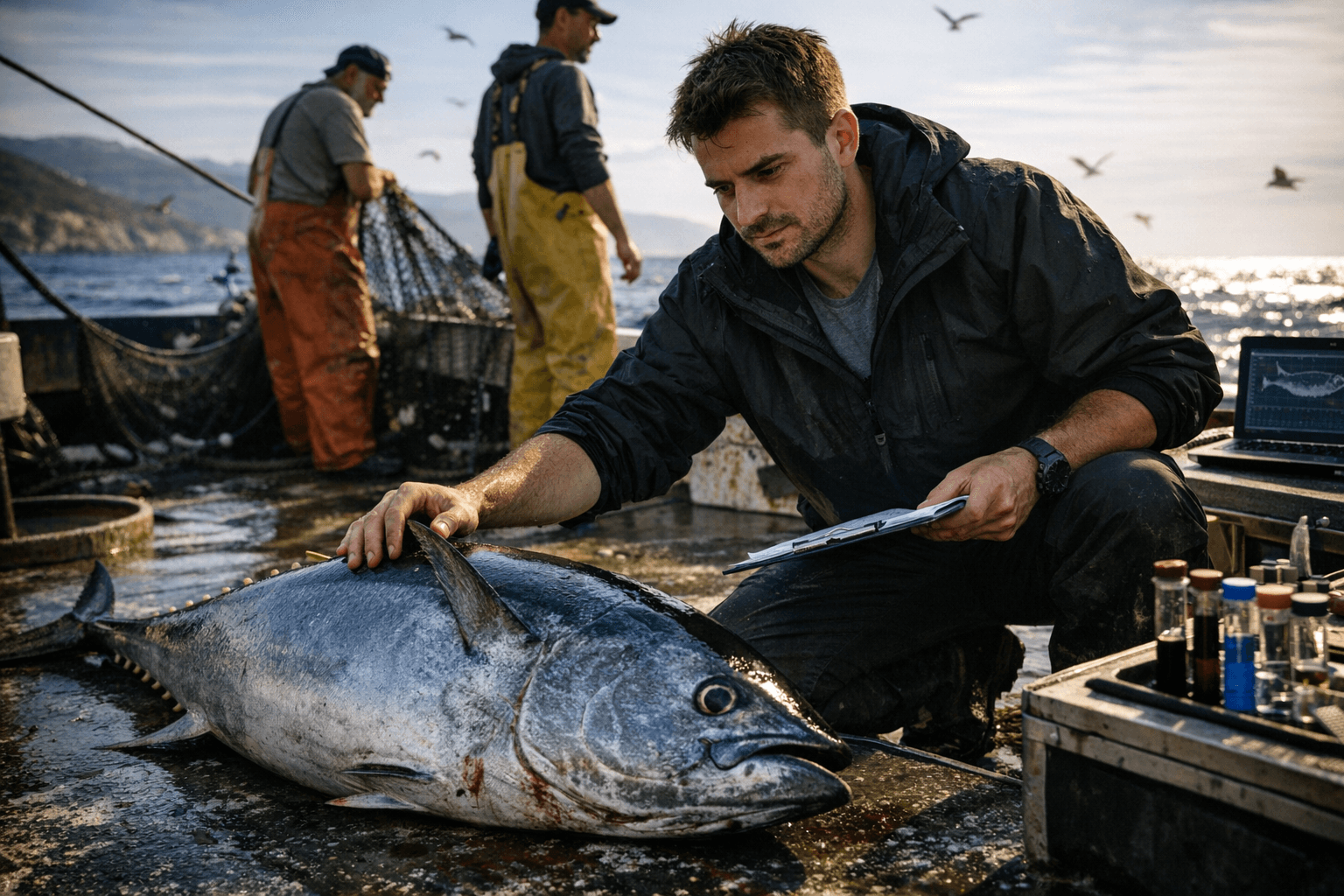
As he enters a laboratory with saltwater pools full of fish, Luka Žuvić explains how climate change is affecting the feeding ecology and reproductive biology of Atlantic bluefin tuna, and how the species is adapting. That scene sets the tone for work that moves beyond the lab bench to the docks and policy tables, connecting local fishermen, aquaculture interests and national research infrastructure.
Žuvić, described as Research Assistant, Institute of Oceanography and Fisheries, Split in the profile header and described as a doctoral student working at the Croatian Institute of Oceanography and Fisheries in the Adriatic coastal city of Split in the body text, focuses on Atlantic bluefin tuna biology. His projects span feeding ecology - using stomach-content DNA metabarcoding - identification of juveniles, reproductive biology and research into tuna aquaculture. The range of techniques and topics links basic biology with applied questions around growing and managing bluefin stocks.
Connecting with the community is crucial for Žuvić’s research. Conversations with fishermen help him better understand the bluefin tuna's habits and how marine pollution affects the fish. "They are also curious about the biology and ecology of bluefin tuna," Žuvić says. He frames those conversations as part of a broader push to make science less remote. "Sometimes scientific research is invisible," he adds. "That's why we as researchers need to go out from our institutions and labs to the public so that we can show them what we are working on. This helps create more trust in the scientists and their research." Sharing research with non-scientists benefits everyone, the work argues, by improving data quality, local stewardship and policy relevance.
That local engagement is paired with attention to national research visibility. Current Research Information Systems, in particular the Croatian Research Information System CroRIS, play a role in making outputs easier to find and share. CroRIS "brings together information on scientific activities across Croatia into one central system" and "makes it easier for researchers around the world to share and access scholarly articles, datasets, and other academic materials without restrictions." The CroRIS entry is recorded as a conference or workshop item published in conference proceedings (UNSPECIFIED), with uncontrolled keywords including current research information systems ; national CRIS ; system interoperability ; open science ; transparency ; research ecosystem ; CroRIS. Subjects listed are SOCIAL SCIENCES > Information and Communication Sciences and SOCIAL SCIENCES > Information and Communication Sciences > Library Science, division Centre for scientific information, depositing user Sofija Konjević, date deposited 17 Dec 2024 10:59; the URI field is blank in the record. CroRIS is described as set to expand its features, improving how it works with digital repositories and managing research data, and these updates aim to make the research process more connected, easier to navigate, and more efficient, highlighting Croatia's dedication to open science.
For anglers, fishers and coastal communities, the practical value is clear: molecular methods like stomach-content DNA metabarcoding sharpen understanding of diet shifts under warming seas, juvenile identification improves monitoring of recruitment, and closer ties between researchers and fishermen can speed problem solving on pollution, stock status and aquaculture practices. As CroRIS and local outreach both push for greater visibility, the next step is turning that visibility into shared data, management decisions and trust at sea.
This article was produced by Prism’s automated news system from verified source data, official records, and press releases, then run through automated quality and moderation checks before publishing. The system is built and supervised by the people who set the standards it runs under. Read our full AI policy.
Did this article answer your question?