Shark Bites Chunk From Tuna Just as Angler Reaches the Boat
A shark took a chunk from a boatside tuna on March 25 in footage that spread fast; 77% of surveyed anglers have faced depredation, and the fix starts with shortening the fight.
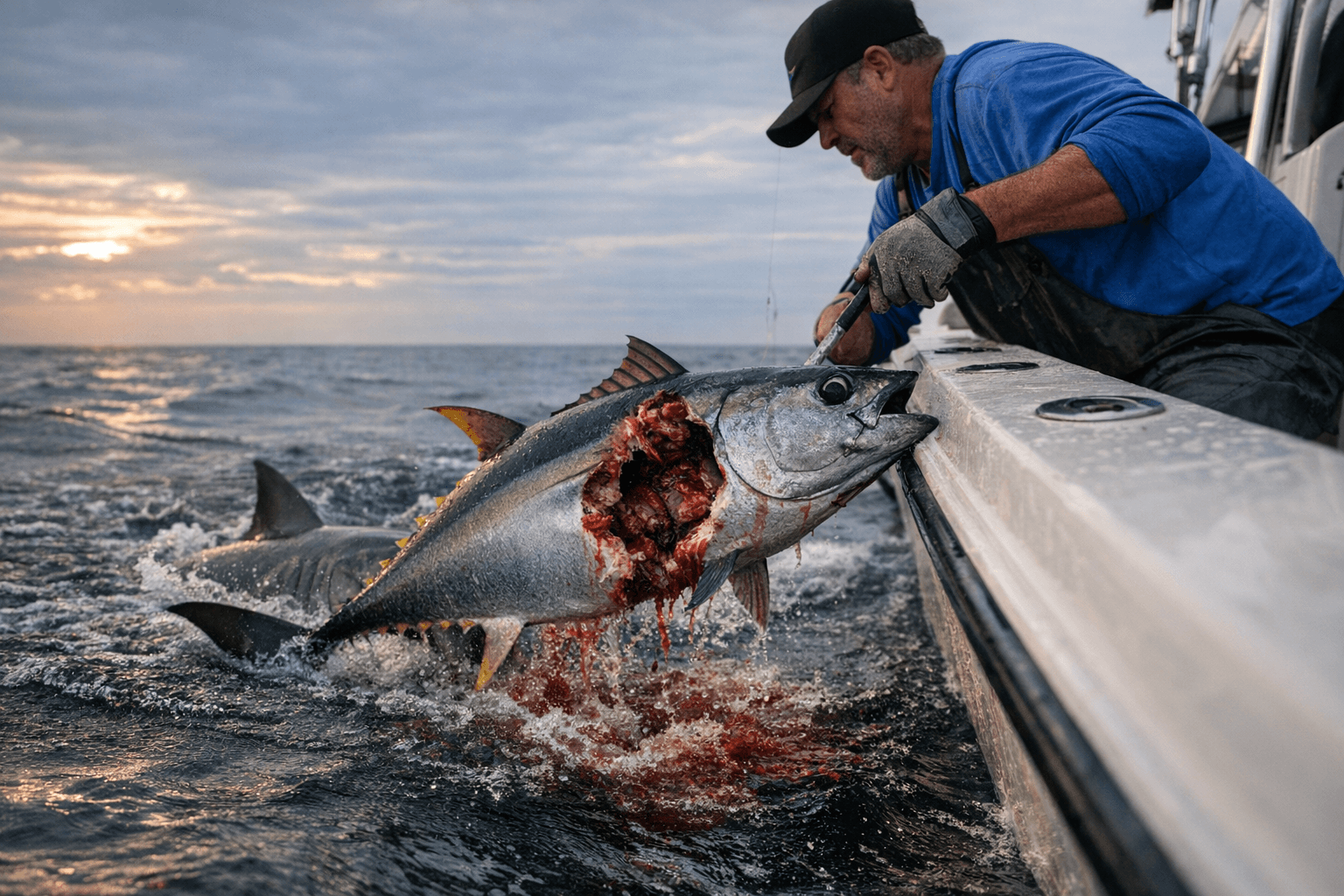
Seventy-seven percent of surveyed saltwater anglers have watched a shark take their fish, partially or completely, within the last five years. A clip that spread via MSN's video feed on March 25 reminded anyone who had forgotten what that moment looks like: an angler fought a tuna to the gunwale, only for a shark to rush in and remove a sizeable chunk of the fish before it could clear the rail.
The footage circulated widely because it captures something specific that statistics alone do not. The window between a tuna breaking the surface and that fish on the deck is measured in seconds; it is also precisely when sharks move. Blood, thrashing, and the low-frequency vibrations of a boat backing down are all learned cues. Research in high-depredation fisheries has documented sharks surrounding a vessel within 15 to 20 minutes of engine noise alone, with no bait or chum in the water.
The cost of a single depredation event compounds fast. A shark-bitten tuna is generally unsuitable for sashimi or sale without full inspection and trimming; most operators discard badly damaged portions outright to avoid histamine and bacterial risk. That means the fish, the quota slot it occupied, and whatever fighting time it took are all gone. Add $50 lures, a blown leader, and tackle stress to the ledger of a trip where sharks showed up early, and a $2,000-plus charter day starts to look very different.
The most controllable variable in the equation is fight time. Stepping up to 50-pound-class stand-up gear, or heavier, allows enough sustained pressure to shorten a yellowfin or bluefin fight considerably compared to light-tackle setups, reducing blood in the water and the acoustic signature that draws predators toward the boat. Once sharks appear boatside, repositioning the angler toward the bow and adjusting the captain's heading can swing the fish away from a circling predator; a quick burst of forward throttle disrupts the shark's approach angle entirely.
If a depredation event has already occurred, move the boat. At least a half-mile of relocation breaks the reward cycle because a shark that has just fed will continue working the same area. Wire or heavy-monofilament leaders will not stop a determined shark mid-fight, but they do reduce bite-offs that send $50 plugs and the entire hookset to the bottom.
The harder call is when to cut the line altogether. If multiple sharks are actively circling and escalating, continuing the fight rewards every predator in the area and builds the kind of surface stimulus that draws more in. A partially eaten tuna is already a food-safety problem. The practical decision tree looks like this: one shark circling with the fish still intact, change the angle and keep fighting; two or more sharks escalating toward the surface with a damaged fish, cut, move the boat, and start the next drift without a blood slick already working the water.
None of this replaces crew preparation. Clear landing roles, a rehearsed gaff sequence, and the standing rule that no hands go near a struggling fish at the gunwale are what separate a clean 30-second lift-and-deck from the scene in that clip. Charter operators running known shark grounds brief all of this before lines go in the water, not after.
This article was produced by Prism’s automated news system from verified source data, official records, and press releases, then run through automated quality and moderation checks before publishing. The system is built and supervised by the people who set the standards it runs under. Read our full AI policy.
Did this article answer your question?