South Africa Albacore Fleet Earns MSC Certification for Yellowfin Bycatch
South Africa's albacore pole-and-line fleet earned MSC certification covering yellowfin tuna bycatch across 50 vessels, the latest step in the fishery's expanding sustainability story.
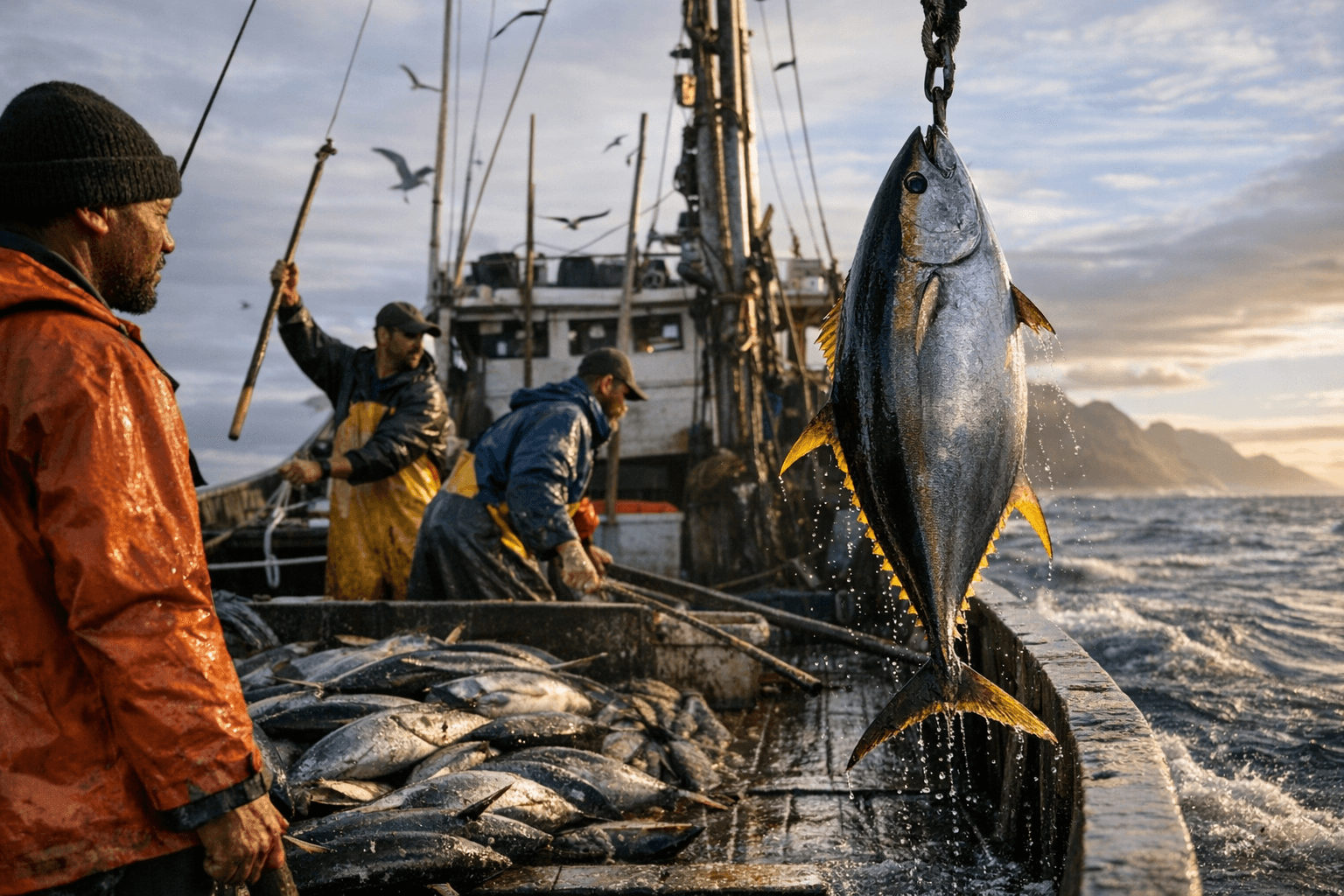
Getting a tuna to the boat clean is only half the story. The other half is accounting for every fish that comes over the rail, including the ones you weren't targeting. South Africa's albacore pole-and-line fishery just closed that loop, earning Marine Stewardship Council certification that formally covers yellowfin tuna bycatch across 50 of its vessels, extending a sustainability framework that the fleet spent years building from scratch.
The certification adds yellowfin (Thunnus albacares) as a certified species alongside the southern albacore (Thunnus alalunga) that anchors the fishery, which operates largely out of the harbours at Cape Town and Hout Bay. The MSC's expanded scope reflects work the fishery has been doing since a dedicated onboard observer program was established in late 2020 to collect independently verified catch data, including species encountered as bycatch, their condition at capture, and release outcomes.
Pole-and-line is already among the cleanest live-bait methods in the commercial tuna world. Each fish is hooked individually, which sharply limits non-target catch compared to longlining or purse seining. But "minimal bycatch" is not the same as "no bycatch," and the distinction matters to MSC. The observer program gave assessors what they needed: length and weight data, bait usage records, and species interaction logs that could be independently verified against the MSC Fisheries Standard.
The fishery has been building its certification portfolio in layers. ICV Africa, which catches roughly 2,500 metric tonnes annually, representing nearly half the total fishery volume, became the first South African tuna operation to earn MSC certification in August 2024, completing the process through the MSC's In-Transition program. The Southern Africa Sustainable Tuna Association (SASTUNA), an alliance of more than 130 independently owned small, medium, and micro-enterprise vessels from the Western Cape, followed with its own albacore certification in January 2025. The yellowfin bycatch extension adds another layer to that foundation.
Around 2,500 people work across the South African albacore pole-and-line sector, and southern albacore catches have averaged approximately 3,200 tonnes per year over the last decade. The fleet's albacore stocks fall under ICCAT oversight as a South Atlantic highly migratory species, and MSC-certified fisheries operating in that ocean are required to demonstrate active participation in harvest strategy development for the region.
The practical impact for the global tuna market is real: albacore from this fishery is already canned and shipped to processors serving supermarkets in the U.S. and Europe. Yellowfin moving under that same MSC umbrella broadens the certified volume that buyers and retailers can trace back to a verified-sustainable source, at a moment when transparency about exactly what is in a can of tuna is worth more than it has ever been.
This article was produced by Prism’s automated news system from verified source data, official records, and press releases, then run through automated quality and moderation checks before publishing. The system is built and supervised by the people who set the standards it runs under. Read our full AI policy.
Did this article answer your question?