Spot Schooling Tuna by Reading Surface Birds and Bait Signs
Read shearwaters, terns, and frigatebirds working bait to locate schooling tuna; spotting bird-and-bait signs turns fleeting feeding events into fishable opportunities.
Shearwaters, terns, and frigatebirds working bait are often the earliest and clearest signs of schooling tuna near the surface. For tuna anglers, learning to read those bird movements and the bait they chase is one of the fastest ways to find live schools before the action breaks up.
Start with the birds. Surface birds that are "working bait" usually mean a concentration of baitfish is present and predators are feeding close to the surface. A compact vortex of diving terns or a trail of shearwaters following a slick signals a dynamic feeding patch. Frigatebirds often patrol the edges of these events and can point anglers to where bait is being pushed up. Read the pattern: tight, aggressive bird activity usually indicates active strikes; looser, scattered birds can mean baitfish are present but tuna are not yet committed.
Surface bait signs amplify what the birds tell you. Look for bait on the surface, splashes, and dark streaks or slicks where bait and predators are concentrated. These visual cues are brief and can disappear as quickly as they form, so mark the position on your chartplotter or note GPS coordinates as soon as you see birds working bait. That saves time when the birds scatter and the school moves.
Subsurface indicators matter, too. Feeding tuna create boils, fast-moving shadows, and rapid changes in water color that are visible to experienced eyes. Electronic tools such as a sounder can confirm a bait-ball beneath the surface when visual signs are ambiguous. Combine visual observation with electronics to narrow the strike zone and choose the right presentation.
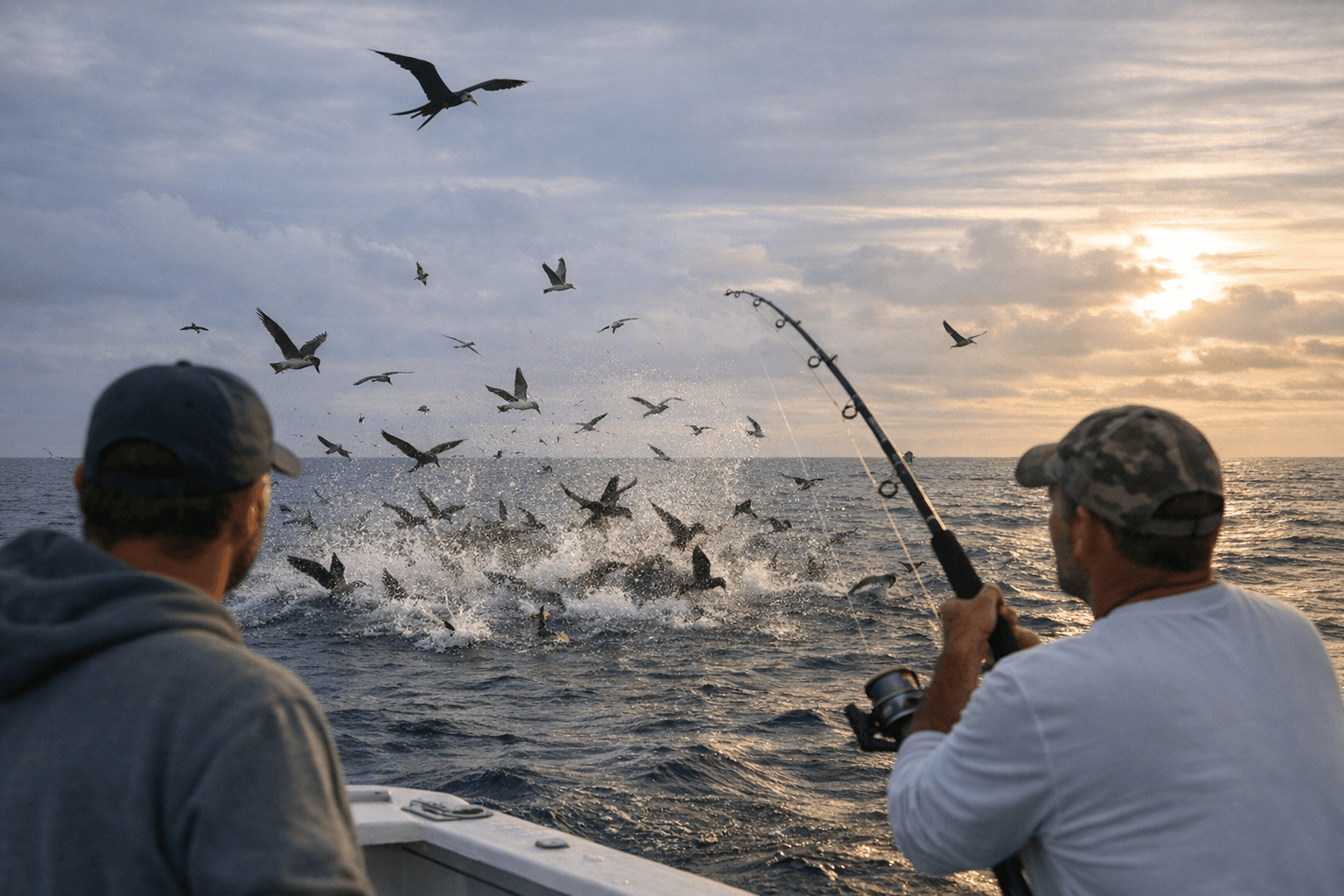
Approach and presentation are practical follow-ups. Close the distance without spooking the birds, keep baits or lures ready, and be coached to cast where the birds and bait converge rather than where the biggest splash occurred. Quick, decisive presentations convert short-lived feeding events into hookups.
This approach keeps days on the water productive and minimizes fuel and time wasted chasing false marks. For local anglers, practicing bird-reading on every trip builds pattern recognition that pays off on busy grounds and in calm windows when schools feed intermittently. Keep pen and log handy, note which bird behaviors preceded hookups, and share reports with other captains to improve communal knowledge.
What this means for readers is simple: sharpen your eyes, learn the birds, mark the bait, and be ready to strike. That sequence is a small discipline that often separates long, empty drifts from fast, tuna-filled half-days.
Know something we missed? Have a correction or additional information?
Submit a Tip