Trolling vs. Chunking: Which Tuna Technique Should Beginners Try First
Two techniques dominate beginner tuna fishing, and choosing the right one first can mean the difference between a full fishbox and a frustrating day offshore.
Stepping onto an offshore boat for the first time with tuna on the brain is equal parts exciting and overwhelming. The gear is heavy, the ocean is big, and the fish, whether yellowfin, blackfin, school-size bluefin, or bigeye, don't stay in one place. Before you even think about rigging up, you'll face a fundamental question that divides anglers at every dock from the Gulf to the Northeast canyons: do you troll, or do you chunk?
Both methods have produced limits of yellowfin and both have sent anglers home empty-handed. The difference, especially for someone just getting started, is understanding what each technique actually demands from you, your crew, and your equipment before you commit to one or the other.
What trolling actually involves
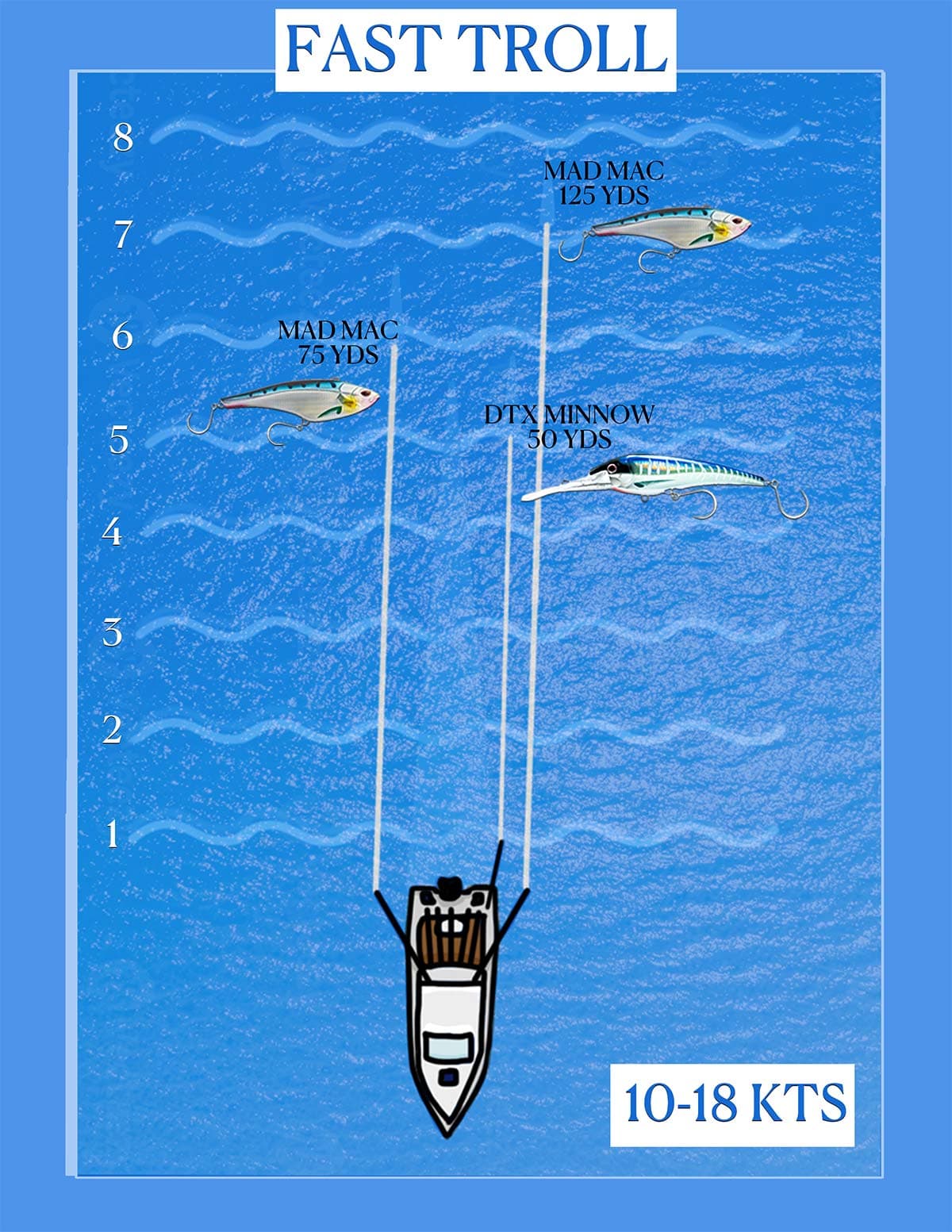
Trolling means putting lures or rigged baits in the water behind a moving boat and covering ground until you find fish. At its core, it's a searching technique. You're running spreads of skirted lures, cedar plugs, or rigged ballyhoo at anywhere from 6 to 9 knots, reading the water for temperature breaks, color changes, and bait activity while your lines do the work behind you.
For beginners, the appeal is obvious: the boat's movement does a lot of the heavy lifting. You don't need to know exactly where the fish are holding before you leave the dock. You're prospecting, running likely zones, and letting the spread cover water. When a fish fires on a lure and that rod doubles over in the holder, everything shifts into high gear fast.
That said, trolling has its own learning curve. Spread configuration matters enormously. Running lures at the wrong depth, the wrong distance behind the boat, or in the wrong sea conditions can mean hours of dragging gear through productive water without a single strike. Learning to read a spread, recognize when a lure is not tracking right, and adjust positions takes time on the water. Rigging ballyhoo correctly so they swim without spinning is a skill that takes repetition to develop.
The gear requirements for trolling are also worth understanding upfront. Heavy conventional reels in the 50- to 80-wide class are standard for offshore trolling targeting larger yellowfin or bluefin. Lighter 30-class outfits work well for blackfin and school-size fish. Rod holders, outriggers, and a well-organized cockpit make the difference between a smooth hookup and a tangled disaster when multiple rods go off at once.
What chunking demands from you
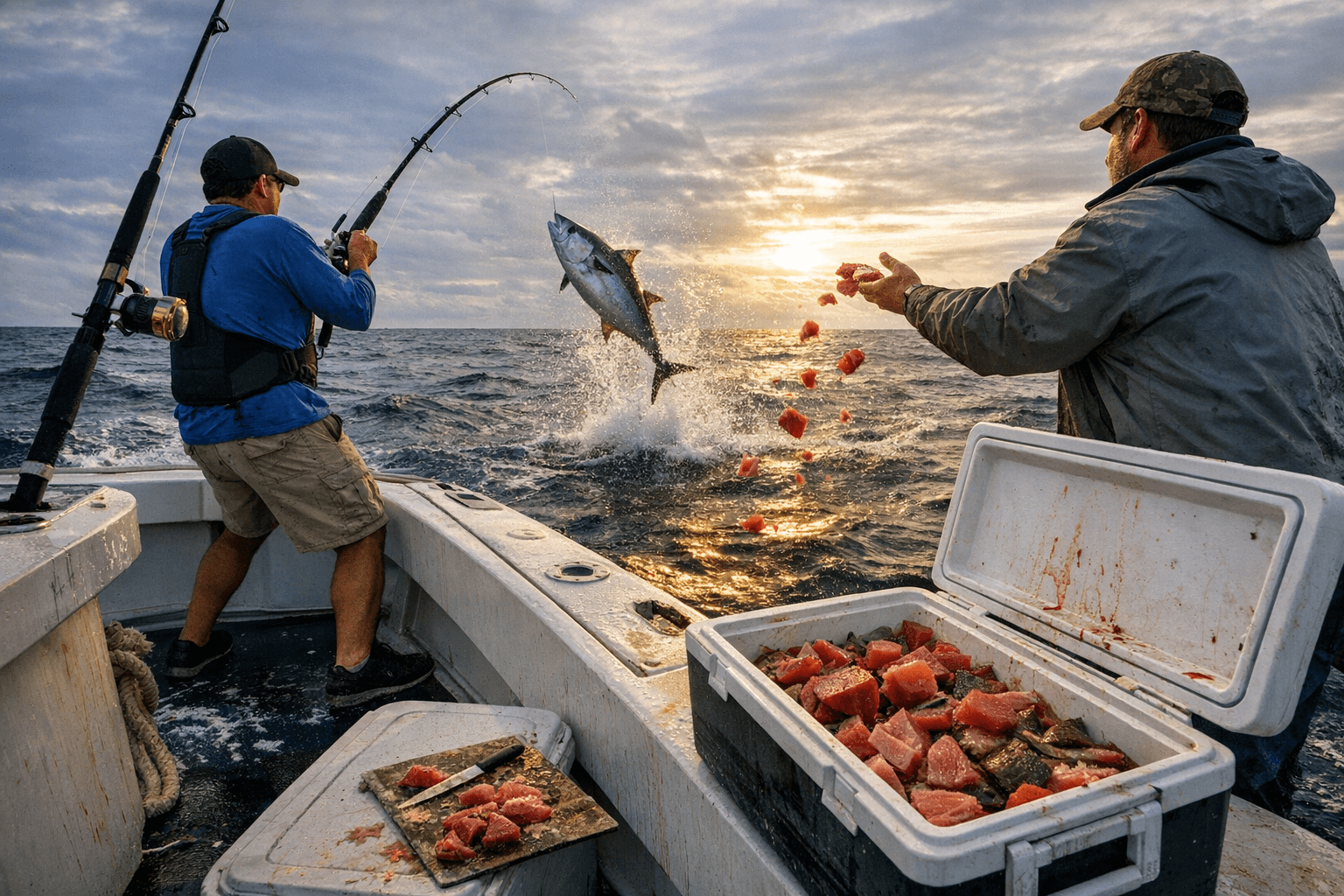
Chunking is a completely different game. Instead of covering water, you stop the boat, find the fish, and bring them to you. The technique involves cutting baitfish, typically butterfish, mackerel, or menhaden, into chunks and tossing them overboard in a steady stream to create a slick that attracts and holds tuna near the boat. Once fish are feeding in the chum slick, you present baited hooks drifted back naturally with the current.
The first thing chunking teaches you is patience and discipline. Maintaining a consistent chum slick is not glamorous work. You're cutting bait and tossing pieces every minute or two to keep the scent trail intact. Too much bait thrown too fast and you're feeding fish without hooking them; too little and the slick dies, fish lose interest, and your drift becomes unproductive.
When chunking works, it works spectacularly. Yellowfin and bigeye that come up into a slick can become aggressive feeders, and the visual element, watching fish slash through chunks just feet from the boat, creates a level of excitement that trolling rarely matches. Many experienced offshore anglers consider a hot chunk bite among the most technically demanding and rewarding situations in saltwater fishing.
The technique also gives beginners an intimate look at tuna behavior. You'll learn to watch how fish are positioned in the slick, adjust your hook presentation based on what depth they're feeding at, and read their mood. An educated eye developed while chunking translates directly into better fishing across nearly every other technique you'll eventually learn.
Which one is actually better for a beginner?
Honest answer: trolling has a lower barrier to entry on your first few trips, but chunking builds better foundational skills for the long term.
Here's the practical breakdown:
- Trolling lets you cover ground when you don't know where the fish are concentrated, which is a common situation for anglers new to a given body of water.
- Trolling gear is forgiving of beginner mistakes in presentation because the boat's speed creates action in the lure regardless of angler input.
- Chunking requires you to locate and anchor or drift on fish before you start, which means you need reliable intelligence from a fleet, recent reports, or access to good sonar interpretation.
- Chunking demands more active participation from everyone on the boat and rewards anglers who pay close attention to detail.
- Blackfin tuna, common inshore and in shallower Gulf and Atlantic waters, respond very well to both methods, making them ideal target species while you're developing your skills.
If you're heading out with an experienced captain or fishing with a charter, chunking becomes far more accessible because the locating work is handled for you. In that context, spending a full day on a chunk bite is one of the best possible classrooms for understanding how tuna feed.
Matching the technique to your situation
The real-world answer for most beginners is that your first tuna trips will likely involve some combination of both. Many offshore boats troll to the fishing grounds, work structure or temperature breaks, and transition to a chunk bite once birds, breaking fish, or sonar marks confirm tuna are in the area. Understanding both methods, even at a basic level, means you're useful and engaged no matter what the day calls for.
Gear overlap also exists: a solid 30- or 50-class conventional reel spooled with 65- to 80-pound braid handles both trolling and chunking duties effectively, which means building a versatile outfit gives you options without doubling your investment.
Yellowfin and bigeye, in particular, reward anglers who can adapt. These fish move, and the boats that catch them consistently are rarely locked into a single approach. Starting with trolling gives you mobility and confidence offshore; adding chunking to your repertoire turns you into a complete tuna angler. The goal is not to pick one technique forever, but to understand both well enough that the fish, and the conditions, make the decision for you.
This article was produced by Prism’s automated news system from verified source data, official records, and press releases, then run through automated quality and moderation checks before publishing. The system is built and supervised by the people who set the standards it runs under. Read our full AI policy.
Did this article answer your question?