Vessel-Level Visibility Could Transform Transparency in Tuna Supply Chains
A new Global Fishing Watch framework linking six industry tools could finally make tuna supply chains traceable from vessel to shelf.

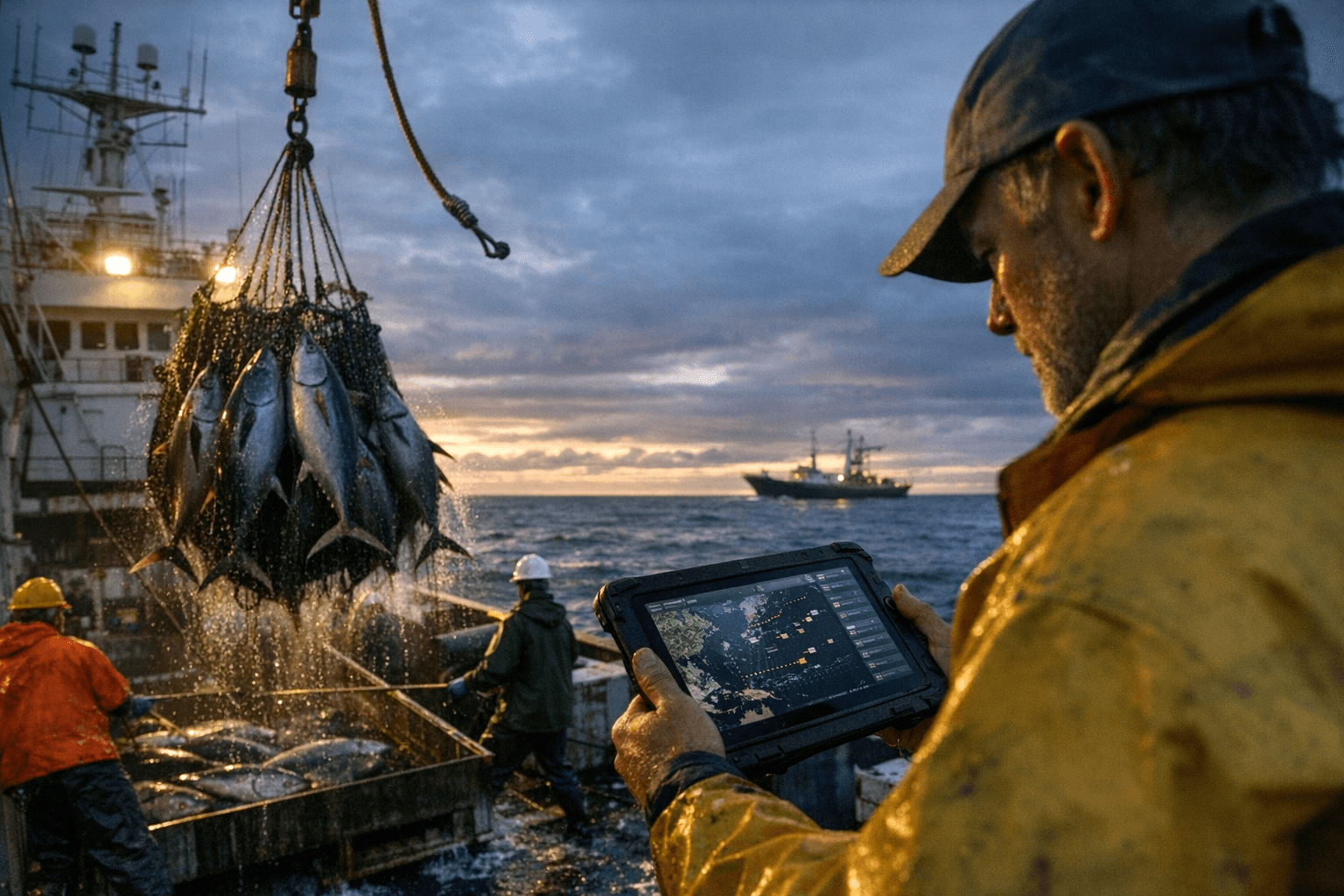
Somewhere between a longline vessel working the high seas and a can of tuna on a supermarket shelf, accountability has a tendency to disappear. The journey tuna takes through global supply chains is long, complex, and for most participants, genuinely difficult to see. That opacity has real consequences, and a new analysis from Global Fishing Watch is making the case that vessel-level visibility is the missing piece that could change everything.
Published on March 11, 2026, the analysis by Caitlin Gilmour, a seafood industry manager at Global Fishing Watch, argues that reshaping the seafood supply chain begins with fixing what we can actually see at the vessel level. The piece is aimed squarely at industry, regulators, and supply-chain actors, and it frames the problem with unusual clarity: "From fishing vessels operating on the high seas in distant-water fisheries, to grocery store shelves across continents, seafood — particularly tuna — often passes through a vast and opaque network."
Why visibility gaps are a problem that compounds
The opacity in tuna supply chains is not just an inconvenience for compliance teams. Gilmour's analysis is explicit that "this lack of visibility has significant implications — not only for sustainability and labor rights, but also for the ability of companies, regulators and consumers to manage and mitigate risk." As global demand for seafood continues growing, so does the complexity of the networks delivering it, meaning the consequences of that opacity scale up in parallel.
For the tuna sector specifically, the stakes are high. Distant-water fisheries operate far from port, often across multiple jurisdictions, with catch passing through transshipment, processing, and distribution networks that span continents. At each handoff, traceability can degrade. Without reliable vessel-level data anchoring the chain from the start, efforts to verify sustainability claims, detect labor abuses, or manage sourcing risk become significantly harder downstream.
A three-way collaboration targeting the data gap
Global Fishing Watch's response is a collaborative effort with two of the most established organizations in tuna sustainability: the Sustainable Fisheries Partnership (SFP) and the International Seafood Sustainability Foundation (ISSF). Together, the three organizations are working to integrate and expand existing databases in a way that improves traceability across global tuna fisheries.
As Gilmour writes, "As part of a broader suite of tools supporting the seafood industry to enhance transparency and accountability, Global Fishing Watch is collaborating with the Sustainable Fisheries Partnership (SFP) and the International Seafood Sustainability Foundation (ISSF) to integrate and expand existing databases that improve traceability in global tuna fisheries."
What makes this collaboration practically significant is that it links tools already in active use rather than building from scratch. The integration connects:
- SFP's FishSource and Seafood Metrics
- ISSF's Proactive Vessel Register and Vessels on Other Sustainability Initiatives
- Global Fishing Watch's Vessel Viewer and Marine Manager
Each of these tools carries distinct, complementary information. SFP's FishSource and Seafood Metrics provide stock-level and fishery-level assessments used widely by buyers and sustainability teams. ISSF's Proactive Vessel Register documents vessels that meet ISSF conservation measures, while Vessels on Other Sustainability Initiatives tracks participation in broader certification and improvement programs. Global Fishing Watch's Vessel Viewer and Marine Manager contribute monitoring, control, and surveillance capacity rooted in satellite-based vessel tracking data.
Linking these databases creates something none of them offers individually: a layered view that connects vessel identity and behavior to fishery-level sustainability data and market-facing certification status. The analysis describes the combined resources as providing "a more comprehensive transparency framework, incorporating sustainability indicators that extend beyond fish-stock health and management practices."
What transparency actually requires
The analysis is careful to distinguish between data collection and genuine transparency, a distinction that matters enormously for anyone who has watched box-ticking replace accountability in supply-chain due diligence. Gilmour's framing on this point is direct: "Improving transparency is not just about data collection — it's about making that information reliable, verifiable, accessible and actionable."
That four-part standard, reliable, verifiable, accessible, and actionable, sets a meaningful bar. Reliability means the underlying data reflects reality consistently. Verifiability means it can be independently checked, not simply asserted. Accessibility ensures the right actors across industry and regulatory contexts can actually reach and use the data. And actionable means the information connects to decisions: sourcing choices, risk assessments, compliance determinations, market access conditions.
The path forward outlined in the analysis rests on two reinforcing steps: strengthening verification of vessel-level information, and integrating existing tools and databases so that data flows between systems rather than sitting in isolated silos. "By strengthening verification and integrating existing tools and databases, the seafood industry can better manage risk, meet market expectations and support long-term sustainability," Gilmour writes.
Who this framework serves
The intended audience for this integrated approach is deliberately broad. Industry participants, including tuna processors, traders, and retailers, stand to gain cleaner due diligence processes and more defensible sourcing decisions. Regulators working across regional fisheries management organizations and national agencies gain better-connected data to inform compliance monitoring. Supply-chain actors at every point between vessel and shelf benefit from information that flows rather than stalls.
The analysis frames the expected outcomes across three dimensions: risk management, market expectations, and long-term sustainability. Those three objectives map closely to the pressures actually driving transparency demand in the tuna sector right now, whether from import regulations requiring traceability documentation, retailer codes of conduct, or consumer-facing sustainability commitments. "This integrated approach meets market needs and supports responsible, sustainable tuna sourcing worldwide," the analysis concludes.
Notably, the framework extends its sustainability indicators beyond fish-stock health and management practices, the traditional metrics of fisheries sustainability. That expansion signals an intent to capture labor and human rights dimensions alongside ecological ones, consistent with the explicit linkage in the analysis between visibility gaps and risks to labor rights as well as environmental sustainability.
What comes next
The collaboration between Global Fishing Watch, SFP, and ISSF represents a significant alignment of three organizations that have historically operated with complementary but separate datasets. Whether the integration delivers on its transparency promise will ultimately depend on execution details that remain to be clarified: the technical architecture for linking vessel identifiers across databases, governance arrangements for maintaining and updating combined datasets, and the metrics used to assess whether traceability in tuna fisheries has genuinely improved.
The analysis frames this work as part of a broader suite of tools rather than a finished product, which is an honest characterization. Building vessel-level visibility into tuna supply chains at meaningful scale will require participation from industry actors, uptake by regulators, and continued investment in verification capacity. The foundation being assembled by these three organizations, six linked tools spanning vessel monitoring, fishery assessment, and sustainability tracking, is a serious attempt to give the supply chain the connective tissue it has long been missing.
This article was produced by Prism’s automated news system from verified source data, official records, and press releases, then run through automated quality and moderation checks before publishing. The system is built and supervised by the people who set the standards it runs under. Read our full AI policy.
Did this article answer your question?