Warm Weather Sparks Reliable Blackfin Tuna Bite Off Palm Beach
Seven blackfin tuna hit the box on a Palm Beach charter as warm water started stacking fish in familiar spring water.
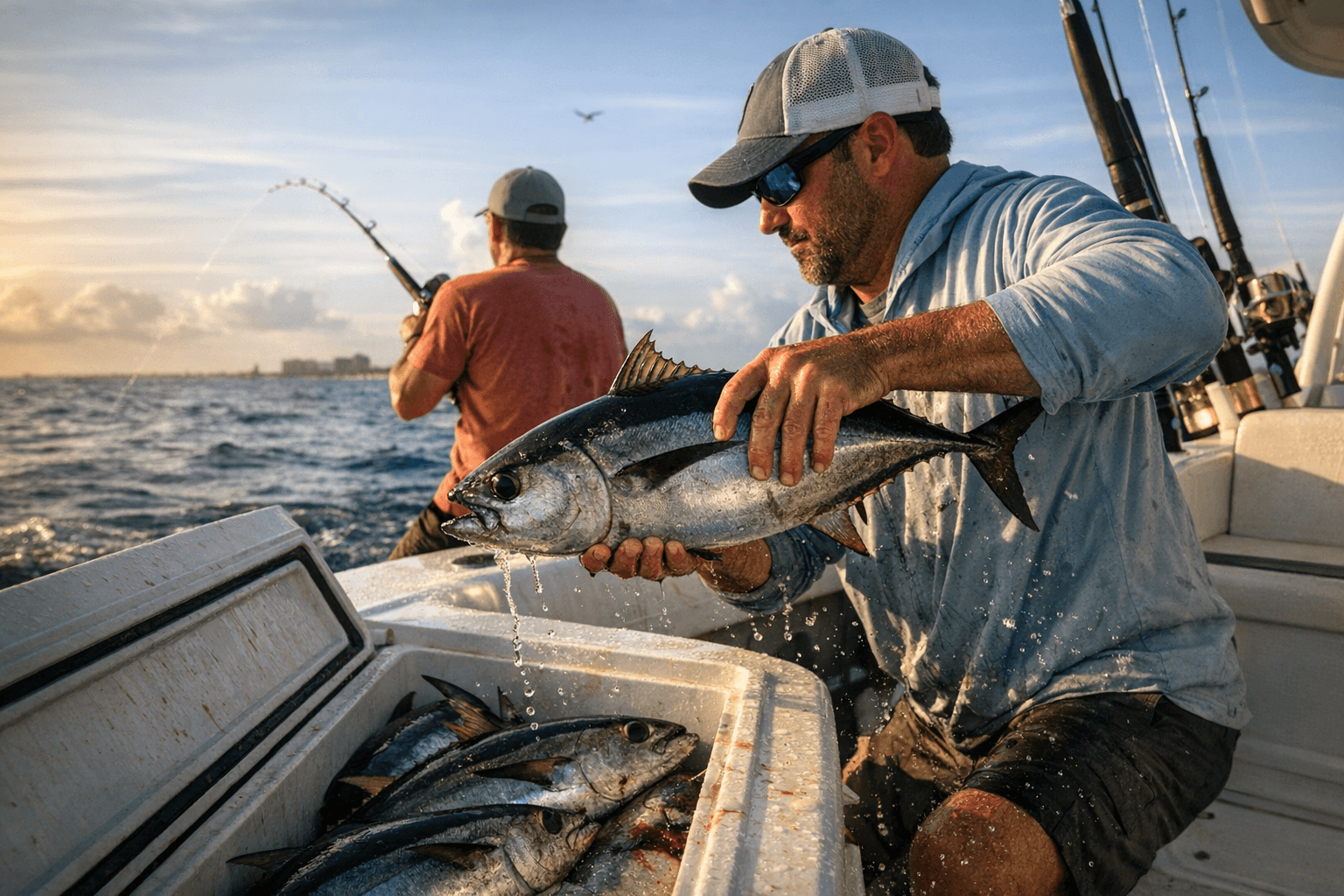
Seven blackfin tuna in one box was the kind of number Palm Beach anglers notice fast, because it suggested more than a stray fish or two. A April 6 report from Lucky Dog Sportfishing said the fish were “showing up now in good numbers with the warm weather,” and that is the clearest sign yet that the blackfin bite may be shifting from rumor to routine off Palm Beach.
That matters because blackfin tuna are one of Florida’s most responsive offshore targets when the water starts to settle into spring. Florida Fish and Wildlife Conservation Commission materials say the species is native to Florida, commonly grows to about 28 inches, and lives in coastal to offshore waters where it feeds on small fishes, invertebrates and plankton. In southeast Florida, peak spawning runs from May through June, which puts this early-April catch right on the doorstep of the fish’s local spring window.
The timing fits what South Florida captains have long seen: May through July is prime time for blackfin tuna off Palm Beach, with fish moving up the Atlantic coast from the Keys and into the same offshore lanes local crews work from West Palm Beach to Palm Beach. A report like this does not prove the run has fully locked in, but it does suggest warming water may already be pulling blackfin into more dependable numbers. For anglers planning the next couple of weeks, that is the difference between hoping for a bonus fish and building a trip around tuna.
In practical terms, “good numbers” means the kind of action that starts showing up in repeatable charter results, not just a single hot stop. Seven fish in a box on one trip is enough to get attention, especially when blackfin are a predominantly recreational fishery, with recreational landings making up 92% to 95% of the harvest. FWC says 60% of those recreational landings over the last five years came from private vessels and 40% from for-hire boats, which is another clue that consistent reports from charter boats matter when reading the pulse of the fishery.
The other watch item is weather. National Weather Service marine forecasts for the Palm Beach and Jupiter coastal waters in early April showed rough, easterly-breezy conditions, which can shrink the useful offshore window even when fish are around. If the wind eases and more boats start posting blackfin alongside yellowfin in the same offshore stretch, that will be the real signal that Palm Beach is moving into a workable tuna pattern rather than a tease. Until then, the seven-fish report stands as an early marker that the season is waking up.
This article was produced by Prism’s automated news system from verified source data, official records, and press releases, then run through automated quality and moderation checks before publishing. The system is built and supervised by the people who set the standards it runs under. Read our full AI policy.
Did this article answer your question?