Capcom Confirms It Will Not Use AI-Generated Assets in Its Games
Capcom told shareholders it won't put AI-generated assets in its games, but plans to "actively utilize" the tech across graphics, sound, and programming departments.
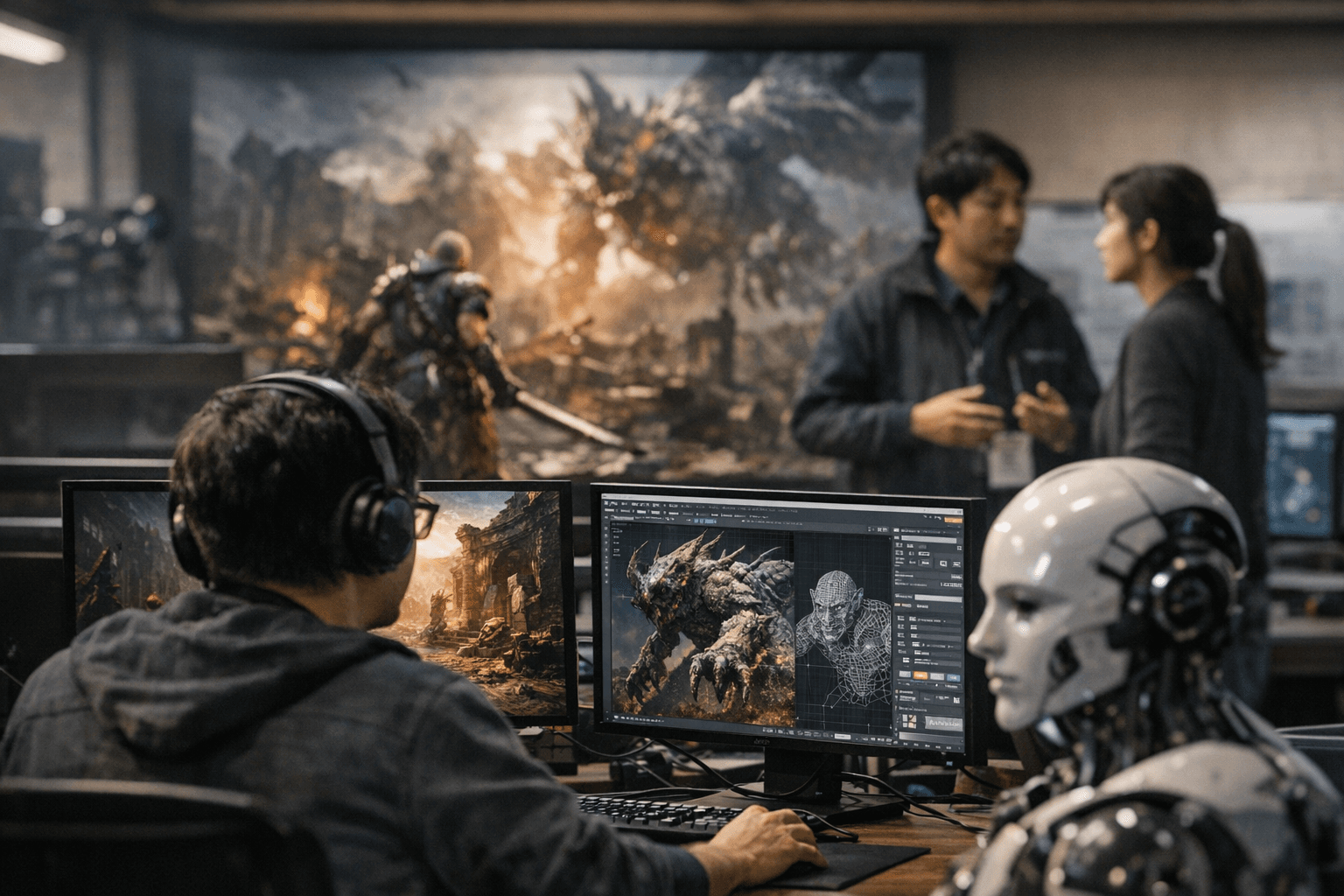
Capcom's answer to a shareholder question about generative AI carried two distinct messages: the company will not put AI-generated assets into its released games, and it intends to use the same technology aggressively inside its development pipeline. The publisher released the questions and answers from its February shareholders' meeting on March 23, giving the public its clearest look yet at where one of gaming's most influential studios stands on one of the industry's most contested debates.
"We will not implement assets generated by AI into our games," Capcom told shareholders, while adding that it plans to "proactively use it as a contributing technology to improve the efficiency and productivity of the game development process." The company said it is "currently exploring ways to implement it in various areas, including graphics, sound and programming."
The distinction matters more now than it might have a year ago. The shareholder meeting was held in February after Capcom's most recent financial results, and it arrived just days after Resident Evil Requiem appeared in a tech demo of Nvidia's DLSS 5 technology, which was criticized for adding an "AI sheen" to character models such as Grace Ashcroft. That demo put a direct visual example of AI-altered Capcom characters in front of an already skeptical community.
Capcom's internal experimentation is not new. Technical director Kazuki Abe previously said the studio had been experimenting with AI during the "idea creation process," using it to generate miscellaneous objects. The shareholder Q&A, translated from a transcript provided by Automaton, formalizes and extends that posture into a stated company policy.
The policy lands against a backdrop of cautionary industry examples. Crimson Desert developer Pearl Abyss said it would conduct a "comprehensive audit" of its in-game assets after confirming that "some 2D visual props were created as part of early-stage iteration using experimental AI generative tools" and were "unintentionally included in the final release." "This is not in line with our internal standards, and we take full responsibility for it," the developer said. The discovery of AI art assets in Clair Obscur: Expedition 33 similarly complicated the reception of a game that had been an awards darling.
The practical concern is straightforward: AI tools used internally during concept and iteration phases have a track record of surfacing in final builds without anyone intending them to. Other major publishers have been warning their investors that discovery of their AI use could cause irreparable damage to their companies in the eyes of consumers. For Capcom, whose catalog spans Resident Evil, Street Fighter, and Monster Hunter, the reputational stakes of an accidental AI asset reaching players are particularly high.
What Capcom is committing to is a hard line at the point of release, not a prohibition on the technology itself. Whether the studio can maintain that separation across graphics, sound, and programming departments, as development pipelines grow increasingly intertwined with generative tools, is the open question its February statement leaves unanswered.
This article was produced by Prism’s automated news system from verified source data, official records, and press releases, then run through automated quality and moderation checks before publishing. The system is built and supervised by the people who set the standards it runs under. Read our full AI policy.
Did this article answer your question?