From Spacewar! to Pong, how video games became a mass market
From Spacewar! and Pong to Zelda and the Game Boy, video games became a mass market by turning hardware limits into new ways to play.
Modern games are built on a chain of hardware hacks that became habits. Britannica’s definition of an electronic game as an interactive game run by computer circuitry across PCs, consoles, handhelds, and mobile devices is the cleanest way to read the medium’s rise: every leap came from a machine learning how to do something the last one could not.
From lab experiment to arcade hit
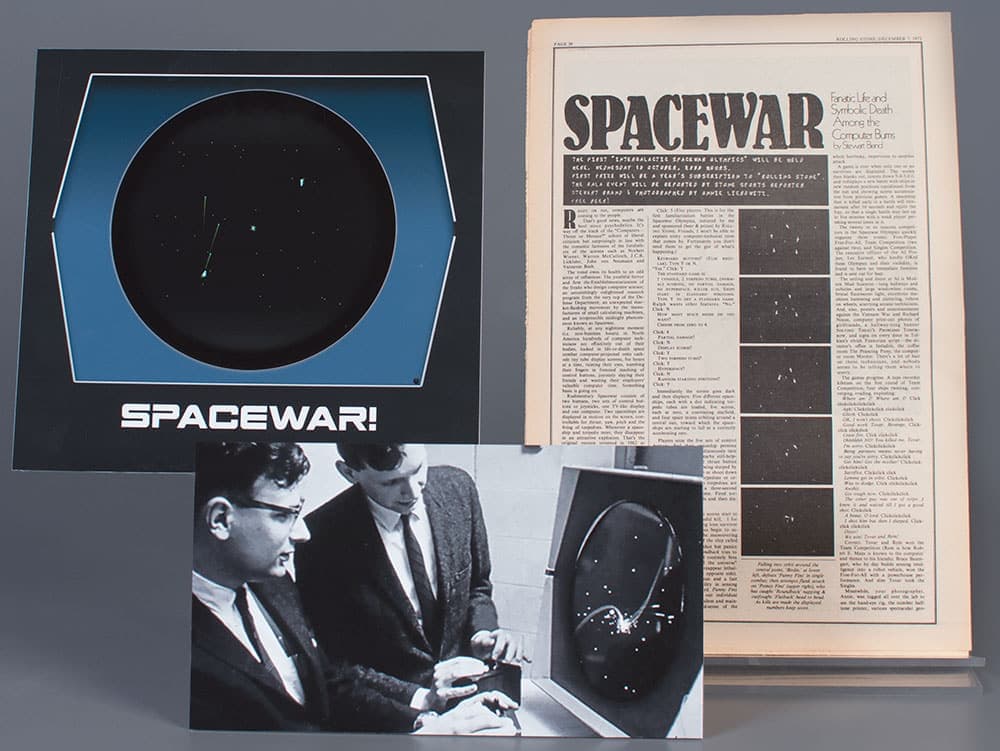
Spacewar! is where the story starts feeling real. The game was initially conceived in 1961 at MIT by Steve Russell, Martin Graetz, and Wayne Wiitanen, then written in its first version by Russell and significantly improved in spring 1962 by Peter Samson, Dan Edwards, and Graetz. The Computer History Museum says it was inspired by E. E. “Doc” Smith’s Lensman novels, which is exactly the kind of sci-fi fuel you want behind a game about digital starship duels.
What matters is not just that Spacewar! was early. It became the PDP-1’s most famous software demonstration, which turned a research machine into a convincing proof that computers could entertain as well as calculate. That was the first big habit shift: games stopped being a novelty on the side and started looking like a reason to own the hardware.
Pong pushed that idea out of the lab and into the market. Britannica identifies Pong as a groundbreaking Atari release from 1972, one of the earliest video games and the first commercial electronic sports game. Ralph Baer had already laid groundwork in 1958 by proposing simple games on home televisions, but Pong made the proposition obvious: people would pay for a game they could understand in three seconds and play in public without an instruction manual.
Home computers turned games into bigger genres
The late 1970s and early 1980s changed the kinds of games that could exist at home. Britannica points to the Apple II, Atari 800, IBM PC, and Commodore 64 as the machines that opened the door, because they brought flexible storage, BASIC, and different input devices into the mix. That combination mattered more than raw power. It let designers move beyond arcade reflexes and into games that depended on text, choice, persistence, and systems thinking.
That is the world where Infocom’s Zork, Sierra’s King’s Quest, SSI’s military simulations and role-playing games, Richard Garriott’s Akalabeth and Ultima series, and Electronic Arts’ early sports and multimedia titles made sense. These games were not just longer; they asked for a different kind of attention. You were reading, typing, planning, and managing, not only dodging bullets or chasing high scores.
This era also quietly taught the medium how to scale content. A computer with more storage and more input options could handle a sprawling adventure, a detailed sim, or a sports game that felt less like a cabinet trick and more like a model of the real thing. Once that door opened, it never really closed.
Online play began as a shared world, not a lobby
MUD, or Multi User Dungeon, pushed the medium toward the social layer that defines so much of gaming now. Developed in 1979 by Roy Trubshaw and Richard Bartle at the University of Essex, it combined interactive fiction, role playing, programming, and dial-up modem access to a shared computer. That mix sounds primitive now, but the design logic is still everywhere in online games.

Britannica’s description of MUD as a shared environment that supported social interaction and performance as well as competitive play is the key detail. It showed that play did not have to be solitary, local, or limited to one screen. The same instincts that drive guilds, raid groups, and persistent online communities were already there in text form, long before broadband turned them into a default feature.
The console comeback made saving part of the design
Nintendo’s Nintendo Entertainment System launched in North America in 1985 and helped revitalize the video game industry after the 1983 crash. That matters because it turned consoles from a market with shaky confidence into the center of home play again. The NES did not just bring players back; it restored the idea that consoles could anchor the industry.
The bigger change was what came next: battery-backed memory. Nintendo says The Legend of Zelda first released in Japan in 1986 and in the United States and Europe in 1987, using battery-backed memory to store progress. That single feature changed player behavior. Saving stopped being a luxury and became part of the design itself, which is why games like Super Mario Bros., The Legend of Zelda, and Final Fantasy could feel larger, deeper, and more narrative-driven than the arcade era had allowed.
Once progress could survive a power-off, console games could ask for a longer commitment. They no longer had to be built around a single sitting or a score chase. They could become adventures with memory, and that is one of the most important breaks in game history.
3D graphics, networking, and portable play finished the job
By the time the PlayStation 2, GameCube, and Xbox generation arrived, 3D graphics and networking had become major selling points. That shift marked a new expectation: players wanted bigger spaces, online connectivity, and systems that could carry a session beyond the living room. The hardware race was no longer just about processing power, but about how many different ways a game could be used.
Portable gaming, though, may have changed the habit most completely. Nintendo says the Game Boy, introduced in 1989, was the first portable handheld game system, and it was originally bundled with Tetris, which became an instant phenomenon. Nintendo’s Switch Online library still identifies Tetris as a North American 1989 Game Boy title, a reminder that the pack-in became part of the system’s identity.
That is the through-line from Spacewar! to Pong and beyond: every breakthrough taught players a new expectation. Arcade immediacy, cartridge convenience, shared online spaces, battery-backed progress, portable play, and 3D worlds all came from specific machines solving specific problems. Modern games feel normal because the hardware kept forcing the medium to find a better way to be played.
This article was produced by Prism’s automated news system from verified source data, official records, and press releases, then run through automated quality and moderation checks before publishing. The system is built and supervised by the people who set the standards it runs under. Read our full AI policy.
Did this article answer your question?