Germany’s games industry adds companies, but jobs keep falling
More studios, fewer desks: Germany’s games sector rose to 956 companies even as development and publishing jobs fell to 12,235.

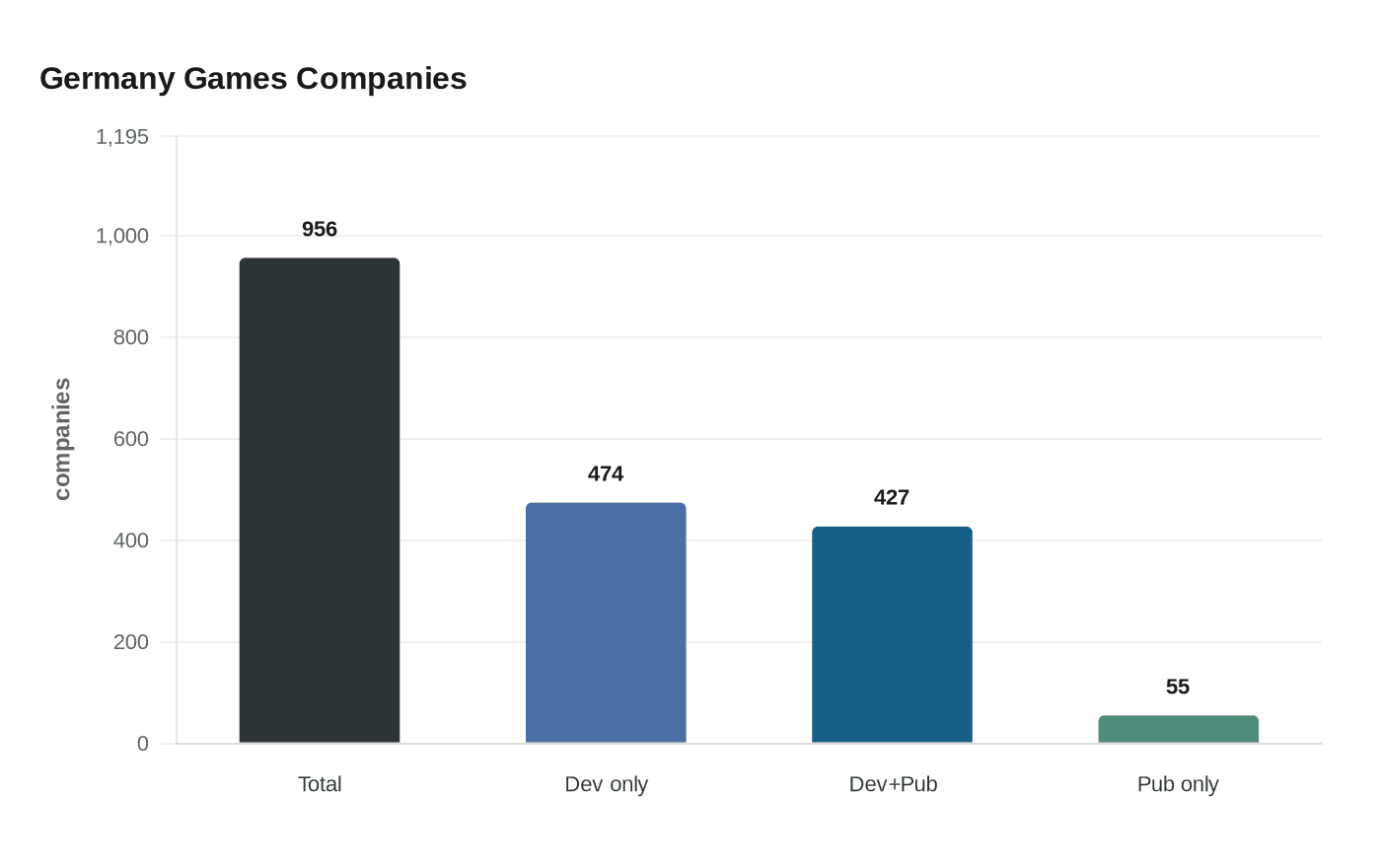
Germany’s games business added companies again, but it also lost workers again, and that is the contradiction sitting at the center of the latest numbers. The German Games Industry Association said the country had 956 game companies, up 4% year on year, while employment in development and publishing slipped 3% to 12,235, the second straight annual decline.
That split tells a sharper story than a simple rebound. Development-only studios grew 6% to 474, development-and-publishing firms rose 3% to 427, and publishing-only companies increased 2% to 55. In other words, the ecosystem kept attracting new teams, but those teams were often smaller, leaner and more cautious about adding payroll. The association said the broader games economy still supports more than 30,000 jobs when education, media, public institutions and retail are counted, so the sector remains a meaningful employer even beyond the studio floor.

Felix Falk, the association’s managing director, said the fall in employees is the clearest sign that conditions remain difficult, even as the company count rises. He said Germany was recovering only slowly from the “international wave of consolidation” and the uncertainty around games funding before 2025. The company total had already dropped 4% in 2025 before turning upward again this year, and the association said the launch of the Federal Games Funding Programme in 2020 was followed by company growth of more than 50% within four years.
Funding is still the lever everyone is watching. Germany’s federal draft budget sets games funding at 125 million euros annually from 2026, and the association has argued that the industry needs those stable conditions until tax-based incentives arrive. Falk said the federal government is creating “important growth impulses” by planning tax-based games funding, and he pointed to the expanded Federal Games Funding Programme and the “Press Start” start-up scholarship as important support.
The mood inside the industry is not collapse, but it is not exactly confidence either. In the association’s 2026 barometer, 32% of companies said they expected to hire in 2026, unchanged from the year before, while 53% expected business to be good. Germany’s games market still generated 9.4 billion euros in 2024, even though that was down 6% year on year, and Germany Trade & Invest put the country at 948 companies and around 12,000 workers. The Press Start grant program has already helped create 75 new development studios from 132 grant recipients, a reminder that the market is still producing new flags in the ground, just not enough stable jobs to make the growth feel settled yet.
This article was produced by Prism’s automated news system from verified source data, official records, and press releases, then run through automated quality and moderation checks before publishing. The system is built and supervised by the people who set the standards it runs under. Read our full AI policy.
Did this article answer your question?