Intel’s Arc G-Series could challenge AMD in handheld gaming PCs
Intel’s new Arc G-Series looks like the first real handheld chip challenge to AMD. If MSI and Acer ship what Computex showed, battery life, heat, and pricing could finally get more interesting.
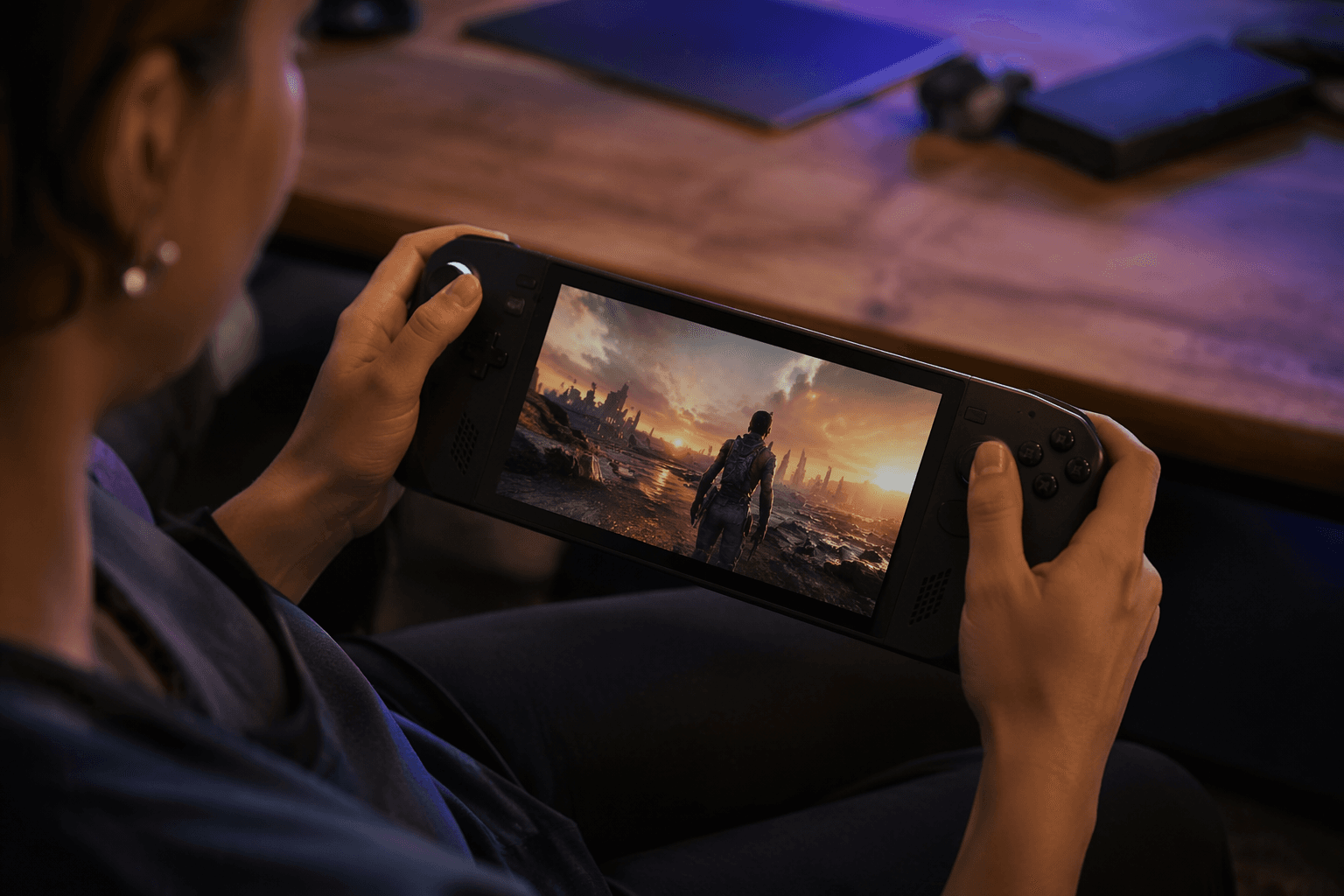
Intel is no longer talking about handheld gaming PCs like a side project. The first hands-on reports from Computex point to Arc G-Series chips that could finally give AMD a serious fight in the devices players actually buy, and that matters because battery life, heat, and smooth frame delivery decide whether a handheld feels premium or just expensive. Intel says Arc G3 and Arc G3 Extreme are purpose-built for handhelds, built on Core Ultra Series 3 / Panther Lake and running on Windows 11.
Intel is trying to reset the handheld PC conversation
For the last few years, the handheld PC space has had a clear gravity well: AMD-powered machines, Ryzen Z-series chips, and a lot of buyers assuming that is simply how the category works. Intel’s Arc G-Series launch is a direct attempt to break that pattern, not with a vague promise of more cores, but with a chip family designed from the start for gaming portables.
That framing matters because handhelds are not mini desktops. They live or die on a weirdly unforgiving mix of battery endurance, thermal headroom, and performance that holds up when the machine is running flat-out in someone’s hands. Intel is saying Arc G-Series was built for that reality first, rather than taking a general-purpose chip and trying to squeeze handheld gaming out of it later.
The first machines look more finished than the usual first-wave handheld
The real proof is not a slide deck, it is the hardware. Windows Central’s Cale Hunt tested MSI’s Claw 8 EX AI+ and Acer’s Predator Atlas 8, both using Intel’s new Arc G3 Extreme processors, and came away impressed enough to treat them as a meaningful next step for handheld gaming. That reaction matters because the first generation of Windows handhelds often felt like prototypes that escaped the lab.
These new machines sound more coherent. Both use 8-inch 1920 by 1200 displays with 120Hz variable refresh rate support, and neither appeared especially loud in the demo. That is not a small detail. A handheld can have decent specs on paper and still feel wrong if the fans scream or the controls feel mushy, while MSI’s device reportedly felt crisp and responsive and Acer’s model had tighter thumbsticks and a more compact shape.
MSI’s own materials push the same practical angle. The Claw 8 EX AI+ pairs Arc G3 Extreme with an 8-inch 120Hz VRR panel, Cooler Boost HyperFlow, and an 80Whr battery. That combination tells you exactly what MSI thinks people will care about: display smoothness, cooling, and the ability to keep playing long enough for the battery spec to matter.
Tom Petersen’s architecture pitch is the interesting part
Intel Fellow Tom Petersen has been blunt about how the company wants people to think about Arc G-Series. His description is essentially that these chips behave more like GPUs with CPUs attached than the other way around, and that is the right mental model for a handheld gaming PC. In this category, graphics performance is not a luxury feature. It is the center of the product.
That approach is also why Intel is leaning so hard on the idea of a graphics-first system on a chip. A handheld that spends its life at the edge of its thermal and power budget needs the graphics block to do more of the heavy lifting, because brute-forcing everything through a general-purpose CPU can burn battery and create heat fast. If Intel’s design really does shift the balance that way, it could make the machine feel less like a compromised PC and more like a gaming device that happens to run Windows 11.

The performance claims are bold, but the comparison point matters
Intel’s headline numbers are the ones that will get quoted everywhere. The company says Arc G3 Extreme is 44% faster than the Core Ultra 258V at 1080p with 2x upscaling, and 42% faster than AMD’s Ryzen Z2 Extreme in the same test. Those are big gains, and they are aimed straight at the one thing handheld buyers notice immediately: whether a game stays playable without turning power settings into a constant chore.
The fine print matters here too. Intel is not claiming a straight raw-rendering sweep across every game and wattage setting. The test is framed around 1080p with 2x upscaling, which is exactly the kind of workload handhelds live with when they need to balance performance and battery life. Intel is also bringing XeSS 3, multi-frame generation, and Windows 11 Xbox Mode support into the mix, which shows it understands that software tools now matter almost as much as silicon.
That is the right strategy for this market. Handheld buyers do not care whether a chip wins by a point in an abstract benchmark. They care whether a game feels smooth, whether the machine stays comfortable, and whether a two-hour session becomes three or four without making the fans unbearable.
What this could mean for battery life, heat, and pricing
The obvious question is whether Intel can turn a strong demo into a real alternative on shelves. Battery life is the first test, because handheld buyers will forgive a lot less if a device dies quickly just to win a benchmark chart. Heat is the second, because a handheld that gets hot in the grips or noisy under load loses the whole point of the form factor.
Pricing may be the biggest swing factor of all. AMD has had a comfortable lane in handhelds, and comfortable lanes usually do not produce aggressive pricing or much variety. If MSI is willing to call the Claw 8 EX AI+ the world’s first handheld powered by Intel Arc G3 Extreme, and Acer is also putting Intel’s new chip in a competing device, the category starts to look less like a one-vendor club and more like an actual market.
That is the practical upside for players. More competition does not guarantee cheaper handhelds, but it usually creates more configuration choices, more pressure on battery and thermal tuning, and less room for brands to hide behind the same old parts. Intel’s Arc G-Series is not a victory lap yet, but it is the first time in a while that AMD’s handheld lead looks genuinely challengeable.
For handheld gaming PC buyers, that is the story that matters. The category has needed a second serious voice, and Intel finally has a chip family that looks built to speak the language.
This article was produced by Prism’s automated news system from verified source data, official records, and press releases, then run through automated quality and moderation checks before publishing. The system is built and supervised by the people who set the standards it runs under. Read our full AI policy.
Did this article answer your question?