Psychedelic Games Raises $3.5M From KRAFTON, FlyQuest for Pirate MOBA Golden Tides
KRAFTON, FlyQuest, and Arbitrum just bet $3.5M on a pirate MOBA with no lanes, and FlyQuest CEO Brian Anderson calls it a new standard for how esports orgs and studios should collaborate.
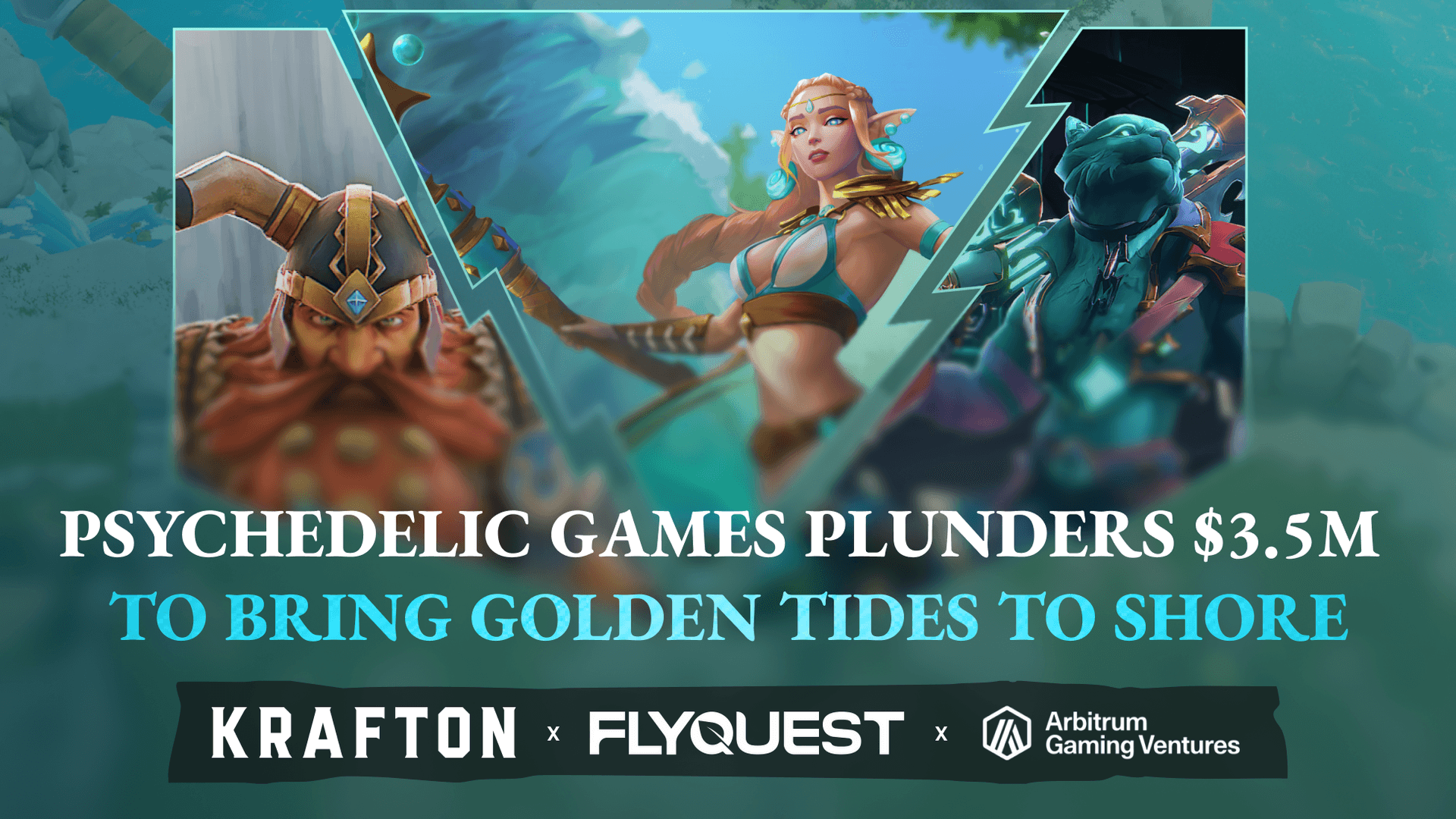
Three backers walked into a $3.5 million deal with no lanes, no towers, and no overlap in their business models. Psychedelic Games, the Dallas studio behind Golden Tides, closed that round on March 24, pulling in KRAFTON, the South Korean publisher behind PUBG: BATTLEGROUNDS; North American esports organization FlyQuest; and Arbitrum Gaming Ventures, a strategic fund backed by the Arbitrum blockchain ecosystem. It is the first time FlyQuest has made a direct investment in a game studio.
Each backer is after something different. KRAFTON wants a publishable competitive title it can scale globally, consistent with the infrastructure it built around PUBG: BATTLEGROUNDS. Psychedelic COO Mason Richman said KRAFTON's "unwavering focus on creating fun, great games above everything else made the partnership feel natural from day one." FlyQuest is after an esports pipeline it can shape from the start: CEO Brian Anderson said the organization believes "the future of esports will be built through teams and developers working together early, starting in development, continuing through launch." Arbitrum Gaming Ventures, whose partner Dan Peng cited enthusiasm for "a team pushing the boundaries of a fresh and compelling style of gameplay," is playing the longer game, positioning for a competitive title that can eventually integrate blockchain-native distribution and monetization. Psychedelic confirmed none of those blockchain features will be present at launch.
The design bet at the center of all three investments is a format that Psychedelic CEO Devin Richman described with a blunt diagnosis: "The MOBA genre created some of the most beloved competitive games of the past fifteen years, but the formula has grown stale." Golden Tides is his studio's answer: a 4v4 match where two pirate crews have 20 to 25 minutes to chart their own routes across explorable islands, locate buried treasure, and fight over it in open naval combat. No lanes. No tower push. The fights that erupt when two crews converge on the same haul replace the tower siege sequences that set the tempo in traditional MOBAs. The roster behind the game includes veterans from League of Legends, Smite, Fortnite, PUBG: BATTLEGROUNDS, Call of Duty: Warzone, and ARK: Survival Evolved, and Psychedelic is pitching the shorter runtime as a structural advantage for broadcast and spectatorship.
Psychedelic is accepting sign-ups for a Q2 2026 playtest on PC, with broader platform expansion planned post-launch but no additional platforms or release window confirmed. The Arbitrum involvement, even without a day-one token component, leaves several questions the studio has not yet addressed: whether any future monetization will introduce pay-to-win mechanics, whether a connected wallet will be required for any game modes, how matchmaking holds up with a fresh player pool at launch, and whether crossplay will be available to keep queues healthy. Psychedelic intentionally bypassed traditional VC in favor of strategic partners, which Anderson called "a new standard for how esports organizations and game studios collaborate." That logic holds on paper; whether it survives once three sets of business interests start pulling in different directions is the real test of the model.
This article was produced by Prism’s automated news system from verified source data, official records, and press releases, then run through automated quality and moderation checks before publishing. The system is built and supervised by the people who set the standards it runs under. Read our full AI policy.
Did this article answer your question?