Steam players react more negatively to AI-tagged games, study finds
An AI stigma on Steam cut review volume by about 53%, and the reviews that did appear were more negative.

Ross Burton’s analysis showed that an AI stigma on Steam cut review volume by about 53 percent and made the reviews that did appear more negative. That is a real hit, because Steam reviews are part score, part storefront signal, and part social proof for every game trying to break out of the crowd.
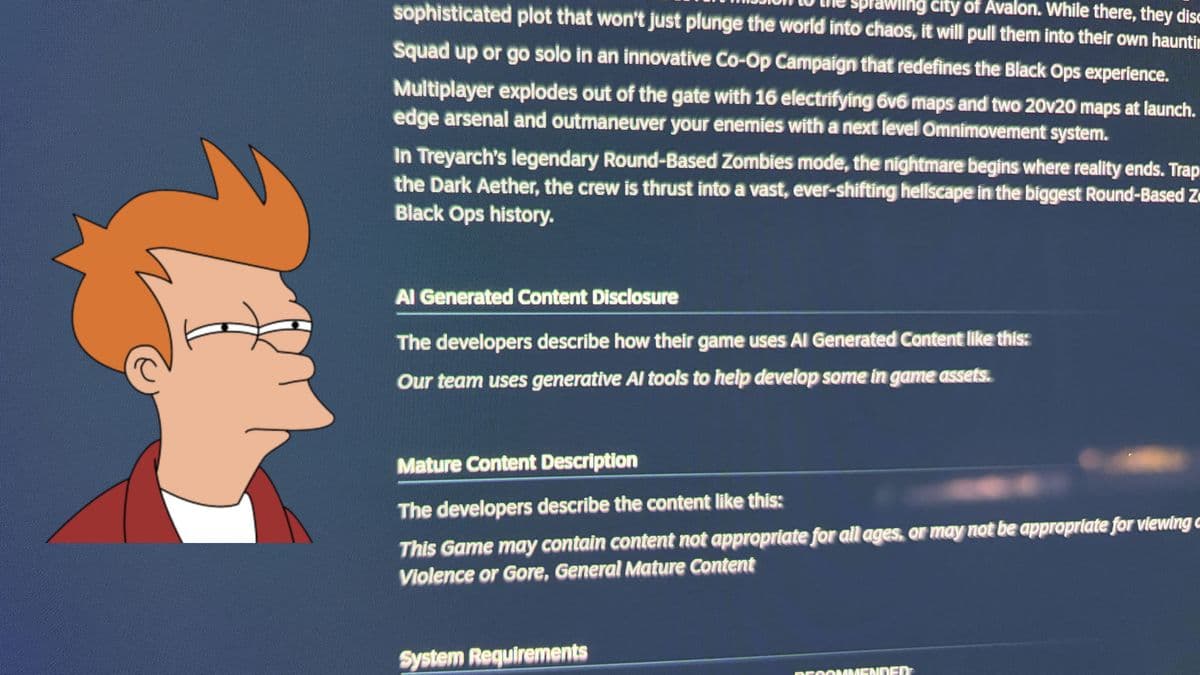
Valve has been forcing developers to disclose generative AI use since 2024, and in January 2026 it rewrote those rules to separate behind-the-scenes workflow tools from player-facing AI-generated content. The disclosure now appears publicly on a game’s Steam store page in an AI-generated content section, and developers still have to flag AI use in the game itself, in marketing assets, and in Steam Community materials.
The policy has become a flashpoint for developers who see AI as a production tool and players who treat the label as a warning sign. In June 2026, Epic Games CEO Tim Sweeney called Steam’s disclosure requirement “really irresponsible,” arguing that the label can act like a stigma before a game even launches. That is exactly the problem the data points to: the reaction is not limited to people who have already played the game and decided they hate it. The label itself can shape whether players buy in, leave feedback, or approach the page with suspicion.
The scale of the issue on Steam is large enough to matter for merchandising, not just messaging. Game Oracle sampled 9,879 Steam games released between January and October 2025 and found that 17.9 percent disclosed AI use. Another analysis said nearly 8,000 Steam titles released in the first half of 2025 disclosed generative AI use. Steam Next Fest has shown the same friction. PC Gamer said only 1 of the event’s over 500 top-played demos had an AI disclosure, while separate SteamDB-based tracking found roughly 1,700 of about 8,600 Next Fest demos disclosed generative AI use.
That combination of numbers makes the commercial risk pretty clear. If AI tagging cuts review volume in half, it is not just a transparency checkbox anymore. It is a visibility problem, a trust problem, and for studios selling on Steam, a problem that can hit the page before the game ever gets a fair shot.
This article was produced by Prism’s automated news system from verified source data, official records, and press releases, then run through automated quality and moderation checks before publishing. The system is built and supervised by the people who set the standards it runs under. Read our full AI policy.
Did this article answer your question?