Teenage Mutant Ninja Turtles: Empire City finally lets players become a Turtle
Empire City turns TMNT into a lived-in VR fantasy, and that shift makes being a Turtle feel real for the first time.
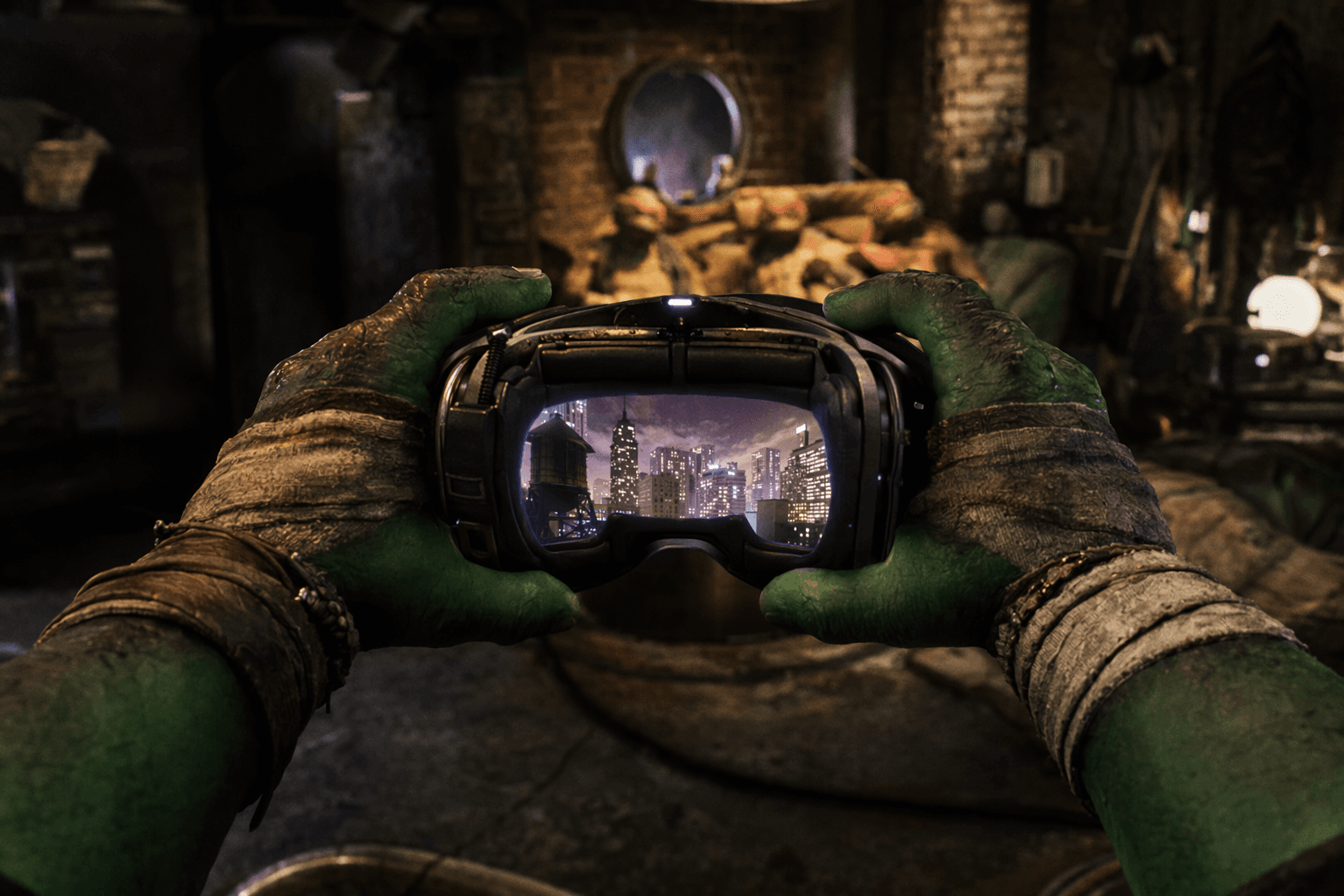
Has VR finally made being a Turtle feel real?
That is the question Teenage Mutant Ninja Turtles: Empire City answers better than most TMNT games ever have. As the first-ever TMNT VR game from Cortopia Studios and Beyond Frames Entertainment, it does something the old beat-em-ups and licensed action games rarely managed: it puts you inside the fantasy instead of asking you to admire it from the outside. The result is a $24.99 first-person action adventure that launched on April 30, 2026 for Meta Quest, SteamVR, and Pico, with single-player and 4-player co-op built in from the start.
What makes that important is not just the novelty of the headset. It is the way the whole game is built around inhabiting Leonardo, Raphael, Donatello, or Michelangelo in first person, with precision strikes, blocks, and parkour traversal carrying the action from rooftops to warehouses to the streets below. The basic pitch sounds simple, but the shift in perspective changes everything: sneaking, climbing, and brawling finally feel like Turtle behavior rather than Turtle cosplay.
Why this TMNT game lands differently
Older TMNT games often worked because they were fast, noisy, and generously stuffed with shell-kicking fan service. They still usually left you feeling like you were controlling a character from a distance, even when the combat was fun in an arcade way. Empire City goes after something more personal. It wants the fantasy of being one of the four brothers, not just playing a game that features them.
That matters because the Turtles have always been a power fantasy wrapped in backyard imagination. The reviewer’s core point is that VR restores the childlike game of pretending you are actually one of them, and Empire City understands that instinct. When you are moving through New York in first person, ducking into cover, slipping across rooftops, and lining up a strike with your chosen weapon, the experience stops feeling like a licensed skin and starts feeling like a role you inhabit.
The game’s setup supports that feeling. It takes place after Shredder has already been defeated, which leaves a power vacuum inside the Foot Clan. That vacuum gives the story room to breathe, because the conflict is no longer just a simple showdown with a single big bad. Instead, the Foot Clan is tightening its grip on New York City while internal divisions pull the organization in different directions.
The Foot Clan split gives the story real tension
Empire City gives the Foot Clan a sharper edge by splitting its leadership between New York and Japan. One faction in New York is led by Mashima, while Karai heads the Japanese branch. That alone gives the campaign more texture than a standard hero-versus-villain beat-em-up, because the enemy pressure comes from structure as much as muscle.
Karai’s role is especially useful here. Cortopia’s dev diary and promotional materials frame her as the head of the Foot Clan’s Japanese branch, and Tom Waltz, the longtime TMNT comics writer and author of The Last Ronin, served as story consultant on the game. That is the kind of detail that matters when a licensed game wants to feel like more than a gimmick. Waltz brings comic-book continuity and character logic to a setup that could otherwise have collapsed into generic ninja-business.
The narrative also leaves room for ambiguity. Karai is not just written as a blunt villain, and that uncertainty keeps the story from flattening out. Bebop and Rocksteady appear as bosses, which gives the campaign some immediate muscle, but the larger conflict is about dismantling the Foot Clan’s machinery and surviving the fallout of Shredder’s death. That gives Empire City more of a crime-drama pulse than a Saturday-morning greatest-hits reel.
What you actually do in Empire City
The game is structured around two sections of New York City, Chinatown and the Lower East Side, and that geography helps the whole thing feel grounded. These are not abstract arenas. They are neighborhoods with enough visual identity to make rooftop routes, warehouse infiltration, and alleyway movement feel like part of a living map rather than disposable level dressing.
The gameplay mix is where Empire City makes its strongest case. Cortopia leans on brawling, stealth, exploration, and clue gathering, so the game is not just about hitting enemies until they fall over. You are moving with purpose, reading spaces, searching for information, and choosing when to fight and when to stay quiet. In VR, that is a smart fit because the format rewards deliberate motion and spatial awareness more than a flat-screen brawler ever could.
A few practical details define the loop:
- You can play solo or in 4-player co-op.
- You can embody Leonardo, Raphael, Donatello, or Michelangelo in first person.
- The combat emphasizes precision strikes and blocks rather than mindless button-mashing.
- Parkour traversal ties rooftop movement into the action instead of treating it as filler.
That combination is why the game feels more immediate than many past TMNT outings. Even when you are not in a fight, the movement keeps you in the mindset of a Turtle moving through enemy territory. The game is not asking you to imagine the fantasy. It is trying to make the fantasy your default physical viewpoint.
Why this matters even if you are not a VR regular
Empire City is notable because it shows how a long-running licensed franchise can still find fresh life when the control scheme matches the core fantasy. That is a much bigger deal than simply saying a Turtle game exists on VR hardware. Plenty of licensed VR experiments have treated the medium like a novelty wrapper. This one treats VR as the reason the fantasy works.
The broader lesson is that TMNT has always depended on play-acting energy, whether that meant two kids pretending the couch was a sewer or an arcade cabinet reducing a whole sidewalk to a co-op brawl. Empire City taps into that same instinct, but with enough physical presence to make it feel earned. The hands-on immersion, the rooftop movement, the split Foot Clan power structure, and the choice to let you play the brothers from inside their world all point in the same direction.
That is why Empire City stands out as more than a first-person curiosity. It finally gives the franchise a game that understands what fans have been trying to do for years anyway: not just watch the Turtles, not just control them, but become one.
This article was produced by Prism’s automated news system from verified source data, official records, and press releases, then run through automated quality and moderation checks before publishing. The system is built and supervised by the people who set the standards it runs under. Read our full AI policy.
Did this article answer your question?