Valve Faces Multiple Lawsuits Over Loot Boxes, Antitrust, and Copyright Claims
A $1 million AK47 skin and a $4.3 billion CS2 market are now at the center of lawsuits that could force Valve to gut loot boxes entirely.

The single most disorienting number in this story isn't a legal filing or a court date. It's the $4.3 billion valuation of the Counter-Strike skins market, reported in March 2025, a figure that a New York Attorney General's office apparently found impossible to ignore.
On February 25, 2026, New York AG Letitia James filed suit against Valve Corporation, alleging that CS2, Dota 2, and Team Fortress 2 loot box mechanics violate New York's Constitution and Penal Law. The complaint is government-brought, meaning it doesn't just seek damages but can pursue fines and injunctive relief: bans, forced disclosures, or mandated product redesigns. It followed an investigation by the Office of the AG that concluded Valve not only enabled players to pay for a chance at high-value virtual items but actively facilitated the third-party marketplaces where those items convert to real cash, including an AK47 skin that sold for over $1 million in June 2024.
That New York action is only one front. Valve is also facing a Washington state consumer class action targeting the same loot-box mechanics, a federal class action covering any U.S. player who purchased a $2.49 case key in CS2, Dota 2, or TF2 and received items worth less than the key cost, an ongoing developer antitrust case in which Wolfire Games and others argue Valve's 30 percent Steam commission is an illegal monopoly on PC game distribution, and a UK Competition Appeal Tribunal proceeding that allowed the Shotbolt antitrust case to continue after Valve attempted to block certification. A copyright licensing suit tied to content distribution on Steam adds a fifth distinct legal vector.
Here is what players could be looking at if regulators and plaintiffs succeed: mandatory odds disclosures before any case is opened, age verification gates on any randomized transaction, hard trading restrictions on freshly opened items, and marketplace rules that sever the link between Steam inventory and real-money third-party sites. In Germany and France, that last shift is already law. As of March 16, 2026, German players must use Valve's X-Ray Scanner system, a pay-after-reveal format where the item inside a case is shown before purchase is confirmed. France has operated under the same mandatory system since late 2019. In both regions, scanning a case makes it immediately non-tradable, which has a direct cooling effect on speculative inventory behavior.
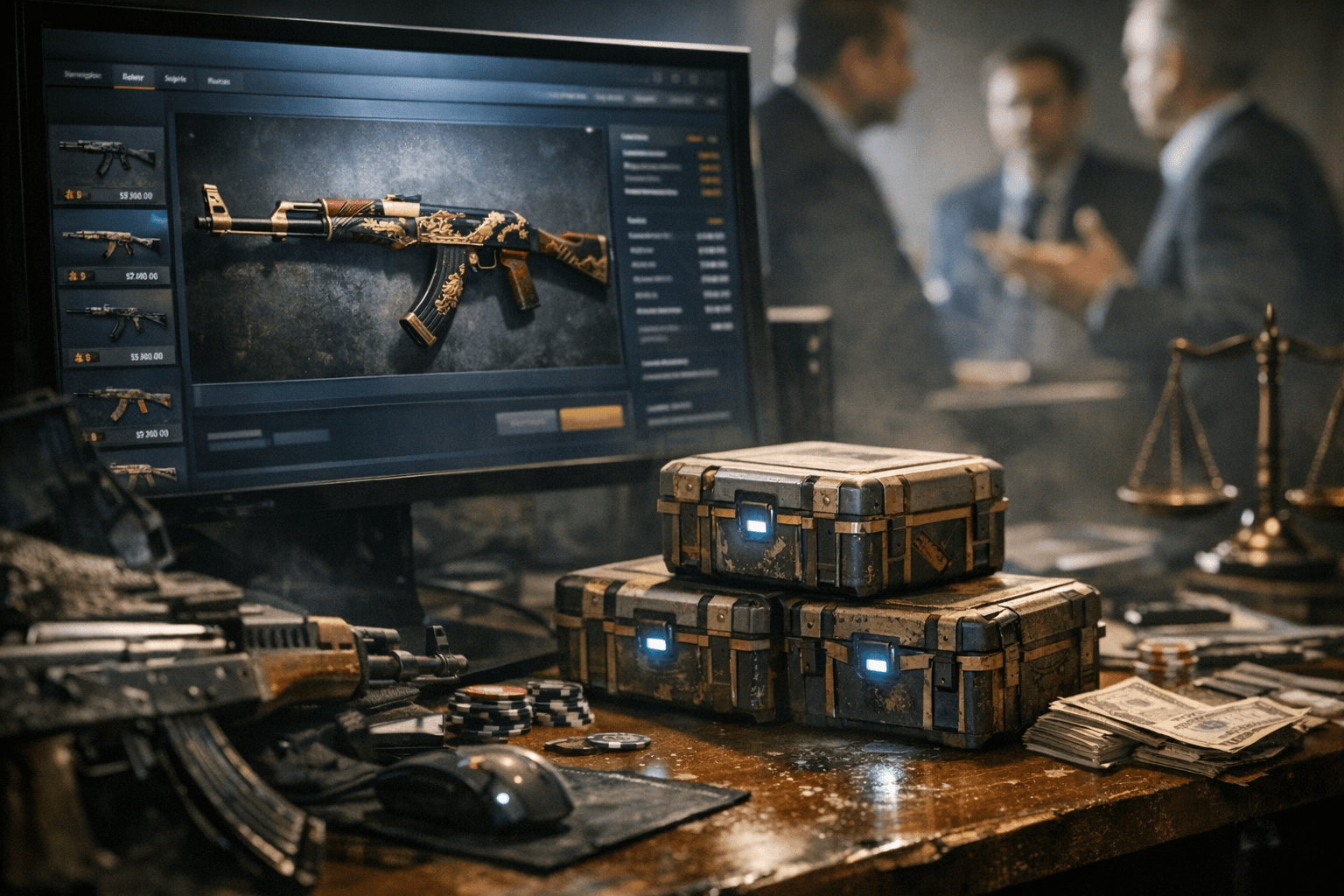
Valve responded to the New York lawsuit publicly on March 11, posting a statement to Steam explaining its position on mystery boxes and the ongoing dispute. The company has not confirmed whether the X-Ray Scanner and the Genesis Terminal system, which replaced traditional loot-box openings in CS2's most recent cosmetic rollout, are direct responses to the legal pressure. Community analysts and coverage from CS2-focused outlets have connected the dots, noting the timing aligns with escalating state-level scrutiny from U.S. attorneys general.
For anyone holding high-value skins, the stakes are not abstract. Court-ordered restrictions on third-party marketplace integration would directly reduce liquidity for items currently valued in the thousands or tens of thousands of dollars. A ruling that treats loot-box keys as an illegal gambling product could trigger refund eligibility for past purchases. Wolfire's antitrust case, if it prevails, could restructure Steam's commission terms in ways that ripple into how games are priced on every platform in the PC market, not just Valve's.
Lawyers interviewed in coverage of these concurrent cases have emphasized that the combined exposure isn't primarily financial. The real risk to Valve, and by extension to every live-service game with randomized monetization, is precedent: a ruling in any one of these jurisdictions that classifies loot boxes as gambling under existing law would immediately empower regulators in other states and countries to follow. The coming months of filings, hearings, and product decisions from Valve will likely draw the clearest regulatory line the industry has seen since Belgium banned loot boxes outright in 2018.
This article was produced by Prism’s automated news system from verified source data, official records, and press releases, then run through automated quality and moderation checks before publishing. The system is built and supervised by the people who set the standards it runs under. Read our full AI policy.
Did this article answer your question?