Arturia brings the Moog Memorymoog into the DAW with Memory V
Arturia’s Memory V recreates the Memorymoog’s six-voice, three-oscillator bite, then adds DAW recall, effects and modern modulation for $149.
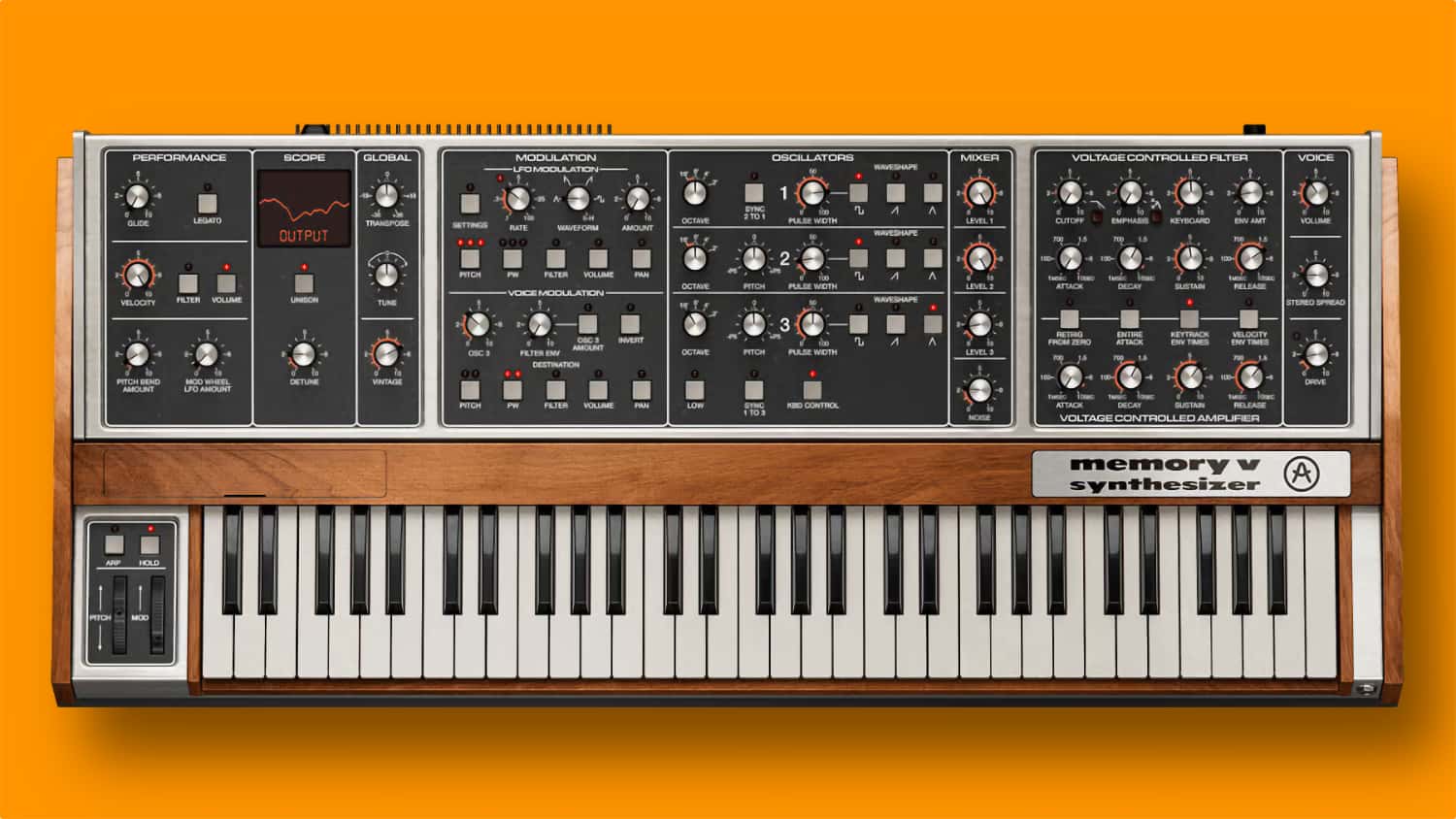
The Memorymoog has always been a dream machine with a repair bill attached, and Arturia has now put that sound inside the DAW with Memory V. The new plug-in targets the 1982 Moog flagship that built its legend on six-voice polyphony, three oscillators per voice and a thick ladder-filter character that could swing from huge brass to cavernous pads.
Arturia released Memory V on May 26, with download files labeled Version 1.0.0.8646 and dated May 20. The software runs on Windows 10 and later, and macOS 11.0 and later, with VST3, AU, AAX and standalone support. Arturia lists the instrument at $149.
What makes the release notable for vintage-synth readers is how directly it leans into the Memorymoog’s identity. Moog introduced the original in 1982 as the first 3-oscillator-per-voice polyphonic synthesizer, and it shipped with 100 factory presets tied to names that still carry weight in synth circles, including Wendy Carlos, Jan Hammer, Herb Deutsch and Bill Wolfer. It was also the last polyphonic synth from the original Moog Music before the company’s collapse, which helps explain why surviving hardware has a reputation for being expensive, temperamental and difficult to keep healthy.
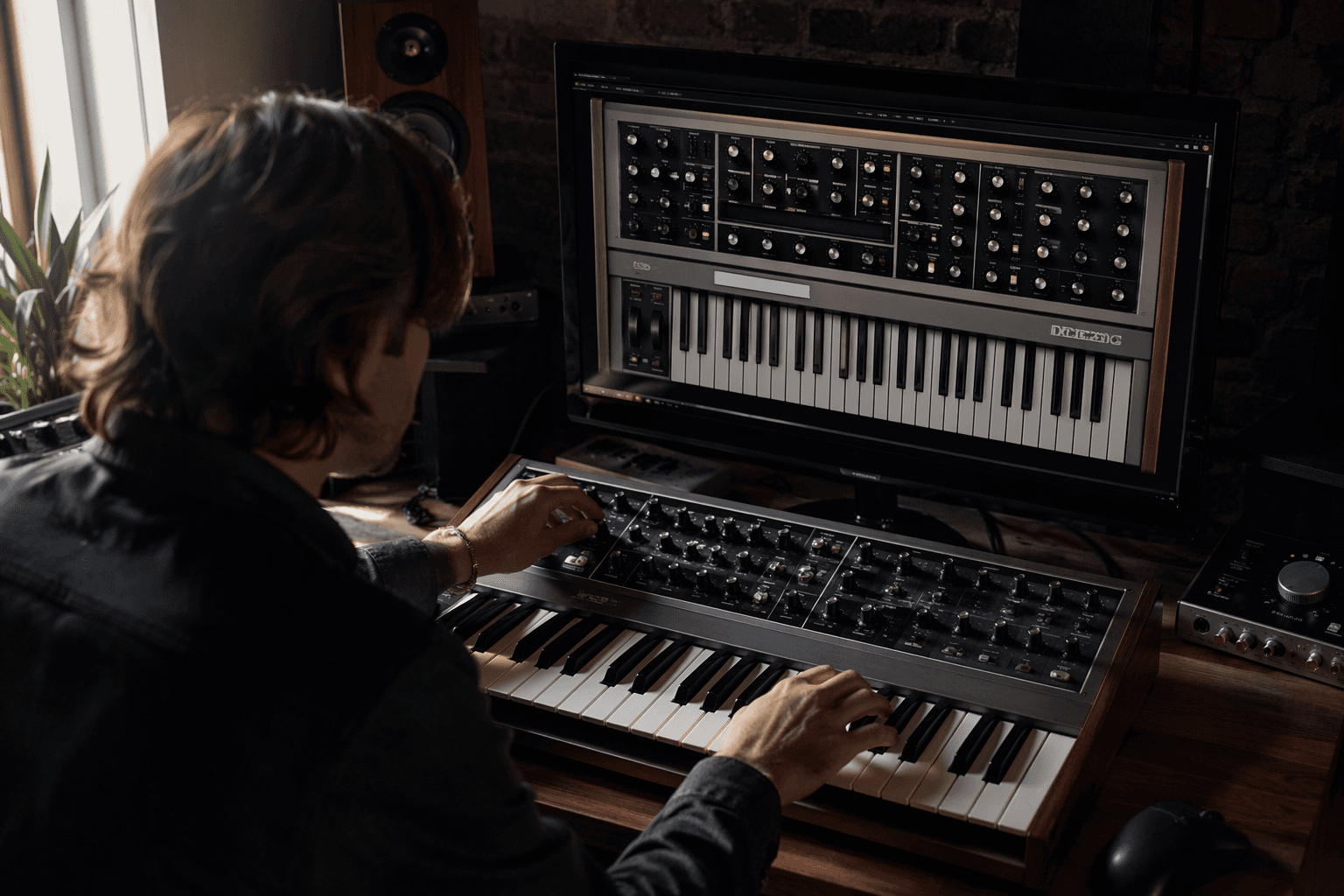
Memory V aims to preserve the parts players actually chase in the original while stripping away the pain points. Arturia says the plug-in includes 300-plus presets, plus modern production features such as drag-and-drop modulation, built-in effects and a four-layer multi-arpeggiator. Retail listings also add NKS support, MPE support, MTS-ESP support, Poly-6 and Poly-12 voicing, mono retrig and legato modes, stereo spread and an oscilloscope display. In other words, it is not just a static museum piece. It is built to sit in a session, be recalled instantly and respond like a contemporary software instrument.
That is the central question around Memory V, and Arturia’s answer is fairly clear: it is close enough to the original architecture and tone to serve as a credible Memorymoog stand-in, but modern enough to behave like a different instrument in daily use. The hardware’s power and instability made it mythical; the plug-in turns that myth into something you can load, automate and save without opening a chassis.
This article was produced by Prism’s automated news system from verified source data, official records, and press releases, then run through automated quality and moderation checks before publishing. The system is built and supervised by the people who set the standards it runs under. Read our full AI policy.
Know something we missed? Have a correction or additional information?
Submit a Tip