Gearnews spotlights five hardware synths for cinematic stereo textures
These five hardware synths prove cinematic width is no longer vintage-only, and each one gets to widescreen pads, strings or soundtrack haze a different way.
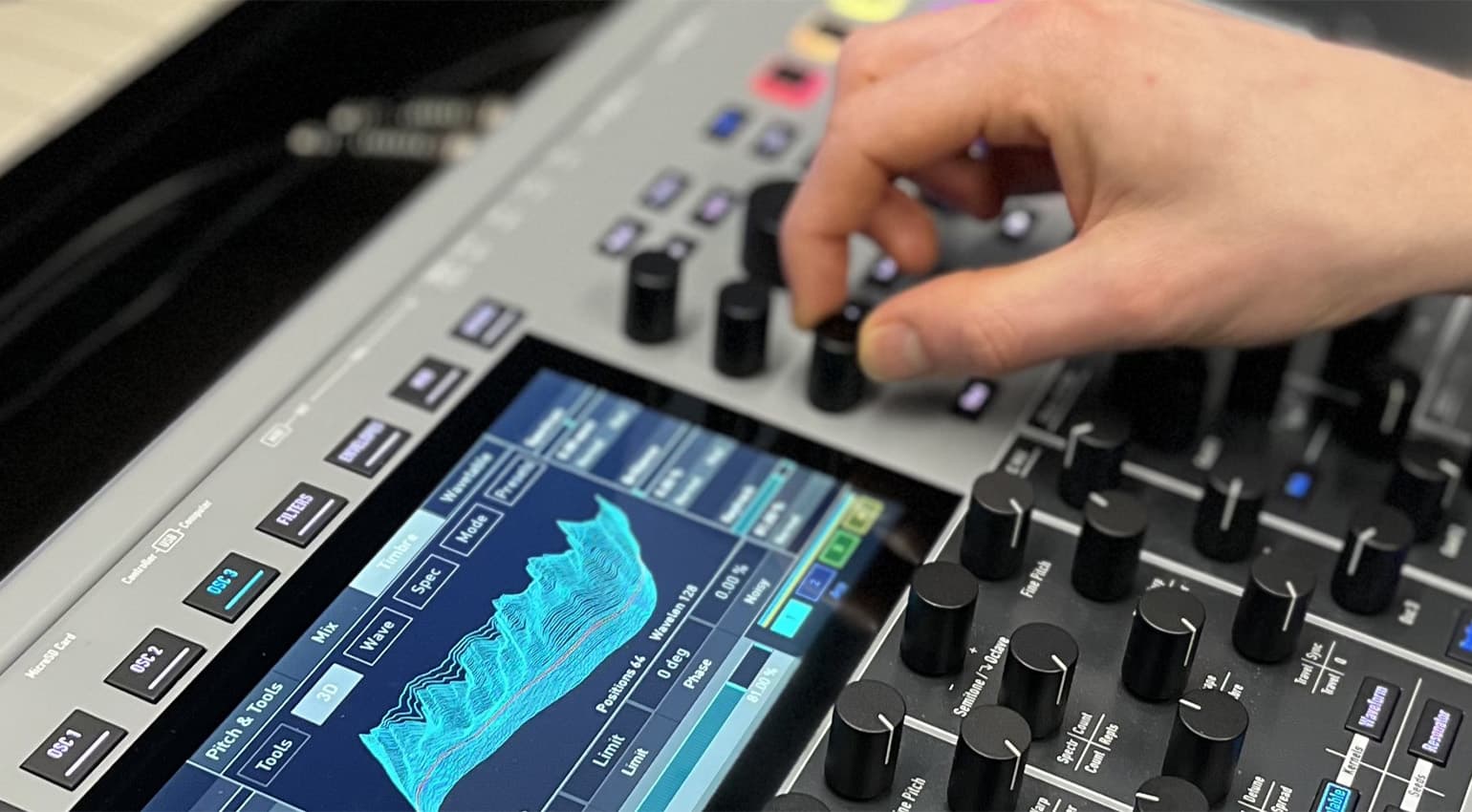
Hardware synths are in a strange, good place right now. The old cinema recipe, fat analog voice cards plus a giant chorus, has been replaced by something broader and more useful: stereo voice architecture, vector movement, wavetable motion, sample layering, and binaural tricks that make a patch feel larger than the speakers. That is the frame Gearnews used for its roundup of five current instruments, and it is the right one for anyone chasing pad clouds, string-machine shimmer, or that unmistakable Vangelis-sized spread without going straight to collector pricing.
What makes this batch worth attention is not that it imitates one vintage circuit. It is that each machine solves the same problem from a different angle: one is a boutique stereo oddity, one is a straight-up legacy revival, one is Moog’s modern poly statement, one is Korg’s wave-sequenced evolution, and one is Waldorf’s digital texture lab. If you are shopping for cinematic width, the useful question is not which synth is "best" in the abstract. It is which one gets you to a specific sound fastest.
UDO Audio Super 6
The Super 6 is the one that most clearly belongs to the new school of stereo obsession. UDO Audio calls it the company’s inaugural production synthesizer, and the hook is its Binaural mode, which turns twelve voices into six stereo super-voices with separate left and right allocation for each ear. In practice, that means the patch already arrives with motion and air baked in, even before you touch external processing.
This is the machine I would reach for first when I want an analog string machine wash that feels wide without turning to mush. It is not trying to impersonate a single classic Roland or Solina circuit, but it convincingly evokes the broader world of late-80s stereo sheen, where chorus and spread were part of the voice rather than an afterthought. George Hearn’s background on the Modal Electronics 008 helps explain why the Super 6 feels so carefully engineered: it has a boutique-digital precision to the stereo field, but the core response still feels tactile and musical.
The Super 6 was first announced at Superbooth 2019, and the long run-up mattered because it built real anticipation around a synth that promised something genuinely different. For me, that difference is this: if you want width with the fewest steps, the Super 6 gets you there faster than almost anything else here.
Oberheim OB-X8
The OB-X8 is the most direct route to the classic American polysynth fantasy because it carries the Oberheim badge into current production with no apology. Oberheim says it combines the sounds and features of the OB-X, OB-Xa and OB-8, including the presets that made those instruments famous, and that is exactly why it matters. This is not a vague tribute act. It is a serious attempt to compress three famous OB personalities into one modern keyboard.
If your target is Vangelis-style brass and pad spread, this is the most obvious hardware answer in the group. The OB family has always had that expensive, glossy bloom, the kind of wide upper-mid voice that makes chords feel like a film score before the modulation wheel even moves. Oberheim has also said the OB-X8 covers more sonic territory than any previous OB-series synth, and that broad remit makes sense here because the instrument is clearly designed to serve both the purist and the player who wants the old voice without the old maintenance life.
The release in May 2022 also gave the instrument a weight that goes beyond nostalgia. Dave Smith died on May 31, 2022, just after the launch, which made the OB-X8 feel like a closing chapter in one of the most important modern analog collaborations. If you want the closest thing here to a big, emotionally legible classic polysynth statement, the OB-X8 is the one that lands first.
Moog Muse
Moog’s Muse sits in a different lane, but it belongs in this conversation because it treats stereo and polyphony as part of a live instrument, not just a studio toy. Moog describes it as an eight-voice analog bi-timbral polyphonic synthesizer, and the company says it took over five years of design work to bring it together. That is a long gestation, but you can hear why in the way the instrument is pitched: backward-looking in tone, forward-looking in workflow.
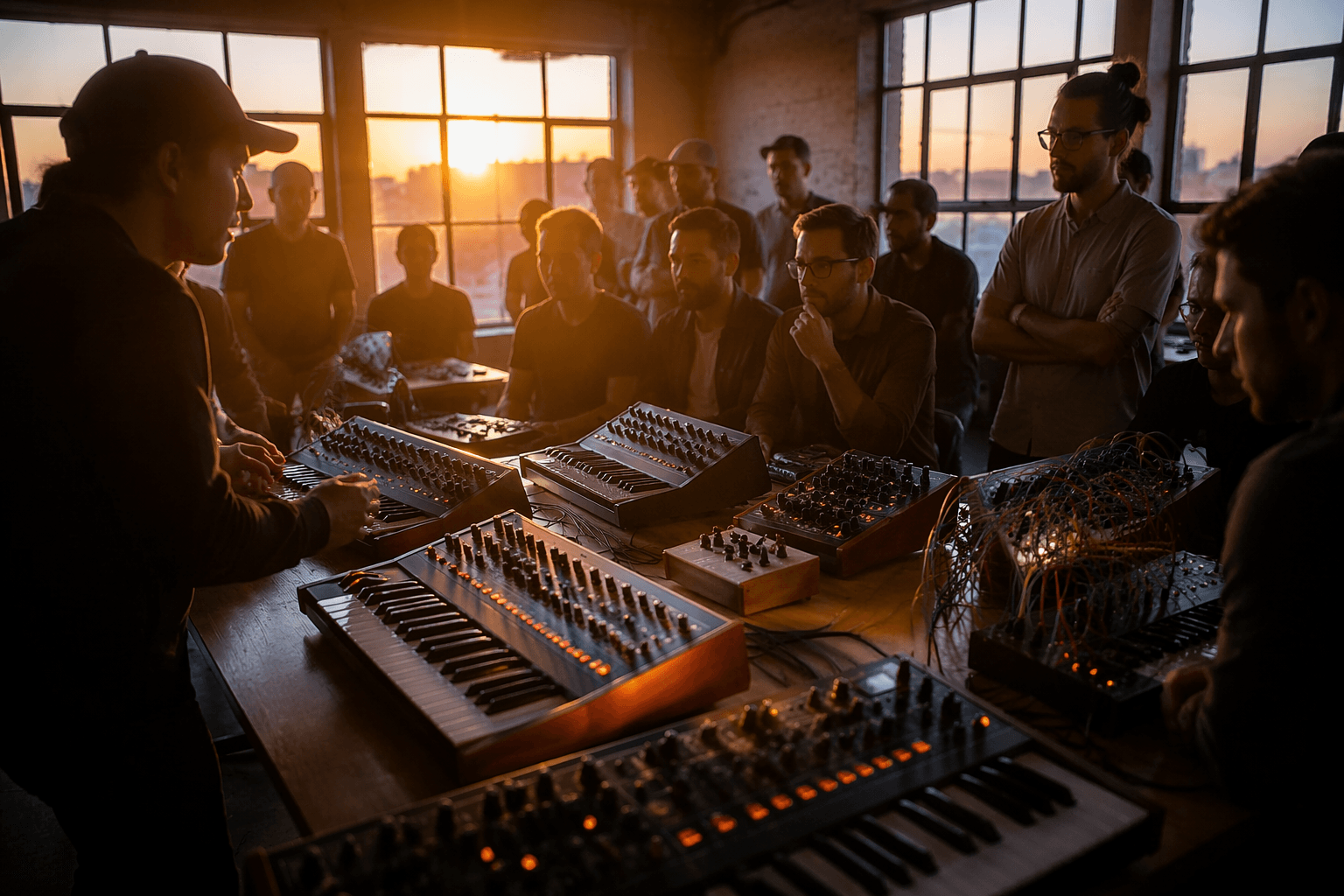
For soundtrack haze and thick, slow-moving pads, the Muse is the one that rewards the fewest compromises. It does not chase the OB-X8’s brand of classic grandeur, and it does not lean on the Super 6’s stereo trickery in the same way. Instead, it gives you Moog weight in a more contemporary polyphonic frame, which means you can build broad, harmonically rich textures that still have the bottom-end authority people expect when they buy a Moog.
That balance is what makes it so useful to a vintage-synth crowd. Earlier stereo flirtations on instruments like the Voyager and One hinted at this direction, but Muse makes the case more cleanly: if you want a modern Moog that can do cinematic width without losing the punch in the middle, this is the one to study.
Korg Wavestate MKII
Korg’s Wavestate MKII is the most obviously "movement-first" instrument in the roundup, and that traces straight back to the original Wavestation. Korg explicitly ties the mkII to that lineage, the one that introduced wave sequencing, and it offers 96 stereo voices, compatibility with sounds and samples from the original wavestate, wavestate SE and wavestate native software, plus third-party libraries. That combination matters because it is not just about big presets. It is about letting evolving layers do the work for you.
This is the best pick for soundtrack haze when you want motion inside the chord, not just around it. The Wavestate mkII is built for those slow shifts where a pad keeps changing color while the harmony stays put, which is exactly why it feels so cinematic. With four layers, modelled filters, and gigabytes of samples in the ecosystem, it can move from ghostly wash to rhythmically animated atmosphere without ever sounding static.
If the question is which synth handles the widest range of "modern film score" textures with the least manual fuss, Korg’s answer is hard to ignore. The Wavestate MKII does not imitate a single vintage poly; it translates the old idea of a big evolving keyboard into a much more powerful stereo platform.
Waldorf Iridium Mk2
The Iridium Mk2 is the clearest reminder that cinematic width now lives as much in digital architecture as in analog heritage. Waldorf says the Iridium Desktop MK2 is a new generation of the Iridium Desktop introduced in 2020, and the upgrade path points straight at the needs of dense sound design, with more CPU, more RAM, and larger sample storage in retail listings. That extra headroom matters because this is an instrument built for layered, multitimbral, evolving textures rather than quick nostalgia patches.
This is the one I would choose for the deepest widescreen soundscapes, especially when the goal is less "classic synth brass" and more "score bed that feels like it is breathing." The Iridium approach is flexible enough to cover aggressive digital sheen, soft pads, and complex evolving textures, which makes it the most future-facing machine in this group. It is also the least dependent on a single heritage reference, which is exactly why it works so well when the brief is cinematic rather than retro.
Taken together, these five machines show how far the old stereo dream has traveled. The vintage tools taught us that width could make a synth feel expensive and emotional; the modern ones have simply turned that lesson into architecture. If you want the shortest path to string-machine wash, reach for the Super 6; if you want Vangelis-scale brass and pad spread, go OB-X8; and if you want 80s soundtrack haze with the least drag, the Wavestate MKII and Iridium Mk2 are where the old cinema vocabulary has become current hardware.
This article was produced by Prism’s automated news system from verified source data, official records, and press releases, then run through automated quality and moderation checks before publishing. The system is built and supervised by the people who set the standards it runs under. Read our full AI policy.
Know something we missed? Have a correction or additional information?
Submit a Tip