Bastl Kalimba blurs acoustic and electronic synthesis at Superbooth 2026
Bastl's Kalimba turns plucks, knocks, and motion into synthesis, with a Kickstarter starting at 389 euros. It feels more like acoustic sound design than a novelty.
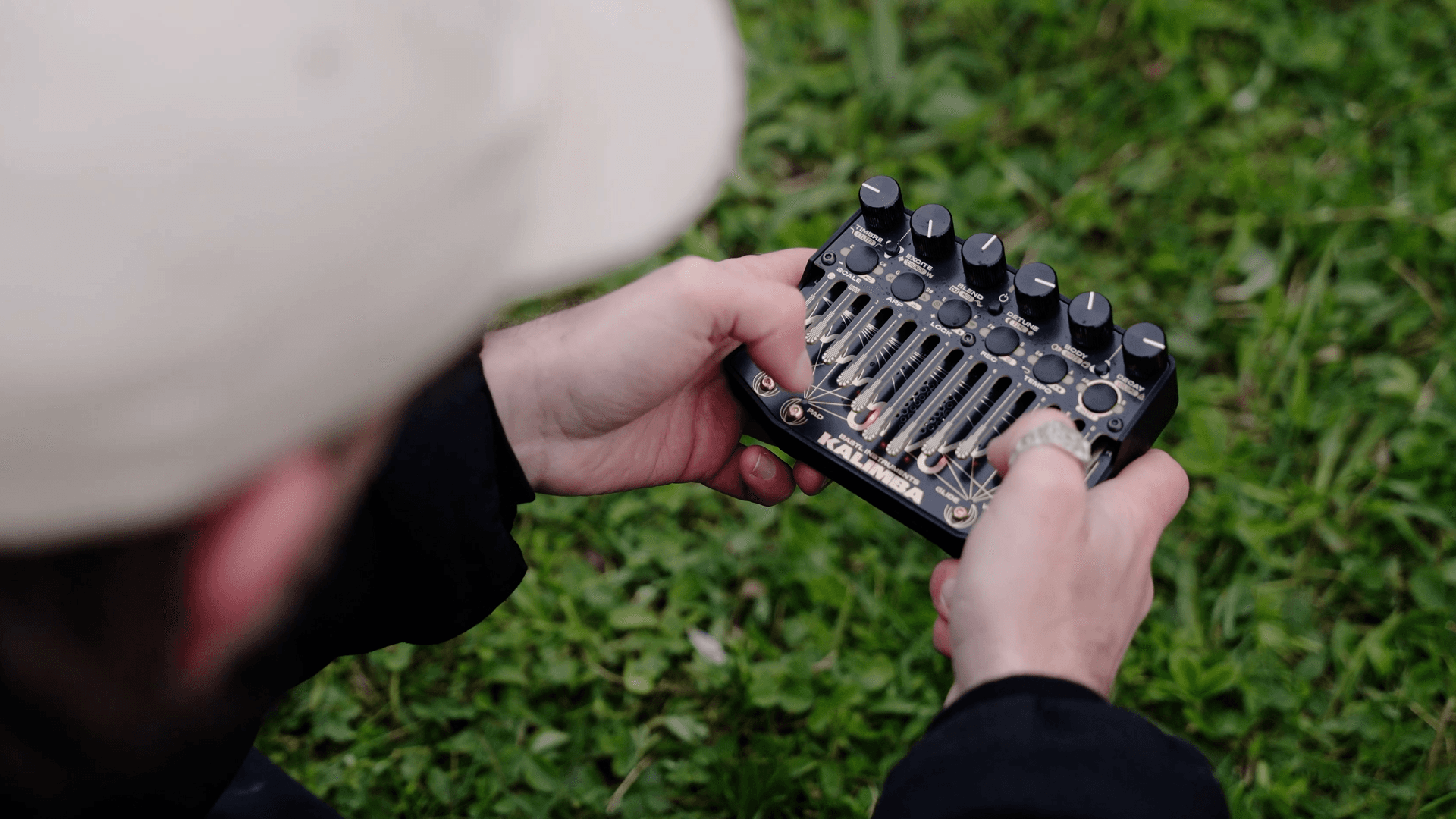
Bastl Instruments used Superbooth 2026 to push a simple idea into stranger territory: a kalimba that behaves like a compact synthesizer without losing the feel of a real acoustic instrument. Kalimba took more than three years to develop, and Bastl said it went through multiple rounds of casing shapes, tine lengths, materials, internal design, features, and visual direction before landing here.
The core trick is physical interaction. Bastl said the instrument uses internal microphones, touch-sensitive areas, and an accelerometer to excite both a physical-modelling engine and an FM engine. In practice, that means Kalimba is not limited to clean plucks. It can be played by striking the body, strumming the casing or the tines, sliding across its touch points, and changing how it sounds simply by moving and rotating the unit. That motion data can also act as an alternate exciter and dynamically filter the left and right channels, which is the kind of hands-on behavior vintage-synth players tend to appreciate when a machine feels alive under the fingers.
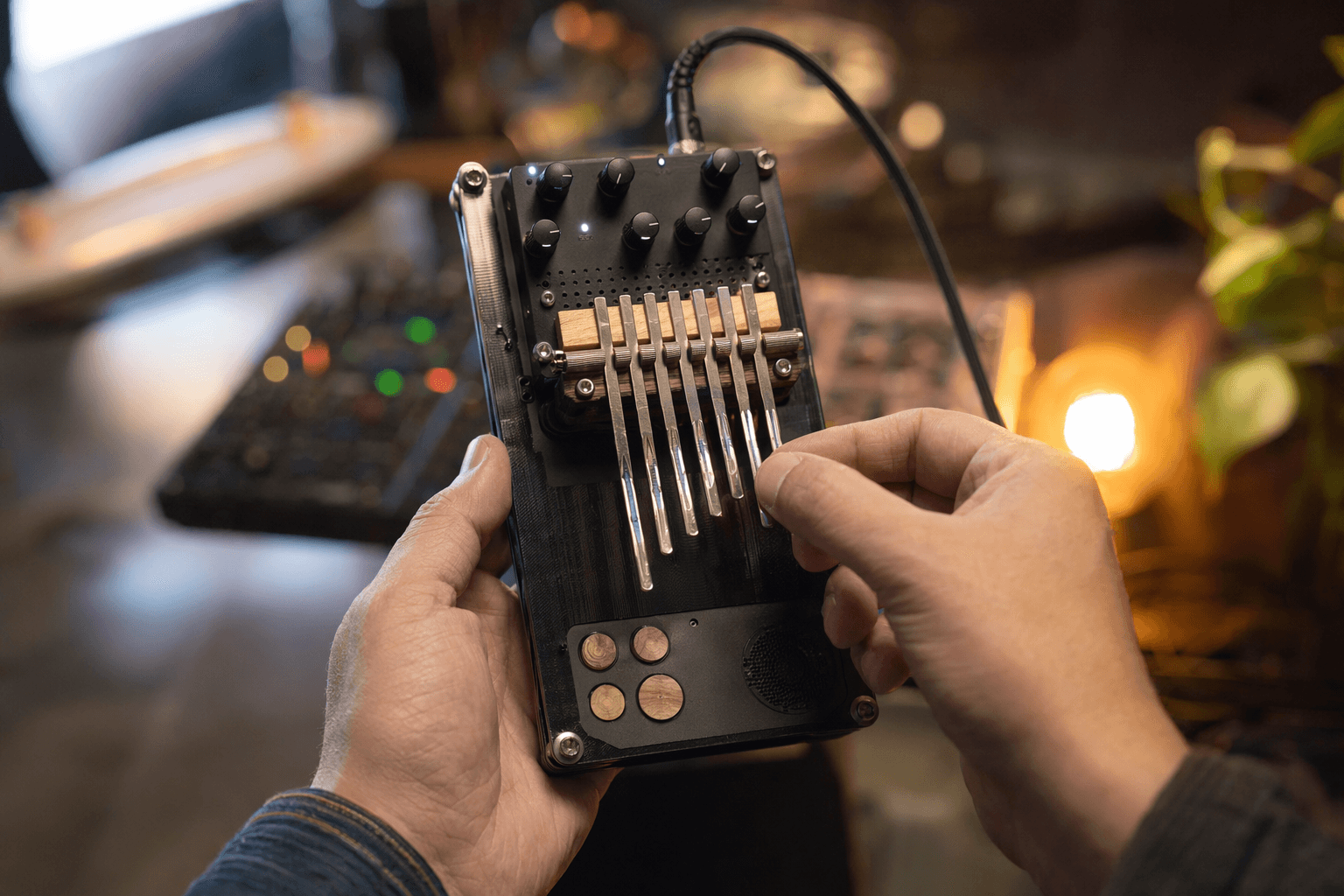
Bastl did not stop at a single voice and a few effects. Kalimba includes custom scales, octave shifting, an arpeggiator, presets, an internal layering looper, tempo and metronome functions, and built-in effects that cover reverb, delay, bit-crush, overdrive, filtering, and modulation. MusicRadar’s live notes suggested it can go far beyond a sweet, bell-like pluck, with destructive looper layering, time-stretching, and reversing audio pushing it into much less recognizable textures. Bastl also built in a rechargeable USB-C battery and a speaker, and says the sensitivity was tuned to avoid feedback on loud stages.
For a vintage-synth audience, the real question is not whether Kalimba is quirky. It is whether it belongs in the same conversation as the current wave of hybrid acoustic-electronic instruments. The answer is yes, but only partly. Korg Berlin’s Phase8, with its eight independent electromechanical voices and steel resonators, is a more obvious cousin to the classic synth lineage because it carries the language of voice structure, sequencing, wavefolding, and pitch-dependent modulation. Kalimba is different. Its connection is more tactile than historic, more about performance interface than retro hardware pedigree.
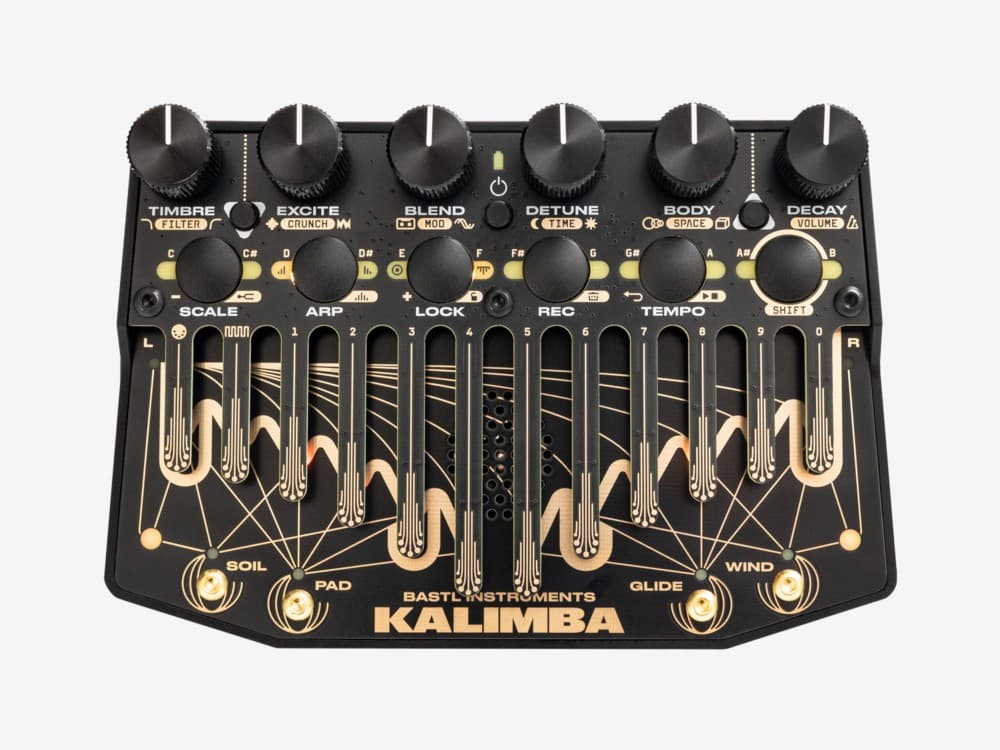
That still makes it relevant. Bastl’s instrument shows how far the old hands-on synth ideal can stretch when touch, motion, and resonators replace oscillators, filters, and envelopes as the starting point. Kalimba launched on Kickstarter from May 7 to June 6, with super early bird pricing starting at 389 euros before rising to 500 euros before tax and shipping. For players who care about interface as much as circuitry, it is one of the clearest arguments yet that acoustic gesture can still drive genuinely electronic thinking.
Know something we missed? Have a correction or additional information?
Submit a Tip