Casio FZ-1 mods keep the vintage sampler relevant in 2026
The best FZ-1 mods in 2026 fix the parts that age hardest, floppy storage, memory limits, and loading, without draining the sampler’s character.
The 2026 mod wave
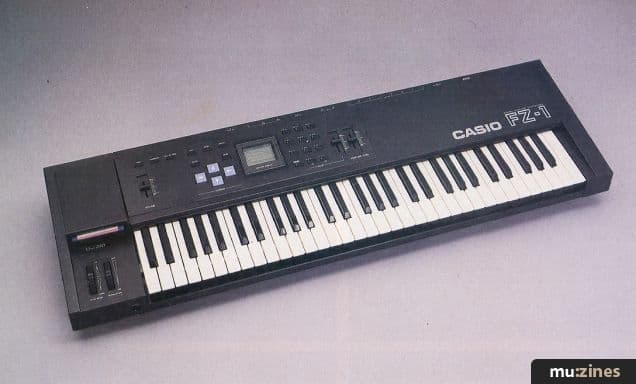
The Casio FZ-1 stays alive in a very specific way: not by pretending it is still 1987, but by getting just enough modern help to keep working like a serious sampler. DeftAudio’s hardware roundup, highlighted by Synthtopia, points to a small but meaningful ecosystem of upgrades for the FZ-1, the FZ-10M, and the FZ-20M, and the takeaway is refreshingly practical. The most useful changes are the ones that solve the old pain points, storage, screen readability, memory limits, and file transfer, while leaving the machine’s core character intact.
That distinction matters because the FZ-1 is already one of the great “love the sound, tolerate the workflow” machines of the late digital era. The best mods are not there to turn it into something else. They are there to keep a vintage sampler usable enough that it can still earn a place on a desk instead of becoming a nostalgia object.
Storage, screens, and the daily friction of using an old sampler
The most obviously corrective upgrade in the current crop is the FlashFloppy-based floppy emulator. That is the sort of change that addresses a real, everyday failure point rather than a cosmetic annoyance. Old floppy mechanisms age, media gets flaky, and a sampler that depends on obsolete storage becomes harder to trust every time you power it up. Replacing that chain with a floppy emulator is the clearest reliability play in the whole set, and it is the mod most directly aimed at preserving usability.
The OLED screen replacement follows the same logic, even if it is less dramatic from a maintenance standpoint. An older display can make an already deep instrument feel slower and more tedious than it should. A sharper OLED does not change the FZ-1’s sound, but it can make navigation and editing less punishing, which is a real workflow improvement on a machine whose appeal depends on hands-on sampling and careful menu use.
There is also a collector’s calculus here. Storage and display changes are the kinds of upgrades that can make a vintage sampler more pleasant to live with without touching the synthesis engine itself. If the goal is to keep the FZ-1 on the bench and in rotation, rather than sealed away, these are the sort of changes that earn their place.
More memory, but only if you need it
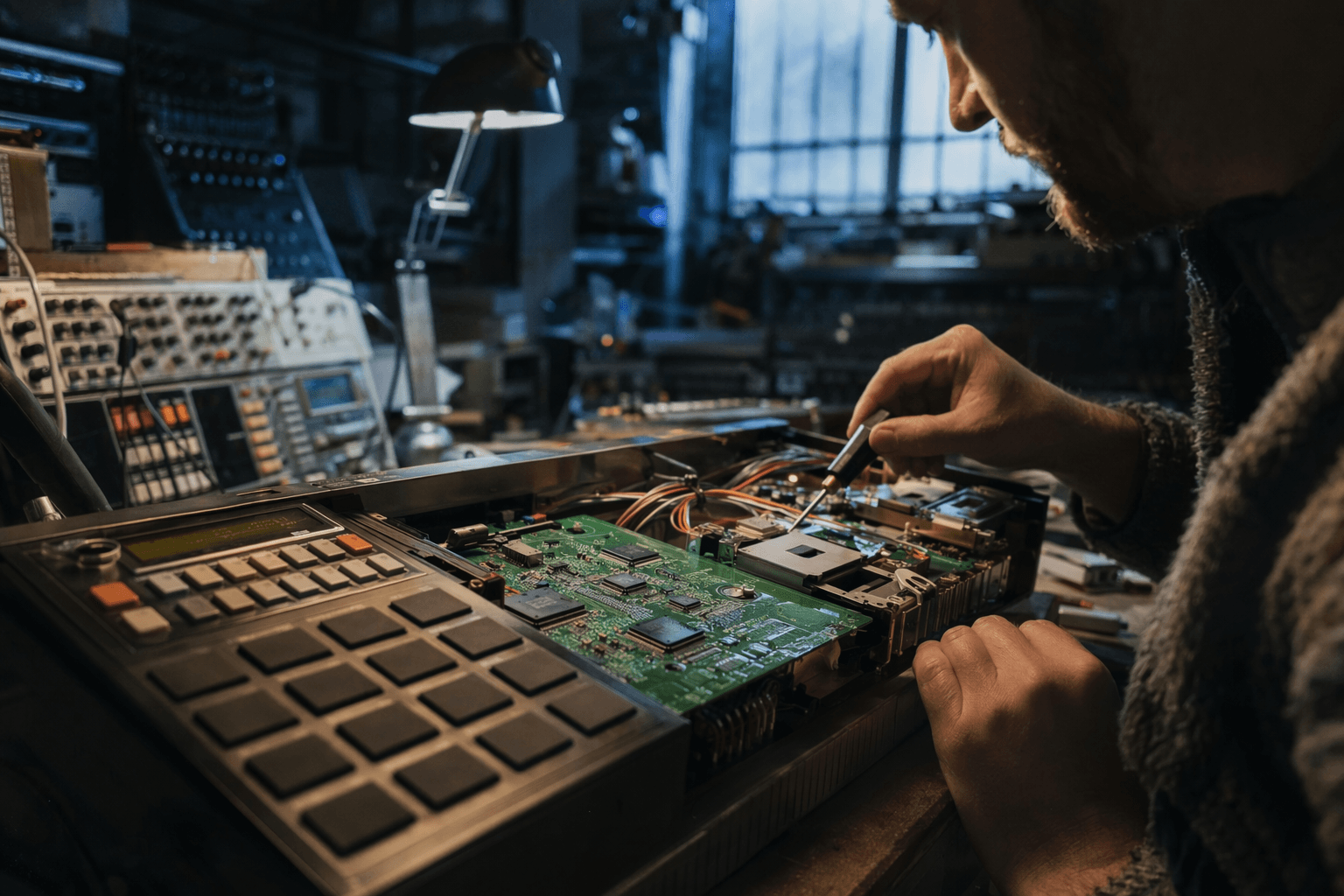
The new 1MB memory expansion board is the most historically interesting of the bunch because it is not just an extra feature, it is a recreation of the original FZ-1 upgrade path. DeftAudio says the board adds an extra 1MB of sample memory for the keyboard FZ-1, which is the only version with an expansion slot, and that it recreates the 1987 circuitry using off-the-shelf 256Kx1 DRAM chips. Beginner soldering skills are required, so this is not the entry-level mod in the lineup, but it is also not a mysterious one-off hack.
This is the kind of change that directly addresses a vintage sampler pain point. The original FZ-1 launched in 1987 with 1MB of memory expandable to 2MB, a 61-key, 16-bit digital sampling keyboard with velocity and aftertouch, and sampling rates from 9kHz to 36kHz. Contemporary coverage from that period said the optional MB10 RAM board could raise onboard sampling time to 29 seconds of 16-bit audio, compared with 14.5 seconds at 36kHz in the base machine. In other words, more memory was never a theoretical luxury on this platform. It was the difference between a sampler that felt constrained and one that could actually breathe.
For players working with longer samples, denser multisamples, or more ambitious arrangements, the memory board is the upgrade that changes what the machine can realistically hold in memory. For collectors, it is the one to weigh most carefully, because it is a board-level change that asks for soldering and does alter the instrument more deeply than a floppy swap or a display refresh.
The quiet upgrade that may help the most at the desk
Parallel-port data loader software is less glamorous than a new screen or a memory board, but it may be the most immediately useful thing in the whole bundle if you are actively moving files in and out of the instrument. Vintage samplers become frustrating when loading is clumsy, especially when the rest of a studio workflow has moved on by decades. Software that smooths that process does not just save time, it makes the machine more likely to be used instead of admired from a distance.
That is also the least invasive path of all. Software support gives the FZ-1 a better chance of staying in working circulation without asking the owner to commit to irreversible hardware changes. For anyone who wants to keep the sampler collectible as well as functional, that matters. It is often smarter to begin with the update that changes the workflow before moving on to the upgrade that changes the chassis.
Why the FZ-1 still gets this much attention
Part of the reason these mods feel worth discussing is that the FZ-1 was never a small instrument in the first place. The line included the rack-mounted FZ-10M and FZ-20M, and the keyboard version was also sold re-badged by Hohner as the HS-1. Vintage Synth Explorer also places the FZ-1 in a useful cultural map, linking it to Underworld, Kronos Quartet, Dee Lite, 2 Live Crew, and Kitaro, with the Hohner HS-1 credited to Coldcut. That list is a reminder that the machine’s footprint stretches across club music, experimental work, and pop production alike.
The support ecosystem around it reinforces that legacy. GitHub projects and archives continue to document loading tools, sample libraries, and other practical material that keeps the platform navigable for owners. Taken together, those efforts show a vintage sampler surviving in the only way that really counts: by remaining a working instrument with a living maintenance culture around it.
The FZ-1’s appeal has always been bigger than nostalgia. In 2026, the best mods do not try to erase its age. They make the age manageable, so the sampler can keep doing what made it matter in the first place.
This article was produced by Prism’s automated news system from verified source data, official records, and press releases, then run through automated quality and moderation checks before publishing. The system is built and supervised by the people who set the standards it runs under. Read our full AI policy.
Did this article answer your question?