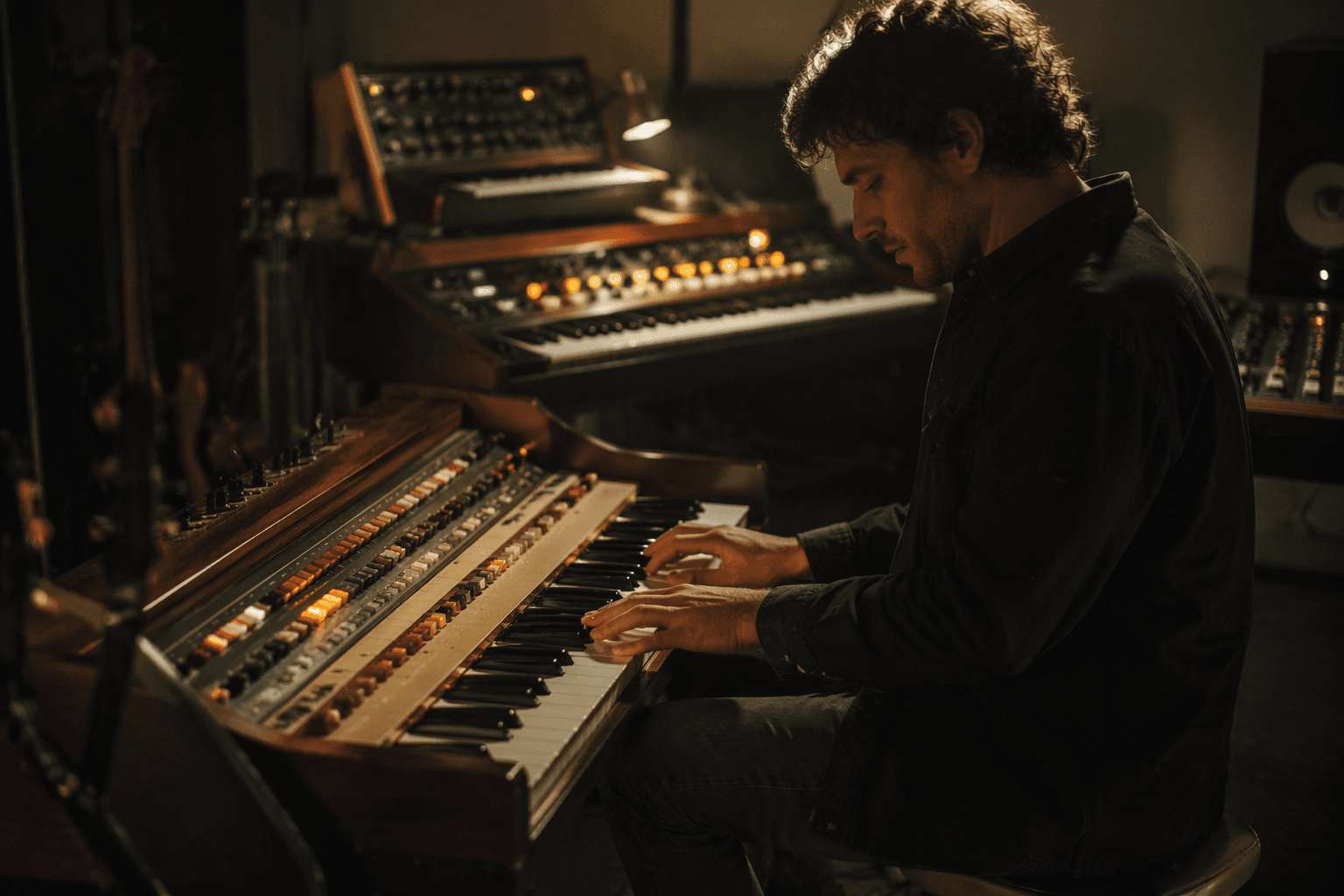
Erica Synths Syntrx II revives EMS matrix synth ideas for modern players
Vintage purists may clock the Syntrx II as an EMS cosplay, but Starsky Carr shows it can behave like a proper melodic workhorse with real compositional reach.

The first mistake is judging the Syntrx II by its panel
The Erica Synths Syntrx II gets dismissed too quickly as an EMS-style sci-fi effects box, the kind of machine that looks built for bleeps, fumes, and spooky interludes. That read misses the point. In Starsky Carr’s demo, the bigger question is not whether it can make weird noise, but what would make a vintage-first player rethink it as a serious instrument.
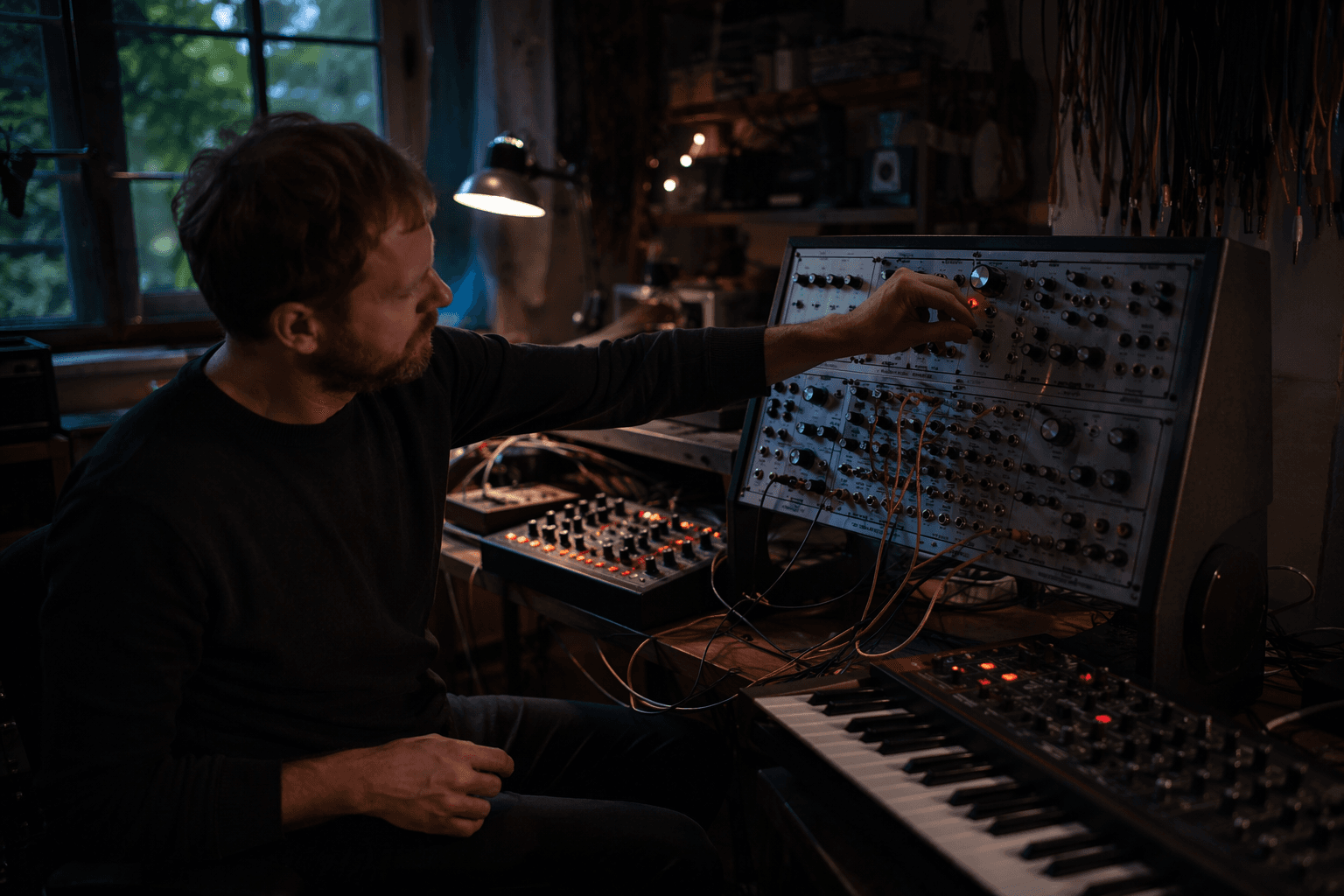
The answer starts with lineage. The Syntrx II sits squarely in the shadow of Electronic Music Studios, the England-based company founded in 1969, whose VCS3 became famous for its pin-matrix routing, three oscillators, and deep ties to players like Brian Eno, Pink Floyd, Tangerine Dream, Depeche Mode, and The Who. Erica Synths is not pretending that legacy does not exist. It is translating it into a contemporary machine that keeps the matrix workflow intact while adding the sort of features a working player actually uses.
Why the old EMS comparison only tells half the story
Carr’s first myth-buster is visual: the Syntrx II looks more complicated than it is. That matters, because a matrix synth can scare off anyone who has spent years with more conventional subtractive layouts. But the 16 by 16 digital pin matrix is still a direct, tactile way to think about signal flow, and that is exactly why vintage players should not write it off. You are not wrestling with a software menu or a hidden page system. You are patching a hardware instrument in a way that still feels adjacent to the EMS way of thinking.
The second myth is even more important. This is not just a sound-design curiosity. The Syntrx II can be treated like a standard three-oscillator monosynth, and Carr leans into that approach instead of treating the machine like a novelty. That alone should reset expectations for anyone who assumes matrix synths are only good for chaotic textures.
A modern synth that still speaks EMS
Erica Synths says the Syntrx II is meant to fit more deeply into contemporary electronic and experimental setups, and that description is more practical than promotional. The instrument is designed to move from drones to basslines to glitched noisescapes, which is the right range for a modern analog synth that still wears a classic matrix interface.
The manual makes the intent even clearer. The Syntrx II includes two main oscillators with waveshapers, a modulation oscillator with 1V/oct tracking, highpass and lowpass filters in series, a sample-and-hold circuit, a multi-colour noise generator, DC-coupled inputs with signal inversion and an envelope follower, a ring modulator, a looping trapezoid envelope generator, two output VCAs, delay, reverb, a recordable joystick, an analogue patch matrix, 256 patch memories, a piano roll sequencer, MIDI in, MIDI thru, two assignable outputs, and a headphone output. That is not an effects pedal with a synth label. It is a full instrument with enough utility to sit in a production setup and do real work.
Where the demo proves the point
Carr’s walkthrough matters because it shows the Syntrx II behaving like an instrument rather than a museum piece. The trapezoid envelope is not presented as an abstract historical nod, but as a practical contouring tool for notes and movement. The onboard three-channel sequencing pushes the machine further into compositional territory, while the piano roll sequencer gives it a more direct route for writing parts that need to repeat, evolve, and lock to a track.
The other useful tests are all the old-school synthesis tricks that still matter when you want a patch to feel alive. FM, self-oscillation, noise modulation, filter techniques, sample-and-hold, joystick modulation, MIDI offsets, and CC assignments all point to one conclusion: the Syntrx II is built for active patching, not passive preset browsing. Carr also addresses patch saving, and that is where the modern and vintage ideas really collide. Saving a patch is useful, but what it preserves and what it does not preserve becomes part of the workflow, not a hidden convenience feature that erases the hands-on character.
How Erica Synths got here
The Syntrx II did not appear out of nowhere. Erica Synths says the original SYNTRX was developed with engineers from Riga Technical University and used a digitally controlled 16 by 16 matrix built around 32 AS16M1 analogue switch ICs. It was produced in a limited run of 1,056 units, and Erica Synths also says Peter Zinovieff approved its re-imagination of the Synthi AKS. That detail matters because it tells you the company was not merely borrowing the shape of an EMS machine, but trying to earn some legitimacy inside that lineage.
The Syntrx II announcement at Superbooth 22 on May 10, 2022, positioned the new version as the next step, with a planned summer 2022 availability and an RRP of €1,800 excluding VAT. The product page still lists it at €1,800 VAT not included and adds worldwide delivery, a 24-month warranty, and a 14-day direct-sale return policy. That puts the machine in a serious price bracket, but also in serious territory for anyone weighing it against other premium analog instruments rather than against nostalgia alone.
What should a vintage-first player take from it
For players who grew up on subtractive classics, the Syntrx II makes the most sense when you stop treating it like an EMS replica and start treating it like a matrix-based analog workstation. The vintage appeal is real, but the practical value comes from how much can be done without losing the exploratory feel that made the original Synthi and VCS3 so influential. The patching still invites chance, but the sequencer, effects, MIDI control, and memory make it easier to bring those ideas into an actual session.
That is the real myth-bust. The Syntrx II is not just there to sound like something from a label sleeve or a soundtrack cue. It can do that, sure, but Carr’s demo shows a machine that can also carry melody, structure, and repeatable musical ideas. For a vintage purist, that is the point where the sci-fi reputation stops being a warning and starts becoming a reason to look again.
This article was produced by Prism’s automated news system from verified source data, official records, and press releases, then run through automated quality and moderation checks before publishing. The system is built and supervised by the people who set the standards it runs under. Read our full AI policy.
Did this article answer your question?