Gulf Coast Synthesis Model 8 brings reel-to-reel workflow to software DAW
Model 8 turns the DAW into a tape machine, complete with reels, varispeed, and deck-like instability. It is closer to threading a multitrack than drawing clips.
Tape workflow comes first
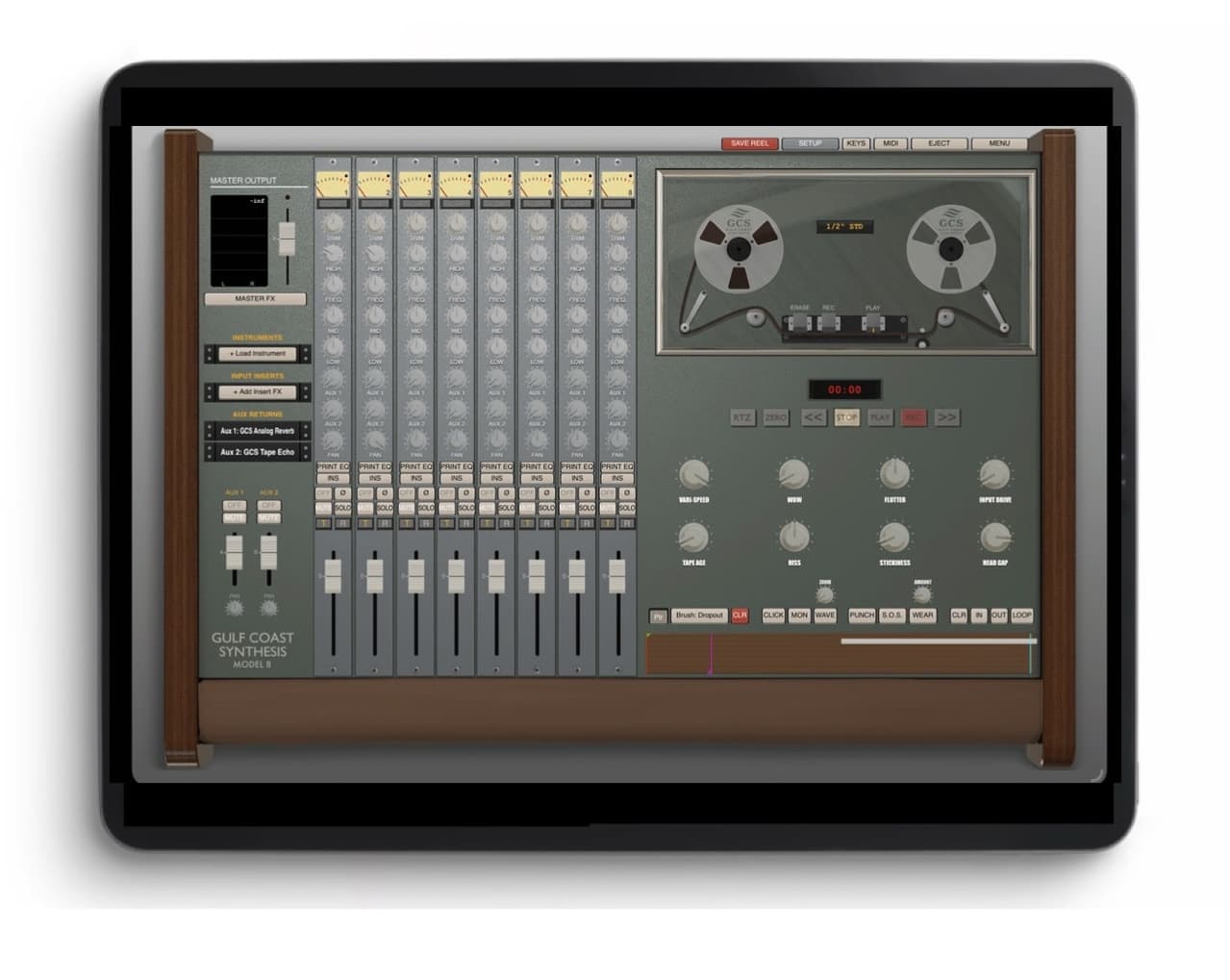
Gulf Coast Synthesis’ Model 8 is built around a simple but disruptive idea: stop thinking in clips and timelines, and start thinking like you are running a tape machine. Instead of a linear DAW grid, the software organizes recording around reel behavior and signal flow, so the workflow feels closer to a cassette multitracker or reel-to-reel deck than a conventional digital session.
That is not just retro styling. Model 8 models speed variation, physical instability, and long-term degradation, so the small unpredictability that defined tape-era recording is part of the instrument. Users can work with speed, direction, and tape condition, and the engine can generate flutter and dropouts, which pushes the experience well beyond a simple saturation box.
A real tape machine hidden inside software
The beta page describes Model 8 as “a standalone 24-track tape machine and studio environment,” and that framing matters. Gulf Coast Synthesis also says the system includes “built-in magnetic physics, analog-modeled synthesizers, and classic outboard routing,” which makes the product feel like a production environment rather than a novelty skin over a modern DAW.
The workflow begins by creating a new “Reel,” which spawns a dedicated folder on disk. Default reel lengths are 10, 20, 30, 45, or 60 minutes, and you can physically grab the reels and tension arms with the mouse to create varispeed movement and Doppler-style pitch bends. That tactile layer is the heart of the design, because it asks you to perform the session like a machine operator, not just arrange audio.
Why the tape formats matter
Model 8’s format choices are rooted in actual recording history, not vague nostalgia. Quarter-inch open reel audio was the earliest common magnetic tape-based recorded sound format and remains the most common open-reel width historically, while professional multitrack systems expanded from 1/4-inch into 1/2-inch, 1-inch, and eventually wider formats. Cassette, by contrast, uses 1/8-inch tape and historically carried two stereo pairs, or four total tracks.
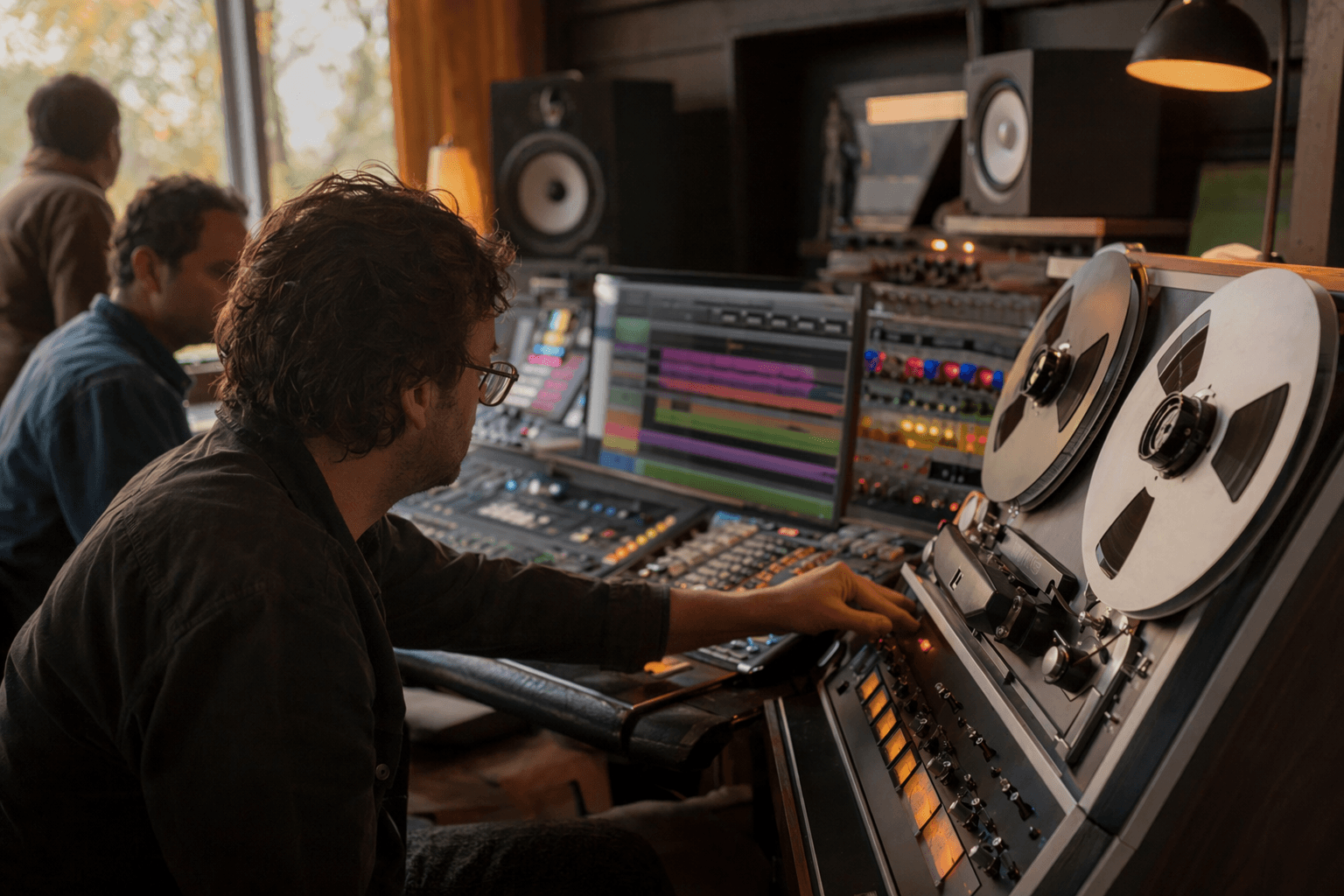
That history is reflected in the software’s support for cassette, quarter-inch, half-inch, and one-inch configurations. Those are not arbitrary menu choices. They map directly to the way tape width shaped track count, noise floor, and workflow on real machines, which is exactly why the product feels aimed at synth heads who already understand what tape geometry meant in the studio.
Routing tricks that matter to synth people
The most interesting part of Model 8 is the way it handles routing. The manual says users can route the output of one track directly into the input of another, and that opens the door to feedback loops, faux tape echo, reverse recording, and varispeed tricks that are deeply familiar to anyone who has ever abused a four-track or pushed a reel machine into strange territory.
It also supports track-to-track internal bouncing, destructive versus monitoring EQ printing, auxiliary routing, and sound-on-sound layering. Those are the kinds of choices that shape arrangement as much as tone, because they force you to commit, bounce, and recycle material the way tape users did when track counts were finite and every pass mattered.
How much of a full production platform is it?
This is not a stripped-down boutique simulator. The engine supports up to 24 tracks, phase invert, color-coded VCA groups, up to four VST3 or AU inserts per track, and up to four master inserts. The desktop edition also offers unlimited third-party plugin support and free updates for the life of the edition, which explains why Gulf Coast Synthesis is presenting Model 8 as a serious production platform rather than a toy for nostalgia sessions.
The software is in public beta on macOS, Windows, and iPadOS, with release expected before the end of May. The beta page says the active build can crash occasionally, especially while features are changing or when hosting some third-party plugins, so it is still very much a live development environment. Even so, the pricing is already public: Desktop is listed at $99 regular, $69 introductory, while iPadOS Full is $29 regular, $19.99 introductory. A free Basic iPadOS tier is limited to 4-track physical tape and does not support third-party AUv3 plugins.
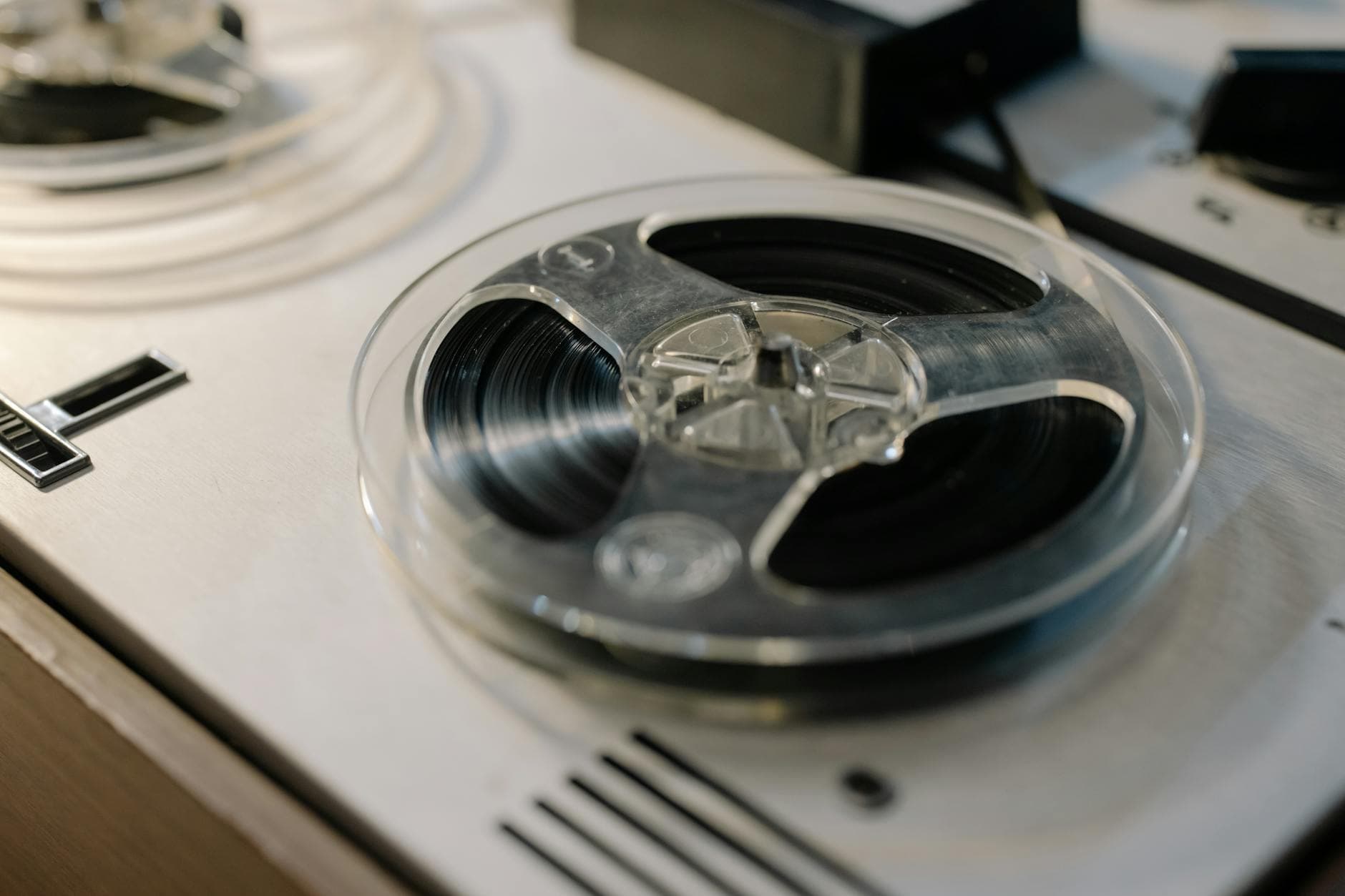
Built-in tools lean into the same era
Model 8 also comes with its own rack and instruments, which keeps the tape concept from feeling incomplete. The beta page lists built-in effects including tape echo, spring reverb, opto compression, FET-style compression, line amp, parametric EQ, and a multi-modulation effect, all of which fit naturally into tape-minded production.
The instrument lineup is just as deliberate: A-10 Poly Synth, Voxtone Rhythm Machine, MonoBass, Glissandio, A-1 Mono Synth, and Stage Keyboard are all integrated. For vintage synth workflows, that matters because it means you can sketch, bounce, process, and print inside one environment without immediately reaching for a modern DAW’s standard toolset.
The person behind it and the bigger picture
Gulf Coast Synthesis says the company was founded by Will, an audio developer and musician based in Austin, Texas. That gives Model 8 a clear individual voice, and the design choices reflect a developer who understands both software architecture and the lure of mechanical recording behavior.
The bigger story is not just that tape emulation is still alive. It is that Model 8 tries to re-create tape-era thinking at the level of workflow, where compromise, friction, and happy accidents are part of the composition process. For synth users who want the feel of a reel machine without hauling iron, Model 8 is less about looking vintage and more about making the computer behave like a studio deck, with all the discipline and instability that implies.
Know something we missed? Have a correction or additional information?
Submit a Tip