Moog Inc. Celebrates Artemis II Role, Bridging Synth Legacy and Aerospace Engineering
Moog Inc.'s thrust vector control systems steered NASA's Artemis II off the pad April 1, a reminder that the company behind the Minimoog is also steering rockets to the moon.
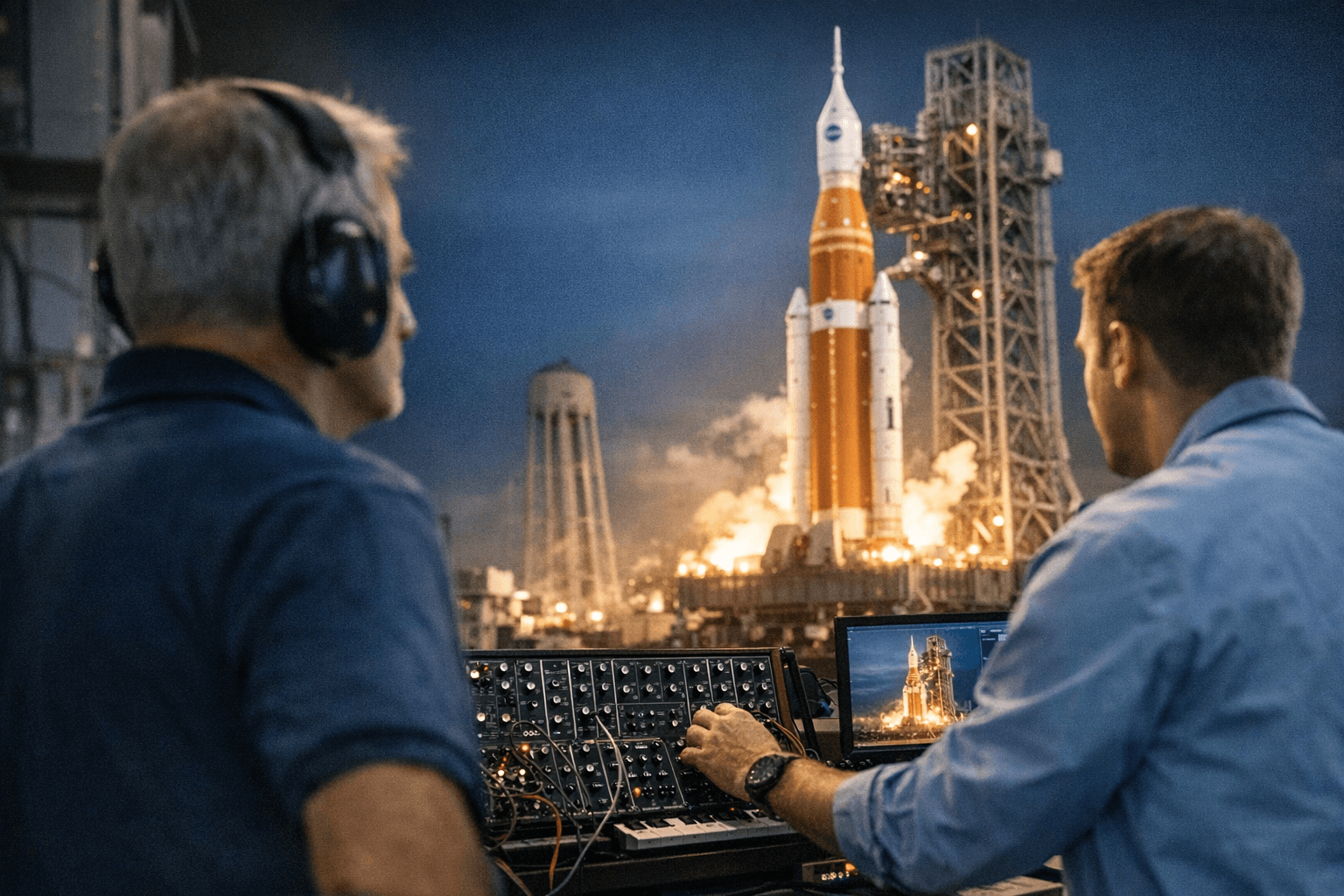
The same East Aurora, New York company whose name is on every Minimoog, Memorymoog, and Moog modular ever made also steered four astronauts toward the moon on April 1, 2026. Moog Inc. provided mission-critical actuation and motion control technologies across the Space Launch System rocket and its ground infrastructure for NASA's Artemis II launch, the first crewed lunar mission since Apollo 17 in 1972.
Jim Steffan, Program Director of Space Actuation Systems at Moog, put the scope of the company's hardware contribution plainly: "We're really on the vehicle from tip to tail. We have hardware in the actuation, part of the core stage, we're in Orion, part of the environment. We've got avionics on the vehicle. Propulsion." Steffan called the successful launch "extremely exciting, and it's a proud moment" for the Moog team that had spent more than three years supporting Artemis hardware programs leading up to the April 1 liftoff from Kennedy Space Center in Cape Canaveral, Florida.
Moog's aerospace credentials run deeper than Artemis. The company helped steer the Saturn V during Apollo, carried that work through the Space Shuttle program, and is now embedded across the SLS from its thrust vector control actuators, which physically gimbal the rocket's engines during ascent, to its launch abort system actuators, designed to pull the Orion crew capsule clear of the vehicle in an emergency. At T-minus two and a half minutes, NASA performs a gimbal check on those very actuators before committing to launch.
For collectors and restorers chasing vintage Moog gear, none of this changes the action on a Model D or the oscillator drift on a Memorymoog. What it does clarify is the nature of the company holding the Moog name. Moog Inc. is a publicly traded aerospace and defense manufacturer, listed on the NYSE under MOG.A and MOG.B, with the engineering infrastructure and contract scale to match. The instrument division exists within a larger organism that builds flight hardware to tolerances NASA demands.
That matters for the ecosystem in practical ways. Corporate visibility from high-profile contracts like Artemis sustains R&D budgets, manufacturing facilities, and the kind of precision engineering culture that occasionally feeds back into instrument-grade components and official service support. It also keeps the Moog name legible to a general audience, which historically correlates with sustained collector demand and stable prices in the vintage market. A brand that launched a moon mission on April 1 is not going to disappear from the synthesizer world quietly.
Moog's unbroken line from the Apollo era through Artemis II is exactly the kind of institutional continuity that makes vintage instrument provenance meaningful. The company that built Robert Moog's filter circuits and the company that just steered a rocket past the moon are, structurally speaking, the same organization, operating out of the same Western New York address.
Know something we missed? Have a correction or additional information?
Submit a Tip