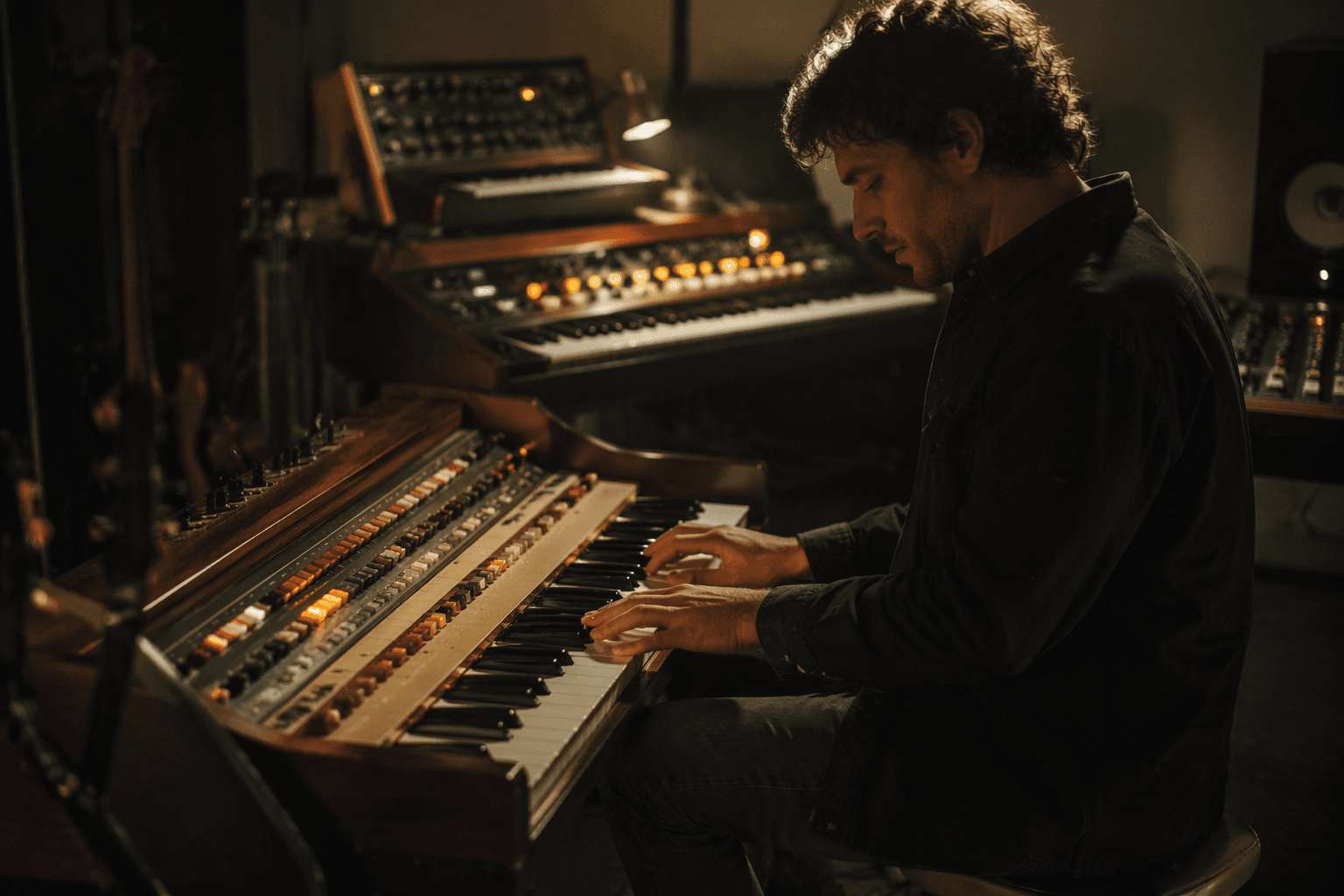
MusicRadar maps the best synthesizers across budgets and styles
MusicRadar's guide reads like a vintage-buyer's decoder ring: OB-X8 for Oberheim bite, Grandmother for Moog muscle, Minilogue XD for a first real synth.
1. Best analogue: Oberheim OB-X8
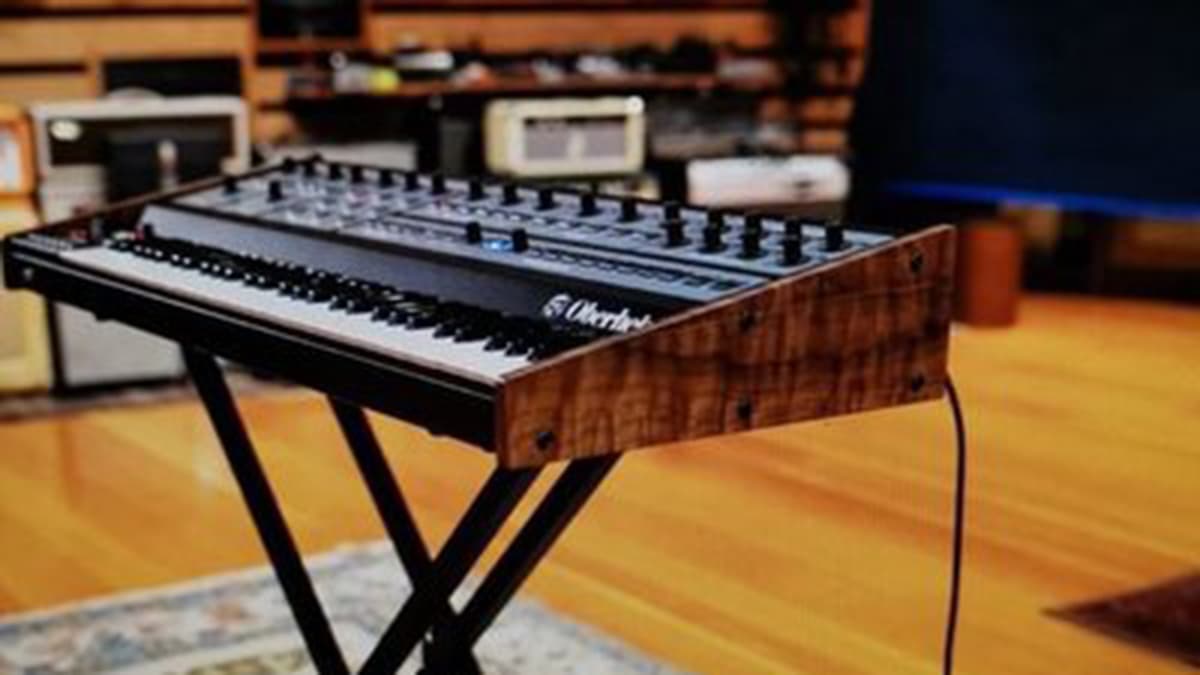
If you want the cleanest bridge between a modern keyboard and the late-70s, early-80s Oberheim sound, this is it. MusicRadar’s pick pulls straight from the OB-X, OB-Xa, and OB-8 lineage, and Oberheim’s own relaunch story matters here too: this was the company’s first new product after more than 35 years, launched as an eight-voice analog synth in 2022 and later expanded into a desktop module that began shipping in June 2023. OS v2.0 pushed it further with binaural mode, a new low-pass filter type, more memory and control, 32-voice poly chain support, and MIDI Polyphonic Expression, which is exactly the kind of modern cleanup a vintage buyer wants.
2. Best bass: Moog Grandmother
This is the one that makes you stop thinking about “vintage-inspired” and start thinking about whether your bass line actually hits hard enough. Moog describes the Grandmother as a semi-modular analog synthesizer with a built-in arpeggiator, sequencer, and spring reverb tank, and it says the circuits, spring reverb, and spirit are inspired by classic Moog modulars. Unveiled at Moogfest in May 2018, it landed with real demand too, with Guitar Center handling the first run of 500 units as the exclusive sales channel.
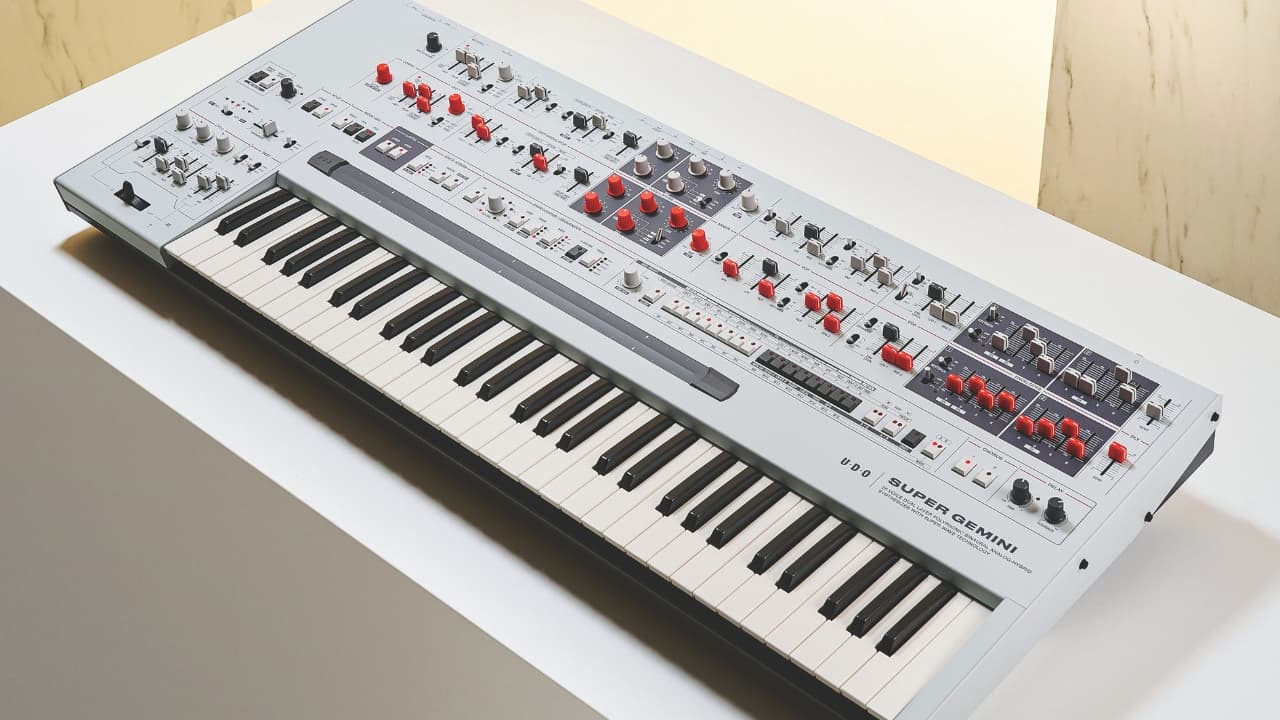
3. Best overall: UDO Audio Super Gemini
MusicRadar’s top slot goes to the Super Gemini, and that makes sense if you care about a flagship that behaves like an instrument instead of a museum piece. UDO Audio describes it as a 20-voice, bi-timbral analog-hybrid synth with a dual-layer design and immediate control over both timbral layers, which means you can build big, animated patches without living in a menu system. It is not trying to imitate one old box; it is trying to give you the muscle of a serious poly and the speed of a panel you can actually perform on.
4. Best beginner: Korg Minilogue XD
This is the rare beginner synth that does not feel like a shortcut. Korg’s Minilogue XD keeps real analog circuitry in the signal path, then adds a digital multi-engine, effects, a powered-up sequencer, and microtuning, which is why it keeps showing up in serious starter conversations instead of novelty lists. Korg’s limited-edition variants, including the Inverted and PW versions, also tell you the platform still has commercial life, not just nostalgia value.
5. Best poly

The poly lane is where the vintage itch gets expensive, so the practical question is whether a modern board can actually give you wide chords and stacked harmony without the old reliability headache. The OB-X8 does that with its eight-voice analog core and 32-voice poly chain support, while the Super Gemini answers from the other side with 20 voices and bi-timbral layering. That is the real modern-poly tradeoff: raw voice count versus the character of the sound engine you are stacking.
6. Best under $/£1,000
This is the sweet spot where the hardware market stops feeling like a compromise and starts feeling like a plan. MusicRadar’s split between under-$500 and under-$1,000 categories says a lot about the current synth scene: there is now a serious middle tier where you can get real controls, real memory, and a proper workflow without jumping straight into flagship money. For vintage buyers, that middle lane is often where the smartest purchase lives.
7. Best under $/£500
The sub-$500 bracket used to mean settling, but that is no longer true across the board. In MusicRadar’s framing, this slot matters because it gives you access to hardware that can still behave like an instrument, not just a cute desktop box, and that is a huge shift for anyone who wants classic synthesis ideas without collector pricing. The point is not to be cheap, it is to get close enough to a vintage workflow that you will actually keep playing it.
8. Best FM synth
FM’s presence in the guide is a good reminder that the hardware revival is not only about analog worship. If your ear wants glassy bells, electric-piano bite, or harder attack transients, FM is the lineage that keeps the vintage story honest because it reaches into the late-80s digital side of synth history instead of pretending it never happened. That makes the category valuable, not as a detour, but as part of the same hardware conversation.
9. Best wavetable
Wavetable synths are for players who want motion first and nostalgia second. They trade pure emulation for moving spectra and evolving timbres, which is exactly why the format sits comfortably in a guide that treats modern hardware as a toolkit rather than a shrine. If analog is about the old voice in the room, wavetable is about how far that voice can bend before it becomes something new.
10. Best ambient
Ambient is where effects, modulation, and long decay times stop being extras and start being the whole point. In a vintage-synth context, that matters because it lets modern hardware deliver the bloom and drift people associate with old modulars and polys, but without begging for perfect tuning or a rack full of outboard gear. This category is the quiet proof that classic synthesis ideas still work when the goal is atmosphere instead of attack.
11. Best mini
Small footprints matter more than people admit, especially once the desk is full of pedals, controllers, and cables. MusicRadar’s mini category recognizes that a compact synth can still be a serious instrument, which is a very modern answer to a very old problem: how to keep the tactile part of hardware synthesis alive when space is tight. The best mini synth is the one that earns desk space instead of borrowing it.
12. Best budget
The real value of MusicRadar’s guide is that it translates the market into usable choices instead of just collecting cool names. Once you read it that way, the question is not whether hardware synths are worth it, because the guide already assumes they are in a golden age, it is which current machine gives you the old feeling without the old repair drawer. That is the part vintage buyers care about most, and it is the thread that ties the OB-X8, Grandmother, Super Gemini, and Minilogue XD back to the same practical answer.
This article was produced by Prism’s automated news system from verified source data, official records, and press releases, then run through automated quality and moderation checks before publishing. The system is built and supervised by the people who set the standards it runs under. Read our full AI policy.
Did this article answer your question?