MusicRadar shows how to make soft synths sound like vintage analogs
MusicRadar’s ZebraCM patch recipe shows how drift, uneven filters, softer envelopes, and noise can fake costly 1970s polysynth character in software.
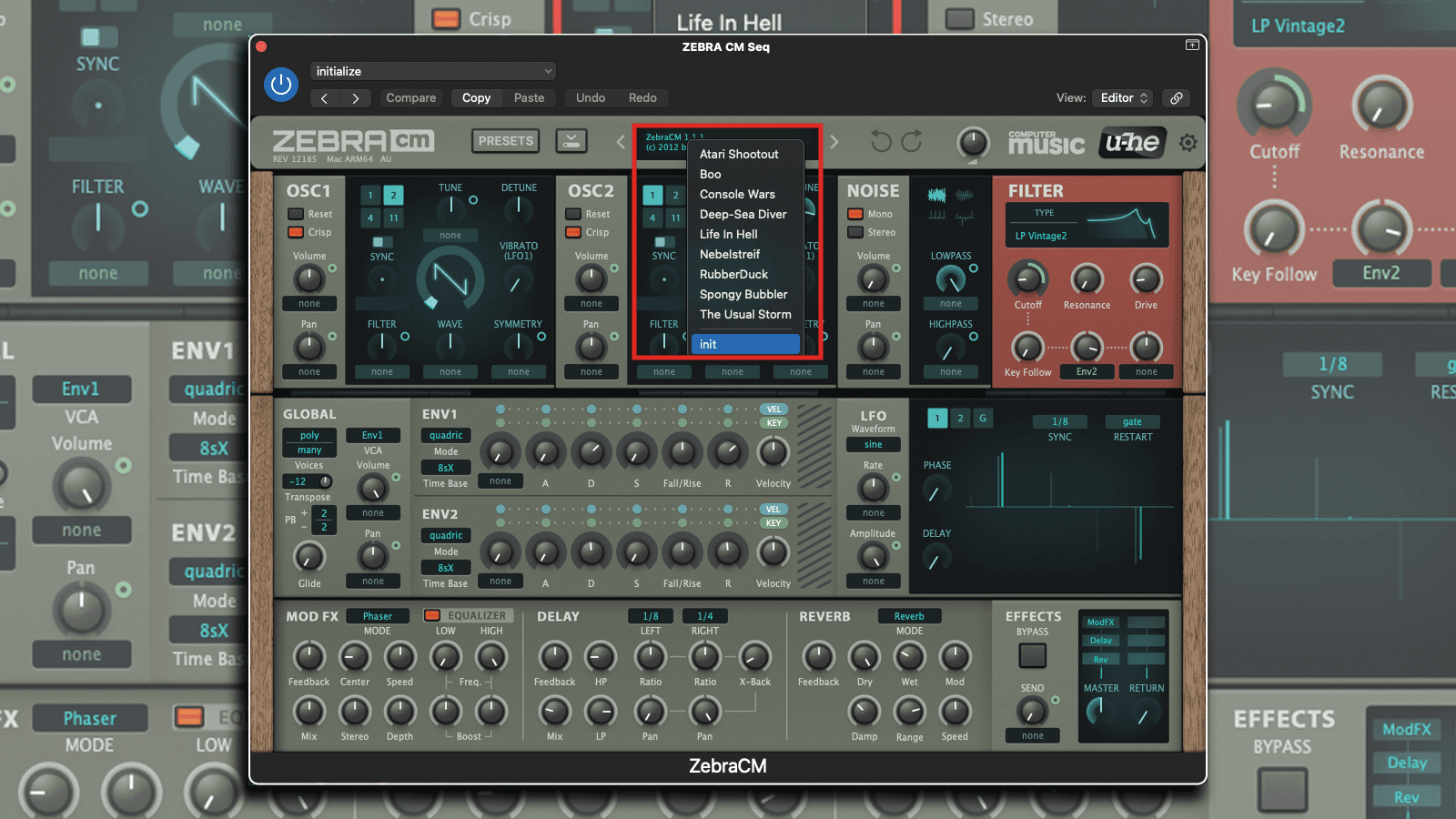
Oscillator drift, filter unevenness, softer envelopes, and a touch of noise are the fastest way to make a clean soft synth feel like a 1970s polysynth. That is the practical promise at the center of MusicRadar’s March 23, 2024 tutorial by Andy Jones, which treats vintage character as a set of small imperfections you can build in on purpose rather than a magic preset you stumble onto.
Start with movement, not polish
The tutorial begins from a simple but crucial idea: modern polysynths are often too clean. Classic analogs are memorable because their circuitry did not behave like a perfectly corrected digital instrument, so the sound itself carried drift, variation, and a little unpredictability. MusicRadar uses ZebraCM as the starting point, a stripped-down version of u-he’s Zebra2 that was originally commissioned by Computer Music magazine for its readers.
That matters because ZebraCM gives you a free, accessible place to practice the vintage approach without needing hardware, maintenance, or collector pricing. The point is not to imitate one exact synth in one exact year. The point is to recreate the feel of an era when instability was part of the instrument’s personality.
What to tweak first
MusicRadar’s method is deliberately hands-on and easy to translate to almost any soft synth. It starts from a blank patch and simple waveforms, then layers in the kinds of imperfections that make a patch breathe.
- Keep the oscillator core simple first, so the tone is easy to hear before you dirty it up.
- Shape the amp envelope so it avoids pad-like smoothness.
- Add a bandpass filter to narrow the focus and make the patch feel less glossy.
- Introduce slow modulation to simulate drift and the gentle movement older analog gear naturally produced.
- Bring in a little noise, then add LFO movement to the cutoff for extra instability.
- Push the effect harder for a rougher, more obviously vintage result, or reduce it if you want the sound to stay closer to the present.
That sequence is the real value of the tutorial. It is not a one-synth trick. It is a repeatable way to make nearly any software instrument feel less clinical by leaning on randomness, movement, and slight imbalance.
Why ZebraCM makes sense for this job
ZebraCM is a smart choice for the demo because it keeps the focus on fundamentals instead of buried menus. As a reduced version of Zebra2, it gives you enough synthesis control to shape the patch, but not so much complexity that the lesson gets lost. Because it was originally created for Computer Music magazine readers, it also fits the spirit of the whole exercise: a free tool being used to chase sounds once associated with expensive hardware.
MusicRadar later revisited the same idea on June 27, 2024, again framing a free modern soft synth as a route to a dusty old ’70s vintage synth sound that once cost a fortune. That second piece reinforces the same takeaway: software is no longer just a placeholder for analog gear. Used well, it can get surprisingly close to the tone, motion, and wear that made old polysynths feel alive.
The benchmark is the Prophet-5
The guide makes more sense when you place it against the synths that defined the target. Sequential introduced the Prophet-5 in 1978 as the world’s first fully programmable polyphonic synthesizer, and it remained in production until 1984. The original launched at $3,995, which Sequential notes is roughly $15,000 in today’s money.
That price alone explains why a software workaround has real appeal. Sequential’s modern Prophet-5 revival even includes a Vintage knob, designed to dial in as much old-school randomness as you want. In other words, the hardware world has arrived at the same conclusion as the software tutorial: a little imperfection is not a flaw, it is the sound.
The wider history behind the obsession
This chase for analog character is rooted in the instruments that shaped the 1970s and 1980s. Sweetwater’s vintage synth overview points to that period as the moment when analog and digitally controlled analog instruments from Moog, Buchla, Sequential Circuits, Oberheim, Roland, Korg, and Yamaha became the classic vocabulary of vintage synthesis. Those names still carry weight because they defined how polyphonic synths could move, stack, and breathe.
Bob Moog’s first commercial synthesizer dates to 1964, according to Moogseum, and the museum in Asheville, North Carolina says it presents his legacy and the science of sound through interactive exhibits and archival material. That context matters because it shows how deep the lineage runs. The modern software trick is not trying to replace that history. It is trying to borrow just enough of its instability to make a new patch feel like it belongs in the same family.
That is why the best first move is not more polish but less of it. Start with simple waveforms, then add drift, uneven filtering, softer envelopes, and a little noise until the patch stops sounding spotless. Once the synth begins to wobble like a well-loved polysynth instead of snapping into modern perfection, the vintage illusion is already working.
This article was produced by Prism’s automated news system from verified source data, official records, and press releases, then run through automated quality and moderation checks before publishing. The system is built and supervised by the people who set the standards it runs under. Read our full AI policy.
Know something we missed? Have a correction or additional information?
Submit a Tip