original Korg miniKORG 700S still sings after 50 years
Chris gets a 50-year-old miniKORG 700S to speak in the voice that made it matter: dual-oscillator bite, Traveler sweeps, and a panel built for performance.
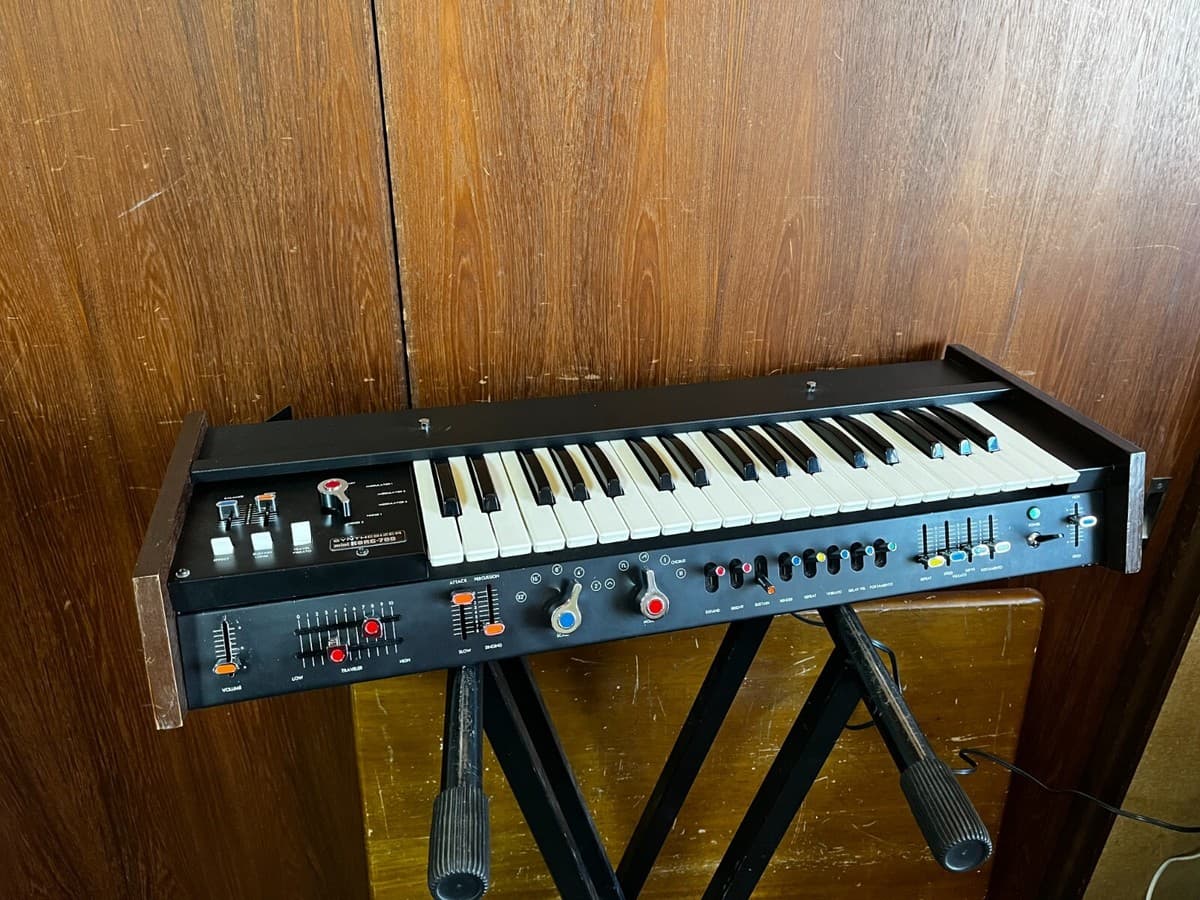
The miniKORG 700S earns its place the moment Chris from Battery Operated Orchestra starts working the panel and the old circuit wakes up in real time. What you hear is not polite nostalgia, but a monophonic analog voice with attitude, the kind of instrument that can go from lean and pointed to thicker and more theatrical as the second oscillator comes in and the Traveler section starts carving the sound.
The sound that still stops you in your tracks
The 700S is easiest to understand as a machine with a very direct personality. It is a dual-oscillator monophonic analog synth, and that matters because the extra oscillator gives the line more weight without turning it into a wash. Add the unusual control layout and the distinctive Traveler/filter control, and you get a keyboard that behaves like an instrument designed for touch, not just settings.
That tactile quality is the heart of the appeal in a demo. A good original 700S should not feel generic, flat, or interchangeable with later analog monosynths. It should sound alive under the fingers, with enough edge to cut through a mix and enough movement to reward careful knob work.
Why the 700S sits in a special place in Korg history
Korg’s miniKORG 700 was its first mass-produced monophonic synthesizer, released in 1973, and the miniKORG 700S followed in 1974. That timing matters because this was still the era when portable analog synth design was being invented in public, and Korg was aiming at a practical use case rather than chasing some futuristic fantasy.
The original 700 was designed to sit on top of an organ as a compact add-on keyboard, almost like a sub keyboard built for players who already lived at a console. The 700S kept that compact identity but added a second oscillator plus extra sustain and vibrato controls, which helped push it from useful oddity into a more flexible performance synth. Even now, that layout makes sense when you see it in action: this was a keyboard meant to be grabbed, shaped, and played, not admired from across the room.
There is also a reason collectors and players talk about the lineage with respect. The original 700 and 700S have long been associated with an unusual control layout and a distinctive Traveler control, and that combination gave the instrument a signature response that is still easy to recognize in recordings.
The records that made the sound familiar
The 700S did not stay trapped in its own decade. It found its way into the vocabulary of synth-pop, post-punk, early ambient, and darker new-wave production, which is why it still feels familiar even to players who have never touched one. The Human League used it on Reproduction, Daniel Miller used it on The Normal’s Warm Leatherette, Kitaro brought it into ambient work, and The Cure used it on Seventeen Seconds and Faith.
That list tells you exactly where the 700S lives in the imagination. It is not only a collector’s prize or a museum piece. It is part of the sound of records that taught listeners what an analog synth could do when it was allowed to be strange, focused, and a little bit dramatic.
What to listen for in demos
If you are judging a 700S from a demo, start with the basics and work outward.
- Listen for a single note that speaks cleanly and stays centered, without feeling weak or unstable.
- Bring in the second oscillator and check whether the sound thickens in a useful way, rather than smearing the pitch or turning muddy.
- Move the Traveler control slowly and make sure the filter motion is smooth, expressive, and obvious in the mix.
- Test the sustain and vibrato controls for immediate response, since those extra features are part of what made the 700S feel more complete than the original 700.
- If ring modulation is part of the patch, listen for clang and harmonic bite without losing the core pitch entirely.
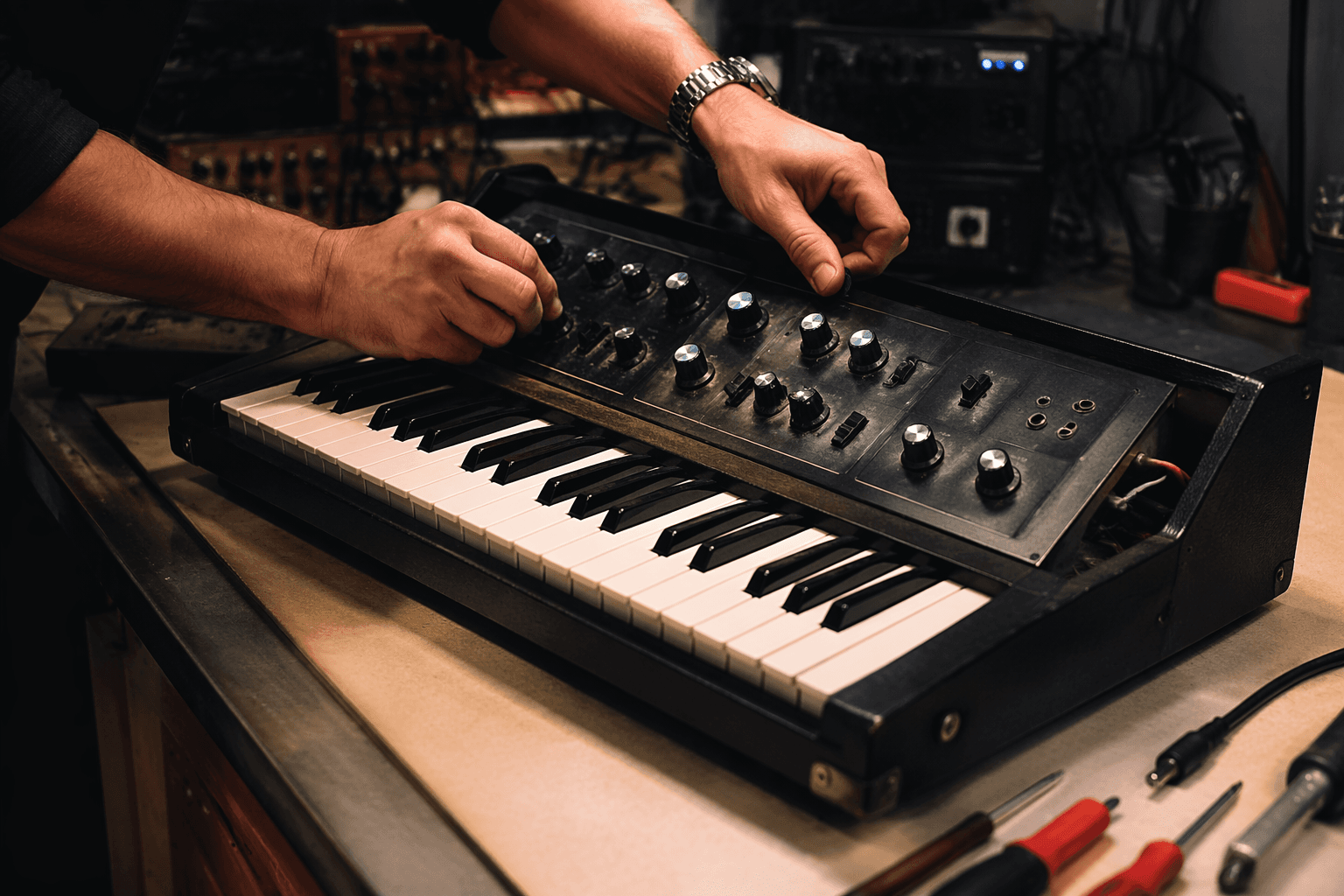
- Pay attention to the way the panel invites movement. The unusual control layout is not just visual flavor. It is part of how the instrument performs.
A strong original example should sound like it has a physical center, with each adjustment changing the voice in a way you can hear instantly. That is the difference between a vintage synth that merely survives and one that still earns studio time.
What matters when you handle one yourself
The value of a real 700S is not only in the badge or the age. It is in whether the instrument still behaves like a playable analog synth with character. Since Chris is working with 50-year-old circuits, the useful question is not whether it sounds pristine in some abstract sense. It is whether it remains responsive, musical, and distinct.
A good check is to move through the panel the way the instrument expects. The 700S should reward quick changes in oscillator balance, sustain, vibrato, and filter shape. If those gestures feel alive and the tone remains bold, you are hearing the reason this machine still has a following.
Korg has clearly understood that the lineage never really went away. In 2021 it revived the family with the miniKORG 700FS, developed with original designer Fumio Mieda, and its software version now advertises more than 150 programs. That modern support only makes the original more interesting, because it underlines how much of the appeal still comes back to the same circuit behavior and panel logic that made the 700S memorable in the first place.
The best part of Chris’s 700S feature is how plainly it proves the point. Half a century on, the instrument does not need to pretend to be new. It only needs a note, a turn of the Traveler, and a panel that still knows how to make an analog line sing.
This article was produced by Prism’s automated news system from verified source data, official records, and press releases, then run through automated quality and moderation checks before publishing. The system is built and supervised by the people who set the standards it runs under. Read our full AI policy.
Know something we missed? Have a correction or additional information?
Submit a Tip